While this guide provides local price benchmarks for the Nigerian market, understanding the broader investment logic is vital for large-scale projects.
Check our
2026 Ultimate Grain Silo Investment Guide for deep ROI analysis, high-end automation features, and 30-year durability standards.

Key factors affecting the price of grain silo
The price of grain silos in Nigeria is not fixed, but is affected by a combination of factors:
Silo capacity
Capacity is the primary factor that determines the price. The capacity of common grain silos in the Nigerian market ranges from 5 tons to 500 tons. Take the market quotation in 2025 as an example:
Small silo (5-20 tons):
Price between ₦1,500,000 – ₦5,000,000
Medium silo (30-100 tons):
Approximately ₦5,000,000 – ₦15,000,000
Large silo (more than 150 tons):
Price may exceed ₦20,000,000
The larger the capacity, the lower the unit grain storage cost, which is suitable for farms with high annual output or centralized grain storage.
Silo material and structure
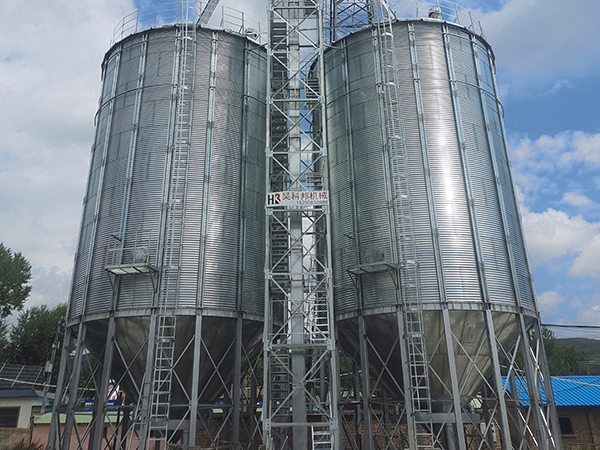
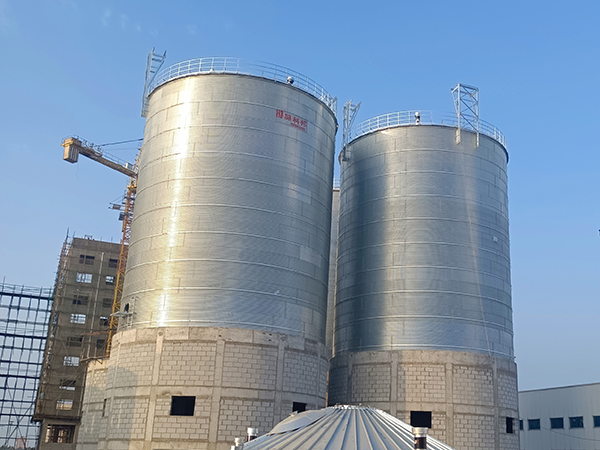
In the Nigerian market, the mainstream grain silo materials mainly include galvanized steel plates and stainless steel. In contrast, galvanized steel plates are more economical and durable, can withstand high temperatures and rainfall in tropical climates, and are relatively cheap.
In addition, the structure is divided into prefabricated and welded types. Prefabricated silos are easy to transport and install on site, suitable for remote areas. The welded structure is more stable, but the transportation cost is slightly higher.
Additional equipment configuration
Modern grain silos are often equipped with auxiliary systems, such as temperature and humidity monitoring systems, ventilation systems, discharging devices, cleaners, etc. These additional functions will significantly improve the storage safety of the silo, but will also increase the overall cost.
Basic silos without intelligent systems:
The price is relatively low, suitable for small farmers with limited funds
The mid-range model is equipped with mechanical ventilation and manual temperature control:
High cost performance, suitable for most agricultural cooperatives
The high-end model has a fully automatic remote monitoring system:
The price is high, but it can greatly reduce manual intervention and loss

The difference between imported and locally manufactured grain silo in Nigeria
In the Nigerian market, there are currently two main sources of grain silos: local manufacturing and imports (mainly from China, Turkey or India). There are obvious differences between the two in terms of price and after-sales service:
| Source | Advantages | Disadvantages | Price Reference (30 tons) |
|---|---|---|---|
| Locally Manufactured | Reduces transportation costs and allows for faster response | Slightly lower technological maturity | ₦6,000,000 – ₦8,000,000 |
| Imported from China | Offers advanced technology and well-engineered structure | Longer delivery time and higher customs fees | ₦5,000,000 – ₦7,000,000 |
For users who pursue cost-effectiveness and long-term stability, modular grain silos from China are one of the more popular choices in the market.
Consideration of transportation and installation costs
In addition to the price of the silo itself, transportation and installation costs are also an important part of the total cost. In Nigeria, the logistics costs in different regions vary greatly, especially from the Port of Lagos to inland areas such as Kano, Abuja, Ibadan and other places.
Transportation costs (container to construction site):
₦500,000 – ₦2,000,000
Installation labor and equipment costs:
₦800,000 – ₦3,000,000
Foundation civil engineering costs (based on 30 tons):
About ₦1,000,000
Therefore, the total cost of a 30-ton grain silo from procurement to implementation may be between ₦7,500,000 – ₦12,000,000.
Is it worth investing in grain silo?
Despite the high initial investment costs, from a long-term operational perspective, building grain silos can help significantly reduce losses during grain storage, improve logistics efficiency, and enhance the company’s professional management level. In Nigeria, a developing market with growing grain production, the investment payback period for grain silos is usually 2 to 4 years, depending on the storage scale and local grain price changes.
Purchase suggestions and precautions
When purchasing grain silos in Nigeria, users are advised to pay attention to the following points:
Choose manufacturers or agents with actual installation cases
Request structural design drawings and material inspection reports
Prefer expandable modular designs to facilitate future expansion
Sign a complete after-sales agreement to ensure the maintenance of temperature control and ventilation systems
In addition, if the budget is limited, you can consider purchasing the basic structure first, and then gradually add control systems and sensors later to balance cost and function.
Conclusion
In general, the price span of Nigerian grain silos is large, depending on multiple factors such as capacity, structure, functional configuration and logistics installation. For farms or agricultural enterprises that want to improve grain storage efficiency and reduce losses, choosing a suitable grain silo is a medium- and long-term investment worthy of serious consideration.
If you plan to purchase a grain silo, it is recommended to communicate with professional manufacturers in advance and make reasonable plans based on your own grain storage scale and budget to maximize the investment benefits.
Website: https://www.cobansilo.com/
Mobile: +8615801054617
Email: william@cobansilo.com