Note: If 1,000 tons is larger than your current needs, we also offer scalable solutions for smaller farms.
Check our Uganda Small-Scale Metal Silo Price List (5T-500T)
for more budget-friendly options.
Note: This guide focuses on the Uganda market. For a more comprehensive look at global industry benchmarks and long-term ROI, check our
2026 Ultimate Grain Silo Investment Guide.
Project basic conditions and assumptions
Before calculating the construction cost, the following basic conditions must be clarified:
Grain silo type
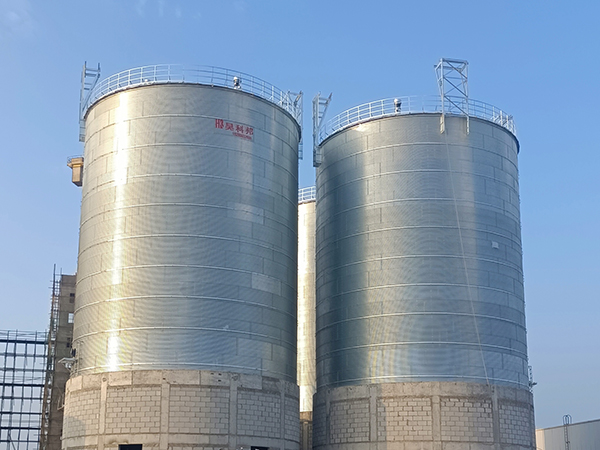
This article discusses steel plate assembled vertical silos, which are mainly used for the medium and long-term storage of grain crops such as corn, wheat, and beans.
Capacity conversion method
1,000 tons refers to the theoretical storage of grains such as wheat or corn. The actual capacity will be affected by factors such as grain variety, specific gravity, and filling coefficient.
Location setting
The central region of Uganda (centered on Kampala) has significant location advantages: complete transportation infrastructure and competitive labor costs, making it an ideal investment location. The region has high logistics efficiency, sufficient human resources supply and outstanding cost-effectiveness.
Functional configuration
Includes basic silo structure, ventilation system, inlet and outlet conveying system, basic civil engineering and necessary control electrical system.

Main composition and price analysis of grain silo
The standard configuration of a 1,000-ton grain silo system mainly includes the following core modules:
Silo main structure
The main body of the silo is constructed with hot-dip galvanized corrugated steel plates, and the plate thickness is usually 2.0 – 3.5mm. Equipped with inspection ports, ventilation caps, ladders, observation ports and discharge cones, the estimated price is about USD 45,000 – 60,000 (excluding tax and freight).
Conveying system
The conveying system is equipped with core equipment such as bucket elevators, scraper conveyors and screw conveyors to realize grain loading and unloading and in-silo circulation operations. According to the conveying capacity (10-50t/h) and process layout differences, the equipment quotation usually fluctuates in the range of US$15,000-25,000.
Ventilation and temperature control system
The ventilation system uses a ground ventilation network with an axial flow fan (0.75-2.2kW) and an integrated digital temperature sensor array to effectively control the moisture and temperature of stored grain. The standard configuration budget is US$8,000-12,000, which will be adjusted according to the silo capacity.
Civil engineering and infrastructure
Including silo foundation, equipment foundation, power access, drainage ditch, etc.
The cost of civil engineering varies greatly in the local area, and is estimated to be USD 20,000-30,000.
Installation and commissioning
The project installation and commissioning costs include labor costs, lifting equipment rental and construction management services, and the total budget is expected to be USD 10,000-15,000.

Overall cost estimation
Based on the professional evaluation of the Uganda grain storage facility construction project, the budget analysis report for the 1,000-ton standard configuration silo is as follows:
Project cost composition and estimated range (unit: US dollars):
Silo main steel structure: 45,000-60,000
Mechanized conveying system: 15,000-25,000
Intelligent ventilation and temperature control device: 8,000-12,000
Basic civil engineering: 20,000-30,000
Equipment installation and system debugging: 10,000-15,000
After comprehensive calculation, the total investment range of the project is US$98,000-142,000.
Key factors affecting costs
Raw material prices
Steel prices fluctuate greatly worldwide. Uganda is highly dependent on steel plates and profiles. International transportation costs will directly affect the main costs of silos.
Local labor and installation conditions
Although Uganda’s labor costs are relatively low, the shortage of technicians and the difficulty of construction organization may increase project management costs.
Whether to use an automated system
Although system function upgrades (such as remote monitoring, intelligent temperature control and automatic discharging) can improve operational efficiency, the resulting cost increase needs to be weighed. It is recommended to evaluate the input-output ratio based on actual needs before implementation.
Taxes and customs clearance fees
Equipment import tariffs and customs clearance cycles are expenses and time costs that cannot be ignored. It is recommended to make a reasonable budget at the beginning of the project.
Return on investment and application suggestions
In the long run, the benefits of building grain silo are mainly reflected in the following aspects:
Reduce grain loss:
Scientific grain storage can control the loss rate within 1%.
Improve value preservation:
Extend the grain sales cycle and avoid the risk of low-price sales.
Increase logistics efficiency:
The supporting transportation system greatly reduces the cost of manual handling.
Improve corporate image:
Modern grain depots are an important symbol of standardized and large-scale operations of enterprises.
For enterprises with medium-to-large planting bases, grain processing plants or export businesses, grain silos are an infrastructure investment with stable returns and controllable risks.
Conclusion
Investing in the construction of a 1,000-ton grain silo project in Uganda has significant economic value. According to our engineering experience, the initial investment of the project is about US$100,000-140,000, but through scientific grain storage management, it can not only effectively reduce the loss rate, but also grasp the value-added opportunities brought by fluctuations in grain market prices.
Investors are advised to focus on three aspects: first, entrust professional institutions to conduct geological surveys and demand analysis; second, select equipment suppliers with African project experience; third, establish a sound operation management system.
Our company has successfully implemented many similar projects in Africa and can provide full-process services from planning and design to construction and operation. If you need a specific plan or cost calculation, please feel free to negotiate.