Quick Answer: As of early 2026, the market price for one bushel of corn fluctuates between $4.20 and $5.10. However, a “bushel” is more than just a price—it’s a weight standard: 56 lbs for corn and 60 lbs for wheat/soybeans.

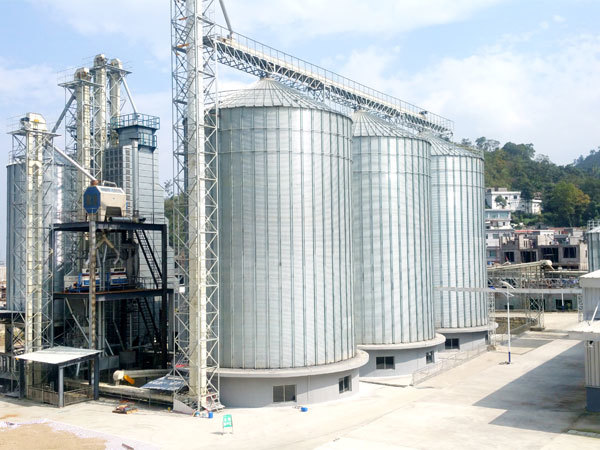
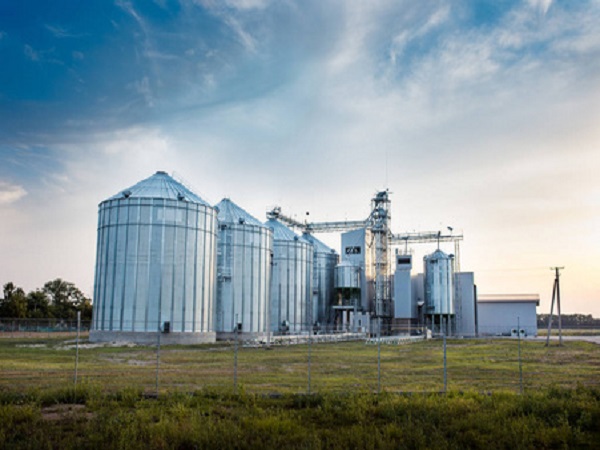
Using high-quality steel silos helps farmers maintain grain weight (lbs/bu) by preventing moisture loss.
Core Definition: What exactly does a Bushel represent?
In simple terms, the bushel is a unit of capacity (1 bushel in the US ≈ 35.2 liters), but in actual trade, for the convenience of transactions, it is strictly defined as the standard weight.
Weight conversion of common agricultural products
The densities of different crops vary, so the number of kilograms corresponding to 1 bushel also differs:
| Commodity | Standard Weight (lbs/bu) | Metric Weight (kg/bu) | Bu per Metric Ton (MT) |
| Corn | 56 lbs | 25.40 kg | 39.37 bu |
| Wheat | 60 lbs | 27.22 kg | 36.74 bu |
| Soybeans | 60 lbs | 27.22 kg | 36.74 bu |

Market Analysis from 2025 to 2026
As of 2026, the baseline cost for agricultural commodities is heavily influenced by global supply chains. According to the latest USDA World Agricultural Supply and Demand Estimates (WASDE), the projected price range for corn per bushel reflects a stabilizing trend compared to previous years. Based on these global insights and related economic research institutions (FAPRI), food prices are entering a new stable period.
Reference for corn prices
Spot market price: It is expected to fluctuate between $4.20 and $5.10 per bushel.
Farm settlement price: Considering the supply pressure during the harvest season, the actual price that farmers receive may be around $3.90 to $4.30 per bushel.
Historical comparison: Compared with the peak in 2024, the price in 2026 will show a stable with a slight decline due to the increase in global planting area.
RMB Conversion Estimation (Taking Corn as an Example)
Suppose the current market price is $4.50/bu and the exchange rate of the RMB against the US dollar is 7.2:
Unit price conversion: $4.50 × 7.2 = 32.4$per bushel.
Ton price conversion: Approximately 1,275 yuan per ton (Note: This is a reference for the FOB price of American Farms and does not include cross-border freight and import duties).
For international buyers in Southeast Asia or Africa, the FOB price per bushel is the baseline; however, your final landed cost will depend on ocean freight and silo efficiency at the destination port.
Why does the price of “one bushel” always change?
In 2026, managing the value of your grain goes beyond just checking the ticker. Many modern farmers are now using digital platforms like Bushel for Farmers to track their scale tickets, contracts, and prepays in real-time. Integrating digital management with high-quality physical storage ensures you know exactly how much each bushel is worth the moment it leaves your silo.
“Market analysts often note that the price per bushel isn’t just a number on a screen—it’s a reflection of logistics, fuel costs, and storage quality. As energy costs fluctuate in 2026, the [CME Group Grain Futures] remain the primary benchmark for determining the actual cash value of a bushel at the farm gate.”
Understanding the driving factors behind the price can help you seize the best time to buy or sell
1. Supply and demand relationship: The growth in demand for biofuels (ethanol gasoline) has been the core driving force supporting corn prices in recent years.
2. Production costs: The fluctuations in the costs of nitrogen fertilizers, fossil fuels and agricultural machinery and electricity directly determine the psychological bottom price of farmers.
3. Climate risk: Extreme weather caused by El Nino or La Nina phenomena can push up futures prices in a short period of time.
4. Logistics and interest: In a high-interest-rate environment, traders’ grain holding costs increase, which often depress the purchase price at the origin but push up the landed price at the terminal.

Expert Advice: How to Deal with Price Fluctuations?
For grain traders and large-scale farmers, “unit price” is undoubtedly important, but “storage capacity” is the key to making profits.
Market rule: Grain prices are usually at a low point during the harvest season and reach a peak when there is a shortage of crops. If you have high-quality Grain Silo steel silos, you can obtain higher profits through “off-peak sales”.
Why choose Coban Silo?
As a professional expert in warehousing solutions, Coban Silo is committed to providing global customers with:
Moisture-proof and insect-proof: Ensure that grains maintain a high standard of Bushel bulk density even after long-term storage.
Intelligent temperature control: Reduces loss and protects the activity of grains.
Cost-effectiveness: Help you take the initiative in price fluctuations and achieve asset appreciation.
Summary
“How much is one bushel?” is a dynamic answer. In 2026, the reference price of corn is approximately 30 to 35 yuan per bushel. Mastering the conversion logic and market trends is your first step into international agricultural product trade.
Contact us for professional warehousing solutions
Coban Silo (Coban Steel Silo)
Official website: www.cobansilo.com
Telephone/wechat: +86 15518705783
Email: info@cobansilo.com