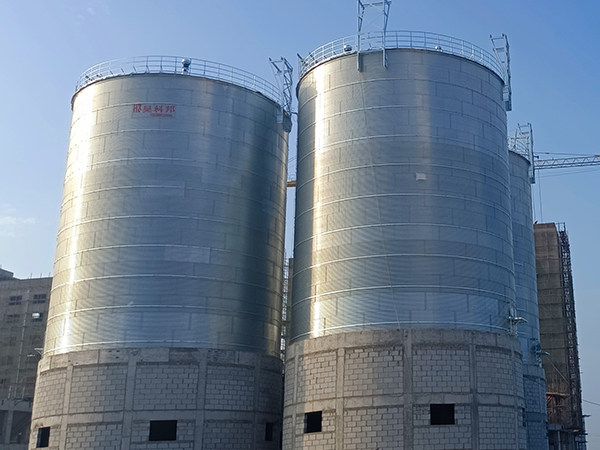
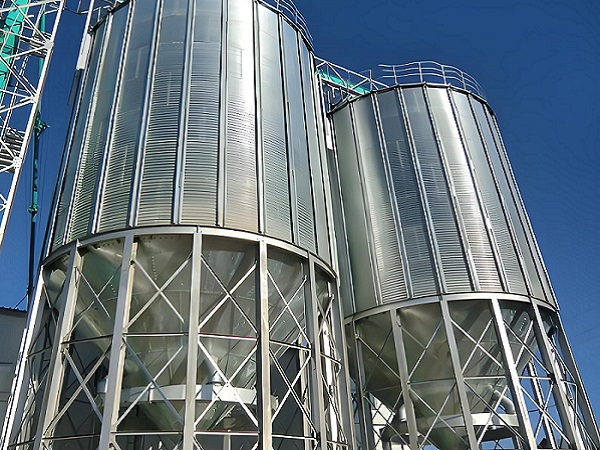
A 500-ton galvanized steel silo and a 5000-ton galvanized steel silo obviously cannot use the exact same temperature monitoring configuration. However, the number of sensors is not simply increased proportionally to the tonnage of grain stored.
In the actual design of a Grain Silo Temperature Monitoring System, engineers first determine the silo diameter, grain layer height, type of grain to be stored, and expected storage time. Then they decide how many temperature sensor cables are needed, how many temperature measurement points are needed on each cable, and the distribution of these measurement points within the grain pile.
Here, it is crucial to distinguish two concepts: a temperature sensor cable is not the same as a temperature sensor. A vertically suspended temperature sensor cable can integrate multiple independent temperature measurement points. Therefore, determining the number of sensors needed for a grain silo actually requires determining both the number of temperature sensor cables and the total number of temperature measurement points.
I. How many temperature sensors are needed for Grain Silo silos of different capacities?
For common circular galvanized steel silos, the following data can be used as a reference in the preliminary design phase. The number of temperature measurement points in the table is calculated based on example cable layouts and vertical measurement point spacing, and is not a fixed standard applicable to all silo types.
| Grain silo capacity | Number of temperature measuring cables (reference) | Total number of temperature measuring points (reference) |
|---|---|---|
| 100–300 tons | 1–3 pieces | 4–12 pieces |
| 500 tons | 3–4 pieces | 12–24 pieces |
| 1000 tons | 4–6 pieces | 24–48 pieces |
| 2000 tons | 5–9 pieces | 40–90 pieces |
| 3000 tons | 7–12 pieces | 70–144 pieces |
| 5000 tons | 9–16 pieces | 108–224 pieces |
| 10000 tons | 15–25 pieces | 225–450 pieces |
For example, in a 1000-ton corn silo, if 5 temperature sensing cables are installed, with 8 temperature measuring points on each cable, then the total number of measuring points is:
5 cables × 8 points/cable = 40 measuring points.
This means that the grain silo can obtain temperature data from 5 horizontal locations and 8 different grain layer heights, instead of just measuring from 5 locations.
In actual engineering, COBAN determines the layout of the Grain Silo Temperature Sensors based on the specific silo dimensions and storage conditions, rather than simply selecting a fixed number based on capacity.

II. Five Key Factors Determining the Number of Temperature Sensors
1. Silo Diameter: Determines the Number of Temperature Sensing Cables Required
For circular steel silos, the silo diameter is typically a crucial parameter determining the number of temperature sensing cables required.
Grain has poor thermal conductivity; when a section of the grain pile has already heated up, a temperature sensor several meters away may still show a normal temperature. Therefore, it cannot be assumed that installing a single cable inside the silo is sufficient to monitor the entire grain pile.
Examples using silos of different diameters:
| Silo Diameter | Reference Number of Temperature Measuring Cables | Horizontal Layout Recommendations |
|---|---|---|
| 6m | 1 cable | Near the center |
| 8m | 3 cables | Dispersed layout |
| 10m | 4 cables | Near the center and outer perimeter |
| 12m | 5 cables | Near the center and in a ring distribution |
| 16m | 7 cables | Multi-point ring layout |
| 20m | 11 cables | Multi-ring coverage |
| 30m | 22 cables | Multi-ring grid coverage |
In practical terms, a 12m diameter silo cannot simply have five cables arranged in a straight line. Engineers need to consider the distances between the central area, the outer area, and different temperature measurement points to avoid densely packed measurement points on one side and large monitoring gaps on the other.
2. Grain Layer Height: Determines the Number of Sensors Required for Each Cable
The higher the silo, the larger the vertical monitoring area of the grain pile needs to be.
In conventional grain silo temperature monitoring systems, the vertical spacing between measuring points is often 1.5–3m, with approximately 2m being a common configuration.
Assuming the effective monitoring lengths of the temperature measuring cables are as follows:
| Effective Monitoring Length | Reference Number of Measurement Points at a 2m Spacing |
|---|---|
| 8m | 4–5 |
| 12m | 6–7 |
| 16m | 8–9 |
| 20m | 10–11 |
| 24m | 12–13 |
The number of measurement points allowed for some variation in the initial and final positions. In practice, the total height of the silo cannot be directly divided by 2, as the space required for the silo top, grain surface level, bottom discharge equipment, and cable fixing structures all occupy space.
For example, if a grain silo has a silo height of 18m, but the normal grain storage height is only 15m, then the temperature sensors should primarily cover the effective grain layer of 15m, rather than adding meaningless measurement points to fill the 18m silo height.
3. Grain Type: Affects Monitoring Density
Corn, wheat, rice, and soybeans have different storage characteristics, so monitoring needs cannot be determined solely by using the same tonnage.
| Grain Storage | Considerations for Temperature Measurement Design |
|---|---|
| Maize / Corn | Broken kernels and fine powder aggregation, localized high moisture content, temperature changes after storage |
| Wheat | Temperature changes during long-term storage, pests, and localized hot spots |
| Paddy Rice | Moisture uniformity upon entry, localized damping, and high-temperature storage conditions |
| Soybeans | Localized high moisture content, broken kernels, and quality changes during long-term storage |
It’s important to emphasize that the type of grain does not directly determine the number of sensors required. It primarily affects the monitoring risk assessment, which in turn determines whether to reduce the spacing between monitoring points or increase the number of temperature monitoring cables in key areas.
For the same 2000-ton steel silo, engineers might use different monitoring densities depending on whether it stores fully dried wheat or corn with fluctuating moisture content.
4. Storage Time: Determining the Need for More Intensive Monitoring
Temperature monitoring requirements differ between short-term turnover silos and long-term grain storage silos.
If grain is stored in the silo for only a few days, the primary task is to monitor the initial temperature and short-term anomalies. For silos storing grain for several months, continuous observation of temperature trends at each grain layer is necessary.
For long-term grain storage, increasing the number of appropriately distributed monitoring points helps detect localized temperature anomalies earlier. However, if the grain’s moisture content is already high upon entry, even installing more temperature sensors cannot replace the pre-drying process.
5. Silo Structure: Limiting the Installation Location of Temperature Sensing Cables
In addition to storage parameters, engineers must also inspect the silo roof structure, inlet location, bottom unloading system, and cleaning equipment.
Especially in large flat bottom grain silos, the temperature sensing cables are subject to grain settling and drag forces during unloading. The more cables there are, the greater the additional load that the silo roof support structure may need to consider.
Therefore, the number of temperature measuring cables installed cannot be determined arbitrarily; appropriate structural and load checks must be performed.
III. Where should temperature sensors be installed in a grain silo?
Grain silo temperature monitoring should not focus solely on the center of the silo, nor should all sensors be fixed to the silo walls.
The conventional approach is to suspend multi-point temperature sensing cables inside the grain silo, placing the sensors directly within the grain pile.
[Diagram of horizontal arrangement of temperature sensing cables in a circular grain silo]

1. Central Area: Monitoring the Internal Temperature of the Grain Pile
Temperature sensing cables are typically installed near the center of the silo.
Especially for grain silos with center-feed, broken corn kernels, fine powder, and impurities may concentrate in the central area, affecting local airflow and grain storage conditions.
However, the central temperature sensing cable does not necessarily have to be located at the exact geometric center. If the exact center is the location of direct impact from the grain, or conflicts with the central discharge port, it can be appropriately offset to avoid cable damage.
2. Intermediate Circular Area: Reducing Monitoring Blind Spots
For steel silos with larger diameters, monitoring only the central temperature is far from sufficient.
Engineers typically install one or more loops of temperature sensing cable between the center and the silo wall, allowing the sensor to cover grain layers at different radii.
The horizontal distance between cables can be initially assessed at approximately 4–6 meters during the design phase, and then appropriately reduced if higher monitoring requirements are needed. The specific spacing should be determined based on the effective monitoring capabilities of the system supplier.
3. Area Near the Silo Wall: Monitoring the Outer Grain Layer
The walls of galvanized steel silos are significantly affected by external temperature and solar radiation. Temperature differences may exist between the outer and inner grain layers depending on the season.
The outer temperature measuring cable should be installed inside the grain pile, maintaining an appropriate distance from the silo wall, rather than being directly attached to the steel plate.
Otherwise, the measurement results are easily affected by the silo wall temperature and cannot accurately represent the actual grain temperature.
IV. How are temperature sensors arranged vertically?
A single temperature sensing cable typically hangs downwards from the top of the silo, with multiple sensors arranged along its length to monitor the upper, middle, and lower layers of grain.
Vertical arrangement of a single multi-point temperature sensing cable

Upper Measuring Points
Primarily used to observe temperature changes near the grain surface. The grain layer near the top of the silo is easily affected by external temperature changes, condensation on the silo roof, and moisture migration.
Middle Measuring Points
Used to observe the temperature distribution inside the main grain pile. For taller grain silos, only one measuring point should be installed in the middle grain layer; otherwise, it will be impossible to determine at which height the temperature anomaly occurred.
Lower Measuring Points
Used to monitor the grain temperature near the bottom of the silo and observe temperature changes during ventilation and cooling. The installation height of the lower layer sensors must avoid the unloading port, cleaning machine, and other moving equipment.
During actual installation, the sensors should not directly contact the metal silo bottom, nor should they extend into the operating range of the cleaning equipment.
V. What is the working principle of a grain silo temperature sensor?
The working process of the Grain Silo Temperature Monitoring System is not complicated, but it requires distinguishing between three parts: the temperature sensing element, signal transmission, and monitoring software.

Common temperature sensing elements used in grain silos include thermocouples, thermistors, and digital temperature sensors.
Thermocouples measure temperature using the thermoelectric potential generated at the junction of different metal conductors; thermistors measure temperature by observing the change in resistance with temperature; and digital sensors use internal circuitry to measure temperature and output a digital signal.
Regardless of the method used, the sensor measures the temperature in its vicinity, not the average temperature of the entire silo.
For example, a 1000-ton grain silo with 40 temperature measuring points might read the following data:
| Measurement Point Location | Current Temperature | 24 Hours Ago | Change |
|---|---|---|---|
| A. Upper Layer of Cable | 25.2°C | 25.0°C | +0.2°C |
| A. Middle Layer of Cable | 26.1°C | 25.8°C | +0.3°C |
| B. Middle Layer of Cable | 31.8°C | 28.0°C | +3.8°C |
| C. Lower Layer of Cable | 24.7°C | 24.6°C | +0.1°C |
This data reveals that the temperature rise in the middle layer of cable B is significantly faster than at other measuring points. In this case, it’s crucial to check the changes at adjacent measuring points, the recent temperature of grain entering the warehouse, and ventilation conditions, rather than solely relying on the average temperature across the entire warehouse to determine grain safety.
This is also why a multi-point temperature monitoring system is more valuable than a single temperature probe.
VI. What problems are likely to occur during actual installation?
| Installation Issues | Potential Impacts | Engineering Solutions |
|---|---|---|
| Insufficient Cable Quantity | Large grain layer lacks temperature measurement points | Reassess horizontal coverage based on silo diameter |
| Insufficient vertical spacing between measurement points | Difficulty in locating local anomalies | Increase measurement points according to grain layer height |
| Cable too close to silo wall | Measurement values affected by steel plate temperature | Maintain appropriate distance from wall |
| Cable located in direct feed impact zone | Cable wear, misalignment, or even damage | Adjust suspension position or implement protection |
| Lower end enters the cleaning machine’s working range | Cable may be damaged during equipment operation | Check the cleaning equipment’s operating envelope |
| Insufficient silo top support strength | Long-term tension may cause structural problems | Check cable and grain drag load |
| Displaying temperature but not saving records | Difficulty in determining temperature change trends | Configure historical data recording and alarms |
Special attention must be paid to the method of cable securing.
During the feeding and unloading process in grain silos, the grain will exert lateral and drag forces on the temperature measuring cables. Large silos cannot be designed with top securing points solely based on the cable’s own weight.
If bottom limiting devices are used, grain flow, silo bottom equipment, and cable tension must also be considered; simply rigidly securing all cables top and bottom is not advisable.
VII. How does COBAN determine the final number of sensors for its grain silos?
For COBAN’s galvanized steel silo projects, the most efficient way to determine the temperature measurement configuration is to first confirm the silo structure and grain storage conditions, and then proceed with cable routing.
For example, consider a hypothetical 2000-ton flat bottom grain silo:

This configuration allows for 49 independent temperature measurement points, but this does not mean that 49 measuring points can completely cover every grain in the grain silo.
The final design still needs confirmation:
- Actual diameter of the silo and maximum grain layer height.
- Grain type, moisture content upon entry into the silo, and expected storage period.
- Location of the feed inlet, discharge outlet, cleaning equipment, and ventilation system.
- Permitted length of temperature sensing cable, measuring point specifications, and silo top load-bearing capacity.
- Whether temperature trend recording, remote viewing, and automatic alarm functions are required.
If the project already has a complete Grain Silo Drawing, engineers can directly mark the location, length, and number of sensors for each cable on the silo plan and section drawings. This is more accurate than simply providing a number of temperature sensors and also reduces adjustments during on-site installation.
VIII. Is it better to have more temperature sensors in a grain silo?
No.
Too few temperature sensors increase the risk of undetected localized temperature anomalies; however, too many sensors increase costs for cables, data acquisition equipment, wiring, and maintenance, and also increase the load on the silo roof structure.
More importantly, temperature monitoring has spatial limitations. Because grain conducts heat slowly, even with a dense distribution of measuring points, small hot spots far from the sensors may not be detected immediately.
Therefore, the goal of engineering design is not to maximize the number of sensors, but to ensure that a limited number of measuring points effectively cover different horizontal positions and grain layer heights.
For COBAN galvanized steel silos, it is recommended to first determine the number of temperature measuring cables based on the silo diameter, then determine the number of measuring points per cable based on the effective grain storage height, and finally verify this based on the feeding and discharging equipment, grain storage conditions, and silo roof structure.
The number of temperature sensors needed for a grain silo ultimately depends on the silo diameter, grain layer height, monitoring requirements, and installation conditions, not the tonnage of grain stored.
This is the real issue that needs to be addressed when selecting a Grain Silo Temperature Monitoring System.