When a customer plans a grain storage project, one of the first questions is usually simple:
How long will it take to install the grain silo?
There is no single answer for every project. A 500-ton silo and a 10,000-ton silo are completely different in terms of diameter, wall height, reinforcement, conveying equipment, aeration, temperature monitoring, and installation work.
Based on COBAN’s experience with galvanized steel grain silo projects, a practical installation schedule can usually be estimated from the silo capacity first.
How Long Does a Grain Silo Take to Install?
For a standard galvanized steel grain silo, the approximate on-site installation time is:
| Silo Capacity | Typical Silo Installation Time* |
|---|---|
| 100–500 tons | 7–20 days |
| 1,000 tons | 15–25 days |
| 2,000 tons | 20–35 days |
| 3,000–5,000 tons | 30–60 days |
| 10,000 tons | 60–90 days |
| 10,000+ tons | 60 days or more |
*These figures refer to a normal project with suitable site conditions and prepared materials. The actual schedule depends on the silo design, number of silos, equipment configuration, weather, labor, foundation condition, and site organization.
For a single small silo, the difference of a few days may not be important. For a commercial grain storage project with several large silos, however, the installation schedule can directly affect the project start-up date.
The Silo Body Is Not the Whole Installation
One common mistake is to look only at the time required to assemble the silo body.
A complete grain storage system normally includes several stages:
- Foundation preparation
- Silo body assembly
- Roof installation
- Stiffeners and structural components
- Ladders and platforms
- Aeration system
- Temperature monitoring system
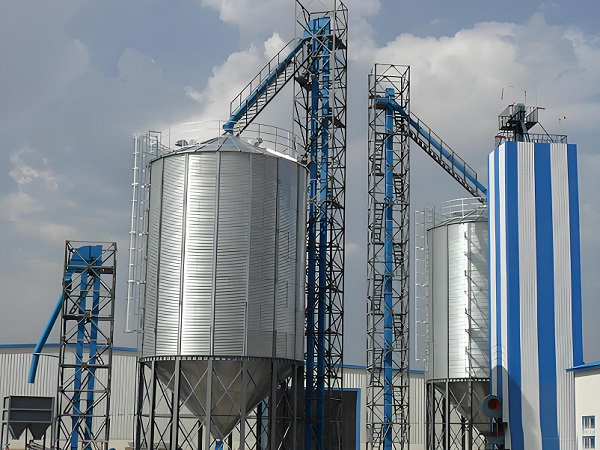
- Loading and unloading equipment
- Electrical connections
- Testing and commissioning
The galvanized steel silo itself is modular and assembled from factory-made components, which is why installation can be considerably faster than conventional concrete silo construction.
So when a supplier says that a silo can be installed in 15 days, the customer should ask:
15 days for the silo body, or 15 days for the complete storage system?
These are not necessarily the same thing.

100–500 Ton Grain Silo: About 7–20 Days
Small silos are normally the quickest to install.
A typical 100–500 ton silo has a relatively small diameter and lower structural height. The number of wall rings, stiffeners and accessories is also limited.
Under good site conditions, the main work may include:
- Base ring installation
- Wall panel assembly
- Roof assembly
- Ladder installation
- Ventilation equipment
- Temperature sensor installation
- Discharge equipment
- Final inspection
For a simple silo, 7–10 days may be achievable with an experienced installation team.
If the project includes more equipment, difficult weather, local labor limitations or additional conveying equipment, 10–20 days is a more realistic planning range.
For a customer arranging labor and equipment locally, I would not recommend planning the project around the shortest possible number.
It is better to reserve some working days.
1,000 Ton Grain Silo: About 15–25 Days
A 1,000-ton silo is already a common commercial storage size.
At this capacity, the silo diameter and height become larger, and the installation team has more wall panels, stiffeners, roof components and accessories to handle.
For a standard 1,000-ton galvanized steel silo:
15–25 days is a practical installation range.
The actual sequence may look like this:
| Work | Approximate Time |
|---|---|
| Base and bottom components | 1–3 days |
| Silo wall assembly | 6–10 days |
| Roof installation | 2–3 days |
| Stiffeners, ladder and platforms | 2–4 days |
| Aeration and temperature system | 2–3 days |
| Inspection and commissioning | 1–2 days |
Some activities can be carried out at the same time, so the numbers above should not simply be added together.
The important point is that a 1,000-ton silo should normally be planned as a several-week installation project, rather than assuming it can be completed in only a few days.
2,000 Ton Grain Silo: About 20–35 Days
Once the capacity reaches approximately 2,000 tons, the installation becomes more demanding.
The silo may require:
- More wall rings
- Heavier reinforcement
- More roof components
- Larger aeration fans
- More temperature cables
- Larger discharge equipment
- Stronger foundation requirements
- More lifting and working equipment
For this size, COBAN would normally allow approximately:
20–35 days for one standard silo installation.
If several 2,000-ton silos are installed as one project, the total project duration does not necessarily become four times longer.
An experienced team can move between silos and share lifting equipment, tools and installation personnel.
This is why the number of silos is just as important as the capacity of each silo when estimating the schedule.
3,000–5,000 Ton Grain Silo: About 30–60 Days
A 3,000–5,000-ton silo is no longer a small farm storage unit.
At this scale, installation normally involves a larger structural system and more supporting equipment.
The installation team must pay particular attention to:
- Wall alignment
- Bolt tightening
- Verticality
- Stiffener installation
- Roof structure
- Foundation connection
- Aeration arrangement
- Temperature monitoring
- Loading and discharge systems
For a standard project, 30–60 days is a reasonable planning range.
A 5,000-ton silo can take longer than a 3,000-ton silo, but the difference is not necessarily proportional to capacity.
Why?
Because installation speed is influenced by the diameter and height of the silo, the number of structural components, equipment configuration and working method, not simply by the number of tons stored.
10,000 Ton Grain Silo: About 60–90 Days
A 10,000-ton grain silo is a large industrial storage structure.
At this level, the project normally involves much more than assembling galvanized steel panels.
The system may include:
- Large-capacity grain receiving
- Bucket elevators
- Belt or scraper conveyors
- Aeration fans
- Temperature monitoring
- Dust collection
- Roof equipment
- Discharge systems
- Electrical control
- Access platforms
- Safety equipment
For one large 10,000-ton silo, 60–90 days should be considered a reasonable project planning range when the scope includes the main supporting equipment.
If the foundation is already completed and the materials are on site, the actual silo erection can be shorter.
If the project starts from an undeveloped site, however, the total construction period will be longer.
Why Can Two Similar Silos Have Different Installation Times?
Capacity alone cannot determine the exact installation schedule.
From an engineering point of view, I normally look at six factors first.
1. Is the Foundation Ready?
This is one of the biggest factors.
The silo foundation must be constructed according to the approved design before the steel silo can be installed.
If the concrete foundation is still being constructed or has not reached the required condition, silo assembly cannot simply start because the steel materials have arrived.
For overseas projects, foundation preparation should therefore be started while the silo is being manufactured.
This can save considerable time on the overall project schedule.
2. How Many Silos Are Being Installed?
One 5,000-ton silo and five 1,000-ton silos both provide approximately 5,000 tons of storage, but the installation work is not identical.
Five silos mean:
- Five silo foundations
- Five silo bodies
- Five roofs
- More ladders and platforms
- More aeration connections
- More temperature monitoring points
The total installation period therefore needs to be calculated based on the actual project layout, not only total storage capacity.
3. What Equipment Is Connected to the Silo?
A silo body without conveying equipment is a relatively straightforward structure.
A complete grain storage system is different.
For example:
Truck → Receiving Pit → Cleaner → Bucket Elevator → Distributor → Silo → Screw/Belt Conveyor → Outloading
Every additional machine requires installation, alignment, electrical work and testing.
Therefore, a customer should always ask for two schedules:
Silo erection time
and
Complete system installation and commissioning time.
4. How Experienced Is the Installation Team?
The same silo can take different amounts of time with different teams.
An experienced crew already knows:
- Which components should be assembled first
- How to organize the lifting work
- How to control panel alignment
- When to tighten bolts
- How to install sealing materials
- How to coordinate roof and wall assembly
Good site organization can make a noticeable difference.
5. What Is the Local Weather Like?
Rain, strong wind and extreme heat can affect installation.
High-altitude work is particularly sensitive to strong wind.
For overseas projects, we normally recommend keeping some schedule allowance rather than promising that every project will finish on the earliest possible date.
6. Are All Components on Site?
A surprisingly common cause of installation delays is not the silo itself.
It is a missing component.
For example:
- Missing bolts
- Missing sealing materials
- Incorrect foundation bolts
- Delayed fans
- Missing temperature cables
- Delayed conveyors
- Unavailable lifting equipment
Before installation starts, all components should be checked against the packing list.
A Practical Installation Schedule for Customers
If a customer asks us, “When can I start storing grain?”, I would not answer with only the silo erection time.
A more useful schedule is:
| Project Stage | Typical Planning |
|---|---|
| Engineering and foundation preparation | 1–3+ weeks |
| Silo assembly | 1–8+ weeks |
| Auxiliary equipment installation | 1–3 weeks |
| Electrical and control work | Several days–2 weeks |
| Testing and commissioning | 2–7 days |
These stages can overlap.
For this reason, the total project period should be calculated according to the actual project scope rather than simply adding every number in the table.
Can the Installation Time Be Shortened?
Yes, but there is a limit.
The safest way to shorten the schedule is better preparation, not simply putting more workers on site.
Before the steel arrives, the customer should have:
- Completed the foundation
- Confirmed anchor bolt positions
- Prepared lifting equipment
- Prepared installation tools
- Arranged local workers
- Prepared electricity
- Prepared material storage space
- Checked the delivered components
The manufacturer should also provide the installation drawings and installation sequence in advance.
For larger overseas projects, manufacturer engineers can provide installation supervision and commissioning support while the local team handles general labor and site work.
What Should Customers Put in the Contract?
Instead of simply writing:
“Installation: 30 days.”
I recommend defining the scope clearly.
For example:
Silo erection: 30 days
Mechanical equipment installation: 10 days
Electrical installation: 7 days
Testing and commissioning: 3 days
Also clarify whether the schedule starts from:
- Foundation completion
- Material arrival
- Installation team arrival
- Or project site handover
This avoids many misunderstandings later.
The Realistic Answer
So, how long does it take to install a grain silo?
For a standard galvanized steel silo, a useful planning reference is:
Small 100–500 ton silo: 7–20 days
1,000 ton silo: 15–25 days
2,000 ton silo: 20–35 days
3,000–5,000 ton silo: 30–60 days
10,000 ton silo: around 60–90 days or more
These are practical planning ranges, not guaranteed completion dates.
The final schedule depends on the silo design, foundation condition, number of silos, equipment configuration, manpower, weather and site preparation.
From an installation engineer’s perspective, the best approach is simple:
Do not plan the project according to the fastest possible installation time. Plan according to a realistic working schedule, and leave some time for commissioning and unexpected site delays.
That gives the customer a much more reliable answer when deciding when the new grain storage facility can actually begin receiving grain.