How long can paddy be stored safely? There is no single number that applies to every rice storage project.
From our experience with paddy storage systems, storage life is mainly determined by grain moisture, grain temperature, aeration, initial grain condition, storage environment, and monitoring frequency. A well-designed steel silo can create the conditions needed for long-term paddy storage, but the silo itself cannot compensate for wet or poorly dried grain.
For properly dried and well-managed paddy, 6–12 months is a realistic storage period under controlled conditions, while longer storage requires tighter control of moisture and temperature. FAO guidance notes that paddy at about 14% moisture can be stored for up to six months depending on conditions, while moisture below 12% is more appropriate when storage exceeds six months.
This is where the difference between simply “putting rice into a silo” and operating a proper paddy grain storage system becomes important.
How Long Can Paddy Stay in a Steel Silo?
For a properly designed paddy storage silo, we normally use the following as an engineering reference rather than promising a fixed shelf life:
| Paddy condition | Practical storage target | Main requirement |
|---|---|---|
| Around 14% moisture | Up to about 6 months | Good aeration and regular monitoring |
| 12–13% moisture | About 6–12 months | Temperature and moisture control |
| ≤12% moisture | 12 months or longer may be achievable | Strict monitoring and aeration |
| High-moisture paddy | Not recommended for long-term storage | Dry before silo storage |
These figures are management targets, not guarantees. Paddy variety, climate, grain temperature, initial quality, insect pressure, and storage equipment can all change the actual safe storage period.
Research on rice storage also indicates that maintaining paddy around 11–15% moisture and 16–20°C under controlled conditions can support approximately 12 months of storage without significant deterioration.
The important point is simple:
The storage life of paddy is controlled by its condition inside the silo, not by the calendar.

Why Moisture Determines Paddy Storage Life
Paddy is a living, hygroscopic material. It continues to respire after harvest.
When moisture is too high, respiration increases. This produces heat inside the grain bulk, which can create a cycle of temperature rise → moisture migration → mould growth → further deterioration. FAO specifically identifies excessive moisture as a major cause of increased respiration, heating, mould growth and insect activity in stored paddy.
This is why paddy drying before storage should be treated as part of the storage system.
For long-term storage, we usually recommend drying the paddy to an appropriate moisture level before loading the silo rather than trying to correct excessive moisture after storage.
Why 14% and 12% make such a difference
At around 14% moisture, paddy can be suitable for shorter storage periods when the storage environment is properly controlled.
For storage beyond six months, a lower moisture content provides a larger safety margin. FAO recommends moisture below 12% for paddy intended for storage longer than six months.
However, drying too aggressively is also not the answer. Excessive drying or unsuitable drying conditions can increase fissuring and reduce milling quality.
The objective is not simply “dry the paddy as much as possible.”
The objective is:
Dry correctly → cool correctly → store correctly → monitor continuously.
Why Temperature Control Is Critical in Paddy Silos
Moisture is only half of the storage problem.
A silo can contain thousands of tonnes of paddy, and a small temperature increase inside one section of the grain mass may not be visible from outside.
This is why a commercial paddy silo storage system needs grain temperature monitoring and aeration.
A temperature sensor system can help identify:
- Localized heating
- Temperature differences between grain layers
- Possible moisture migration
- Insect activity
- Abnormal storage conditions
Research on paddy storage has shown that ventilation can significantly reduce grain temperature and help control moisture and quality changes during long-term storage.
For this reason, we do not recommend treating a grain temperature monitoring system as an optional accessory for a large commercial silo.
It is part of the storage management system.
How COBAN Steel Silos Help Extend Paddy Storage Time
A steel silo does not automatically make paddy safe for one year or two years. What matters is whether the silo is designed to control the factors that shorten storage life.
This is where we focus on the complete system.
1. Galvanized steel construction
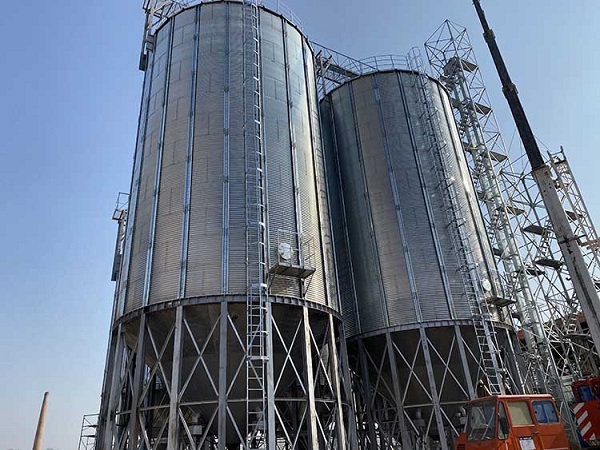
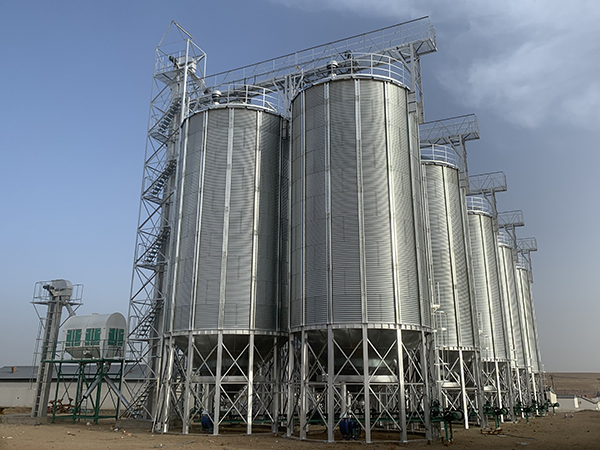
COBAN grain silos use galvanized steel panels designed for grain storage applications.
Compared with temporary bag or basic storage structures, a properly sealed steel silo provides a more controlled storage environment and makes it easier to integrate mechanical conveying, aeration and monitoring equipment.
For large-volume paddy storage, this becomes particularly important because manually inspecting bags or small storage rooms becomes increasingly difficult as capacity increases.
2. Complete aeration system
A paddy storage silo with aeration allows air to be introduced through the grain mass when cooling or moisture management is required.
The purpose is not to continuously blow air through the grain.
The aeration system should be operated according to:
- Grain temperature
- Ambient temperature
- Relative humidity
- Paddy moisture
- Storage season
- Local climate
In hot and humid regions, correct aeration management is especially important.
3. Grain temperature monitoring
COBAN can integrate temperature monitoring into the silo system so operators can observe conditions at different levels inside the grain mass.
This changes the way storage is managed.
Instead of waiting until mould, insects or hot spots become visible, the operator can identify abnormal temperature changes earlier and take action.
4. Better integration with drying equipment
For paddy storage projects, we often look at the grain dryer and silo together.
This is one of the differences between designing a single machine and designing a complete post-harvest system.
The process can be organized as:
Receiving → Cleaning → Drying → Cooling → Temporary Storage → Paddy Silo → Aeration → Monitoring → Rice Milling
The dryer removes excess moisture before storage. The silo then maintains the grain under controlled conditions.
This combination is much more reliable than asking the silo to solve a drying problem.

grain dryer and silo together
Can Paddy Be Stored for More Than One Year?
Yes, long-term paddy storage is technically possible, but it should not be described as a guaranteed “12-month” or “24-month” storage period simply because the silo has a large capacity.
The longer the storage period, the more important the following become:
- Initial moisture content
- Grain temperature
- Grain cleanliness
- Aeration performance
- Temperature monitoring
- Pest control
- Silo sealing
- Inspection frequency
- Local climate
A 2023 study of 2,569 tonnes of paddy stored in a cooled warehouse demonstrated the importance of temperature management during long-term storage; the grain was monitored over a period extending to September.
So when a customer asks us, “Can your silo store paddy for one year?”, our engineering answer is not simply “yes.”
We first ask:
At what moisture? At what temperature? In which climate? With what aeration system? How will the grain be monitored?
Those questions determine whether one year is realistic.
Paddy Storage in Hot and Humid Countries
This is particularly important for customers in Africa and Southeast Asia.
High ambient temperature and humidity can shorten the safe storage period if the paddy is not properly dried and managed. Paddy can absorb moisture from humid surroundings, while temperature fluctuations can encourage moisture migration inside the grain bulk. FAO recommends locating storage in a cool, dry environment with minimal temperature variation and emphasizes the need for drying, aeration and temperature monitoring in bulk silo storage.
For these conditions, we normally place greater emphasis on:
Drying capacity + aeration capacity + temperature monitoring + silo sealing + operating procedures
rather than simply increasing silo wall thickness or storage capacity.
Steel Silo vs. Bag Storage for Long-Term Paddy Storage
For commercial quantities, the storage structure itself makes a significant operational difference.
| Item | Steel Silo | Bag Storage |
|---|---|---|
| Bulk storage | Excellent | Limited |
| Mechanical loading/unloading | Easy to integrate | More labor intensive |
| Temperature monitoring | Can be integrated | More difficult |
| Aeration | Designed into system | Limited |
| Moisture management | Better controlled | More exposed to environment |
| Large-scale operation | Well suited | Labor intensive |
| Long-term management | More systematic | Requires frequent inspection |
FAO notes that bag storage is more suitable for short-duration storage and recommends more frequent inspection when bags are used for longer periods. For bulk silo storage, auxiliary drying, aeration, transfer and temperature-monitoring equipment should be available.
This is one reason steel grain silos for paddy storage are widely used when the storage volume and holding period increase.
The COBAN Approach: We Design for Storage Conditions, Not Just Capacity
A common approach in the silo industry is to start with a question such as:
“How many tonnes do you need?”
That is necessary, but it is not enough for paddy.
At COBAN, we prefer to start with:
Paddy type → moisture at harvest → target moisture → local climate → storage duration → silo capacity → aeration → monitoring → conveying system
For example, a 5,000-ton paddy storage project in a humid tropical region should not automatically use the same configuration as a 5,000-ton silo in a dry climate.
The capacity is the same.
The engineering requirements are not.
This is where project experience matters.
We can configure the paddy grain silo, aeration system, temperature monitoring system, conveying equipment and grain drying system around the actual operating conditions rather than selling a standard silo package and leaving the customer to solve the storage problems later.
A Practical Paddy Storage Rule
If you want one simple rule to remember, use this:
Do not ask only “How long can paddy be stored?” Ask “How long can this paddy remain within the safe moisture and temperature range?”
Under well-controlled conditions, six months is achievable with properly dried paddy, while 12-month storage can be a realistic target when moisture, temperature, aeration and monitoring are properly managed. For longer storage, the operating system must be designed accordingly.
The silo provides the structure.
The dryer controls moisture.
The aeration system controls grain temperature.
The monitoring system tells the operator what is happening inside.
And the operating procedure determines whether the system continues to perform properly.
That is the real foundation of safe long-term paddy storage.