When customers inquire about warehousing infrastructure, the most frequently asked question is: “How long can my grain be stored in silo without a decline in quality?”
The answer is not a simple number, but the result of the combined effect of biology and engineering. Today, let’s delve into the truth about the storage life of grain, the role of modern steel plate silos, and how to protect your profits through scientific management.
Please also read: How much does it cost to build a grain silo?

How long can grain be stored exactly?
Generally speaking, under ideal storage conditions, common wheat can be stored for up to five years, while the safe storage period for rice and corn is usually around two to three years.
However, these figures are not a “guarantee”, but rather a baseline for “safe storage”. In standard business operations, most operators strive to complete the rotation within 12 to 18 months to ensure the best quality of flour processing. If you store oil crops such as peanuts or soybeans, this window period will be significantly shortened – usually only about one year, because the high oil content will cause the grain to oxidize and rancidity very easily.
Types of grain silo and their impact on storage life
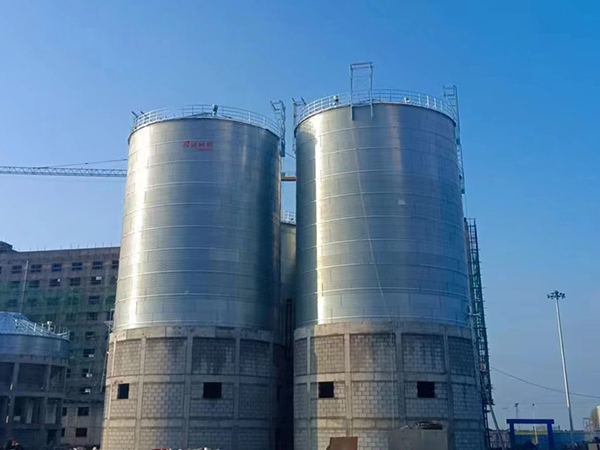
The “house” of a grain determines its lifespan. Although traditional concrete silos (concrete silos) have been the mainstay of the industry for decades, the shift to galvanized steel plate silos (whether prefabricated or welded) has changed the game.
Concrete silo
They have good thermal inertia (the temperature inside the silo is relatively stable), but they are prone to developing tiny cracks. These cracks can seep in moisture – that’s the number one killer of food spoilage.
Steel silo
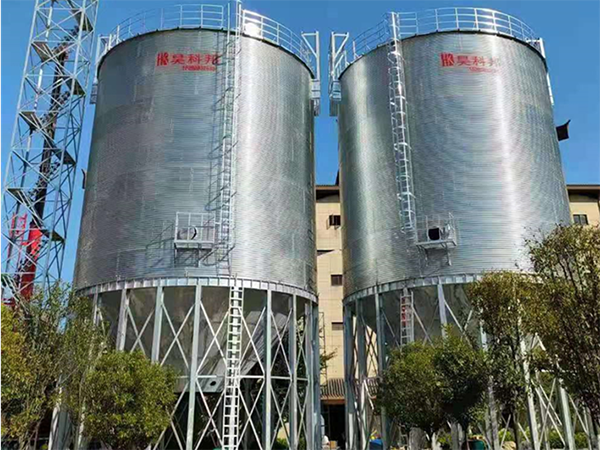
Modern steel plate silos, especially those with insulation layers and high air tightness designs, offer superior control. They are easier to install sensors and ventilation systems and are the preferred choice for long-term strategic reserves.
Bungalow warehouse
This is usually an “emergency” option. Although it has a large capacity, the lack of precise vertical ventilation and pest control measures often leads to a relatively short storage period.

The uses of stored grains: Why is quality control so crucial?
The storage duration is crucial because the final use determines the tolerance for quality decline:
For human consumption
Grains used for grinding into powder or for direct consumption have the highest requirements. Any unpleasant smell or slight discoloration caused by heat will lead to the depreciation or even scrapping of the entire batch of goods.
Growing grain
If the seeds stored are for next year, the germination rate is everything. This requires the strictest temperature control, as even a brief period of high temperature can “kill” the activity of the seeds.
Animal feed
Slightly higher tolerance, but mycotoxins (such as aflatoxin) pose a significant risk. Even if the grain seems fine, incorrect storage methods can produce toxins that are harmful to the health of livestock.
Why are steel silo the “gold standard” for modern grain storage?
If you observe the modern grain terminals nowadays, steel structures dominate. From the perspective of front-line practitioners, the reasons are as follows:
Extremely high space utilization
In regions with high land costs, vertical development of steel plate silos is the only logical choice.
Moisture-proof and rat-proof
A well-designed steel plate silo is like a fortress. Unlike wood or poorly maintained concrete, well-sealed steel plates do not “absorb” external moisture and leave no place for rodents to bite.
High degree of mechanization
They can be easily integrated with a cleaning machine, temperature-measuring cables and an automatic discharging system. This not only reduces the number of workers, but more importantly, it reduces “human errors”.
Fatal factors that shorten the lifespan of grain
If your grain has gone bad, it usually cannot escape the influence of the “biological triangle” :
Temperature
Heat acts as a catalyst. For every 5°C increase in temperature, the respiration rate of grains will significantly accelerate, leading to the formation of “hot spots”.
Moisture content
This is the core factor. When stored for a long time, the moisture content of wheat should be maintained between 12.5% and 13.5%. If the value exceeds this, it is equivalent to inviting mold to a “party”.
Oxygen content
Just as grains breathe, so do pests. In a high-oxygen environment, pests and fungi will multiply in large numbers. This is also the reason why “airtight storage” or “controlled atmosphere” storage is becoming increasingly popular in export trade.
Expert Advice: How to extend the shelf life of grains?
Over the years of cooperation in warehousing facilities, I have found that the most successful operators all follow the following three principles:
15°C rule
If you can keep the temperature of the grain pile below 15°C (low-temperature storage), you will put the grain and pests into a “dormant” state. This can extend the storage life by 1 to 2 years.
Intelligent ventilation
Do not blindly turn on the fan. An automated system should be used, and fresh air should only be introduced when the external humidity and temperature are lower than those inside the grain pile.
The “First In, First Out” (FIFO) principle
It sounds simple, but a lot of losses are caused by old grains getting stuck at the bottom of the warehouse or in dead corners. Modern conical bottom steel silos can effectively solve this problem of “dead grain”.
Core Advantage: Why Choose Kepang Steel Silo?
When choosing a grain storage partner, the details of the hardware determine the long-term return on investment. The reason why Kebang silos are highly favored in overseas markets lies in the following core value points:
Space efficiency: The circular silo structure maximizes the utilization of land area and is particularly suitable for ports and large processing plants.
Intelligent grain condition monitoring: We have integrated modern Internet of Things technology. The warehouse is filled with high-precision sensors. You can monitor the temperature and humidity of each layer of grain in real time through your mobile phone or the central control room.
Anti-corrosion and durability: Made of high-specification hot-dip galvanized steel plates, it has strong corrosion resistance and a service life of over 30 years. This means that throughout its entire life cycle, its allocated cost is much lower than that of traditional warehouses.
Green and low-carbon: In combination with Kebang’s intelligent ventilation system, it can significantly reduce the energy consumption for temperature control, which is in line with the global trend of sustainable agricultural development.
7. Conclusion: Choose the right partner
Choosing a granary is not merely about purchasing a “metal jar”, but rather investing in a biological preservation system. Choosing a low-quality grain silo with poor insulation performance or a thin galvanized layer may save you 10% of the construction cost today, but in the next five years, it may cause you to lose 30% of your grain output.
For international buyers, I always recommend paying attention to steel plate silos with high-specification air tightness monitoring systems. Being able to check the temperature of the grain pile thousands of miles away in real time through your mobile phone is not only “high-tech”, but also a defense line to ensure that every penny of your investment is safe and sound.