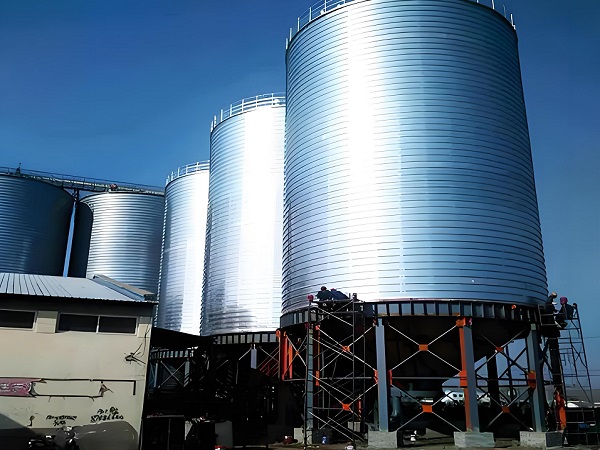
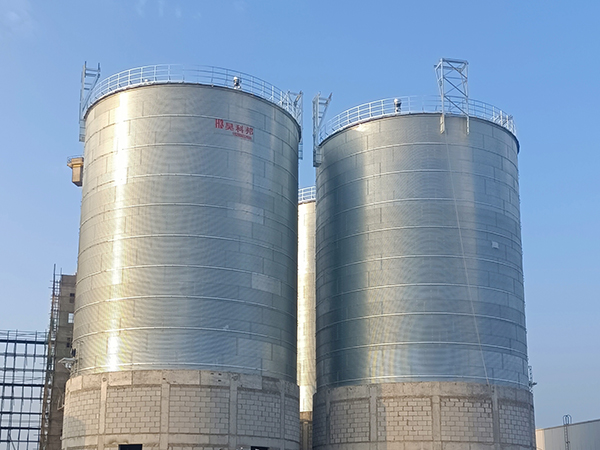
Soybean meal silo: The core facility of modern storage
In the fields of feed processing and grain and oil storage, soybean meal silo, as professional storage equipment, significantly enhance space utilization through vertical and three-dimensional design. This cylindrical storage facility made of steel or concrete, equipped with a temperature and humidity control system and an automated feeding and discharging device, can maintain the nutritional components of soybean meal for a long time and prevent mold and caking. Modern soybean meal silos usually adopt a double-layer silo wall structure, with insulation materials filled in the interlayer, effectively blocking the influence of external temperature changes on storage quality.

The three core functions of soybean meal silo
Storage with guaranteed quality
A closed environment can prevent rainwater erosion and pest infestation. When the relative humidity is maintained below 12%, the shelf life of soybean meal can be extended to 6 months
Logistics efficiency improvement
The matching screw conveyor and pneumatic conveying system can handle 50 to 200 tons of materials per hour, which is three times more efficient than the loading and unloading of traditional warehouses
Cost control
Take a standard silo with a diameter of 12 meters and a height of 24 meters as an example. Its unit volume construction cost is 40% lower than that of a flat silo, and it saves 60% of the floor space
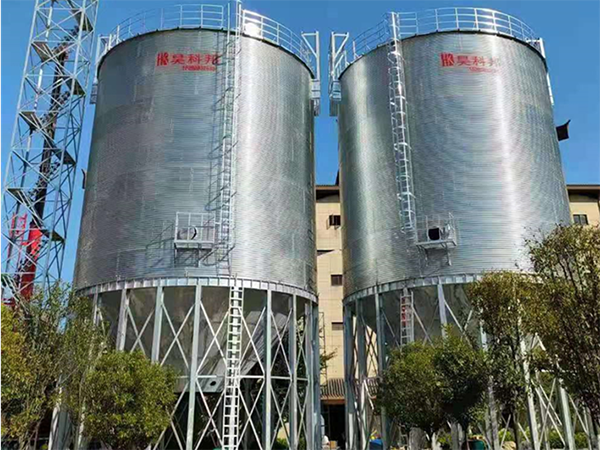
The scientific basis for the selection of construction scale
The scale configuration of soybean meal silo needs to comprehensively consider the following factors:
Raw material turnover volume
A feed mill with a daily processing capacity of 200 tons is recommended to be equipped with two 500-ton silos, while large-scale grain and oil enterprises can choose a group silo system with a capacity of over 3,000 tons
Site conditions
In the design of silo structures, the diameter of a single silo should be controlled within the range of 8 to 18 meters, and the height of the silo body is recommended not to exceed 30 meters. For the group silo layout scheme, the center distance between adjacent silos should be no less than 1.5 times the diameter of the silo. This distance requirement is mainly based on engineering considerations such as structural safety, construction convenience and usage function.
Extended requirements
The modular design of the sliding form silo supports later superimposed expansion. For every additional 6 meters in height, approximately 20% of the capacity can be added
conclusion
Industry data indicates that the mainstream capacity of soybean meal silo in China ranges from 500 to 2,000 tons. Additionally, clustered solutions consisting of 3 to 5 silos account for as much as 67% of the total. It is worth noting that an overly large capacity of a single warehouse may lead to poor discharge. It is recommended that the capacity of a single warehouse does not exceed 3,000 tons. If necessary, a larger storage capacity can be achieved through parallel connection of multiple warehouses. Professional silo design units will provide customized solutions based on the actual needs of enterprises. These solutions include wind pressure calculation and seismic load analysis.