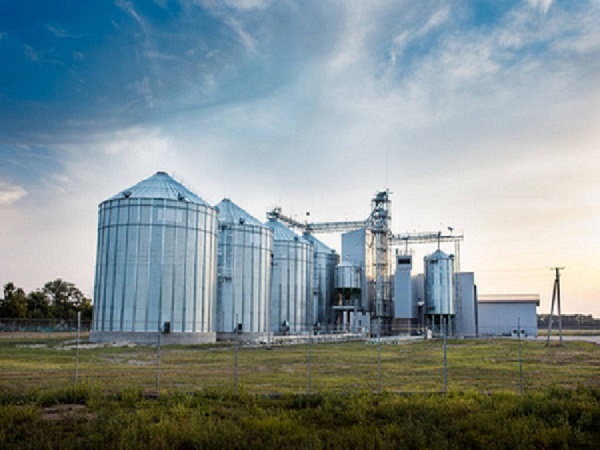
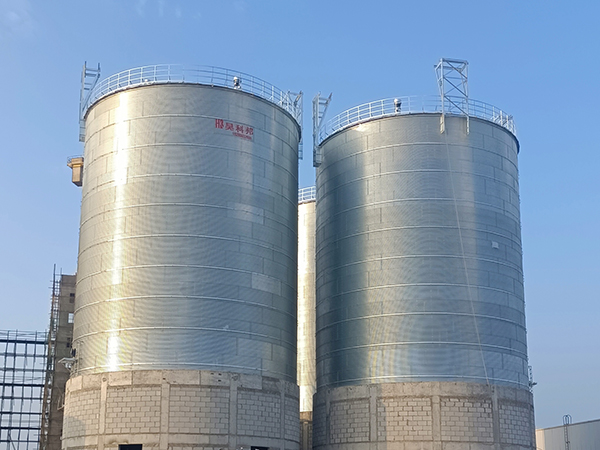
Purpose and principles of grain silo filling
The core purpose of the filling process is to achieve safe, orderly and high-density stacking of grain inside the silo, providing good conditions for later ventilation, drying, storage and warehousing operations. In this process, the following principles must be followed:
Avoid damage
Control the speed and drop of entering the silo to reduce mechanical damage to grain.
Even distribution
Prevent the formation of “funnel” or “biased tower” accumulation inside the silo, affecting ventilation and structural safety.
Reserve working space
Leave a reasonable gap for monitoring, testing, maintenance, etc.
Prevent mixed silo
Different batches and varieties of grain are strictly prohibited from being mixed and filled.
These principles are directly related to the safety of grain silos operation and the stability of grain quality.

Common filling methods and their applicable scenarios
In actual applications, there are mainly the following ways to fill grain silos. Each method has different applicable scenarios according to the silo structure, installation configuration and grain variety:
Vertical lifting + gravity drop
This is the most common filling method. The grain is lifted to the top of the silos by a bucket elevator and falls directly into the silos through a chute or distributor. Its advantages are simple structure and high efficiency. It is suitable for crops with good granularity and strong resistance to crushing, such as wheat and corn.
Pneumatic conveying filling
The pneumatic system uses compressed air to transport grain to the inside of the silos through a pipeline. This method is suitable for long-distance, multi-point sub-silo transportation, and has a low breakage rate. It is suitable for crops such as rice and beans that are sensitive to mechanical damage.
Conveyor belt + mobile chute type
Some flat-bottom silos or special structure silos will use a conveyor belt system with a movable chute to guide grain into the silos. This method is flexible to operate and can adjust the feeding position, which is conducive to the uniform accumulation of grain.
Key equipment for filling grain silo
In order to achieve an efficient and stable filling process, the following equipment plays a key role in the grain silo system:
Bucket elevator
Lifts grain from the ground to the top of the silos, with a processing capacity of up to tens of tons/hour.
Distributor
Located at the top of the silo, it is used to adjust the grain landing point to prevent excessive accumulation at a single point.
Ventilation duct and temperature control probe
They need to be laid out simultaneously during the filling process to avoid the inability to arrange after the grain is compacted.
Dust removal device
Avoid dust pollution in the working environment during the filling process and improve the safety factor.
In the actual silo construction process, it is recommended to combine the silo type and silo capacity design to customize a matching mechanical conveying system to improve overall efficiency.

Detailed explanation of the filling process: from receiving grain to entering the warehouse
A standardized grain filling process can be roughly divided into the following steps:
Grain receiving and initial cleaning
The transport vehicle transports the grain to the grain receiving platform, and removes large impurities after preliminary screening. This link can prevent foreign matter from entering the silo and affecting the subsequent storage effect.
Lifting and transportation
The cleaned grain is sent to the top of the silo by the elevator. The flow rate needs to be controlled during the transmission process to avoid impact and crushing.
Material distribution and regulation
The grain is automatically or manually adjusted to the placement position to ensure that the center distribution of the grain pile is reasonable, uniform and symmetrical, especially in large silos.
Synchronous detection
Filling also requires the deployment of temperature and humidity probes, as well as the activation of the monitoring system, to grasp the situation in the warehouse in real time, laying the foundation for subsequent management.
Final inspection
When filling is close to the top, manual intervention is required to adjust the flow direction of the last section to avoid “peak” accumulation. Some companies will use hydraulic pushers for leveling operations.
Common problems and control strategies
During the filling process of grain silo, common problems include:
Grain pile skew
Mostly caused by improper adjustment of the distributor, the direction and angle need to be adjusted in time;
Too high accumulation
If the center of the grain pile is higher than the design line of the silos, the pressure on the top of the silos may increase, and the filling ratio must be strictly controlled;
Dust explosion risk
The filling dust concentration is too high or the static electricity of the equipment accumulates, which is easy to form explosion conditions. Ventilation and grounding measures should be strengthened;
Blockage caused by excessive grain feeding
The flow rate needs to be controlled by frequency conversion speed regulation to avoid overloading of the lifting equipment.
If handled improperly, these problems may have a direct impact on the safety of the silos and the quality of grain, and in severe cases may also cause equipment failure or personal injury.
Conclusion: Filling is the first step in the operation of grain silo
As an important link in the operation and management of grain silo, filling is not only a “grain loading” process, but also a comprehensive system engineering that runs through mechanical configuration, operating skills, safety regulations and quality control. Only by rationally selecting equipment, standardizing operating procedures, and strictly monitoring details can the safety and efficiency of silos use be ensured, laying a solid foundation for long-term grain storage.
The continuous application of intelligent silos systems is driving the filling process towards automation and dataization, providing reliable technical support for modern agriculture and grain storage and transportation systems.