In modern grain handling and post-harvest management, storage method directly affects grain quality, operational efficiency, and long-term profitability. The two most common solutions—grain silos and flat warehouse storage—are widely used across different regions and project scales.
This article provides a structured engineering comparison to help you understand their differences and choose the most suitable solution for your operation.
1. System Overview
Grain Silo Storage
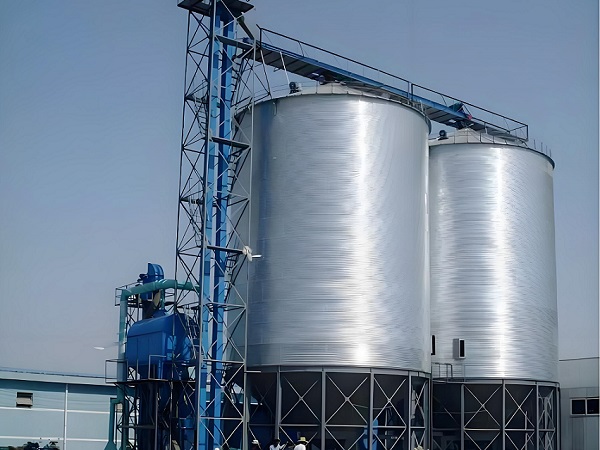
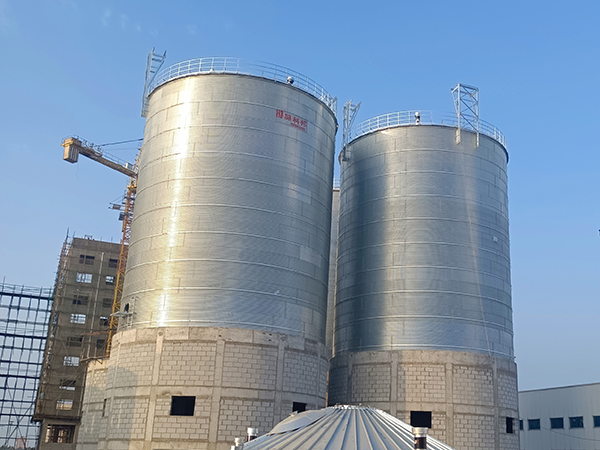
A grain silo system is a vertical, cylindrical storage structure typically made of galvanized steel or reinforced concrete. It is designed for bulk, long-term, and controlled grain storage, often integrated with aeration, temperature monitoring, and automated loading/unloading systems.
Key characteristics:
- Vertical structure (corrugated steel or concrete)
- Mechanized handling system
- Aeration and ventilation control
- High storage density and automation potential

Flat Warehouse Storage
A flat warehouse (floor storage) is a horizontal storage method where grain is stored directly on a reinforced floor inside a building or shed.
Key characteristics:
- Horizontal layout
- Simple structure (building + floor)
- Manual or semi-mechanized handling
- Limited environmental control

2. Performance Comparison Table
| Performance Factor | Grain Silo System | Flat Warehouse Storage |
|---|---|---|
| Storage Efficiency | Very high (vertical space utilization up to 90%+) | Moderate to low (large land requirement) |
| Grain Protection | Excellent (sealed, anti-insect, moisture control) | Medium (exposed to humidity and pests) |
| Automation Level | Fully automated possible | Mostly manual or semi-mechanized |
| Labor Requirement | Low | High |
| Land Usage | Minimal footprint | Large land requirement |
| Temperature Control | Built-in aeration & monitoring systems | Limited or none |
| Investment Cost | Higher initial investment | Lower initial investment |
| Long-term Operating Cost | Lower (efficient management) | Higher (labor + losses) |
| Grain Loss Rate | Very low (≤1–2%) | Higher (3–8% depending on conditions) |
| Scalability | Highly scalable (modular expansion) | Limited scalability |
| Hygiene & Quality | High (closed system) | Medium to low |
3. Key Engineering Advantages of Grain Silos
3.1 Better Grain Quality Preservation
Grain silos maintain controlled airflow and temperature, reducing:
- Mold growth
- Insect infestation
- Moisture reabsorption
This ensures higher market value and longer storage periods.
3.2 Space Optimization
Vertical design allows storage of large volumes in a small land footprint, making silos ideal for:
- Industrial zones
- Port terminals
- Export hubs
- Urban processing plants
3.3 Automation and Efficiency
Modern silo systems integrate:
- Bucket elevators
- Chain conveyors
- Automated discharge systems
- Temperature and moisture sensors
This significantly reduces labor dependency and improves operational consistency.
3.4 Lower Long-Term Cost
Although initial investment is higher, silos reduce:
- Grain loss
- Labor cost
- Fumigation frequency
- Maintenance inefficiencies
Over time, total cost of ownership is significantly lower.
4. Limitations of Each System
Grain Silos
- Higher upfront investment
- Requires technical installation and maintenance
- Needs electrical power and control systems
Flat Warehouse Storage
- Higher grain loss over time
- Vulnerable to pests, humidity, and contamination
- Labor-intensive and less efficient
- Difficult to scale for large commercial operations
5. Which Storage System Should You Choose?
Choose Grain Silos if you are:
- A commercial grain trader or exporter
- Operating large-scale storage (1000 tons and above)
- Located in regions with high humidity or pest pressure
- Focused on long-term storage and quality preservation
- Planning for automation and reduced labor dependency
👉 Ideal for: grain terminals, large farms, feed mills, export companies, government storage projects
Choose Flat Warehouse Storage if you are:
- A small-scale farmer or local aggregator
- Operating with limited budget
- Handling short-term storage (days to a few weeks)
- Located in regions with low humidity and stable climate
- Not requiring automation systems
👉 Ideal for: rural farms, seasonal storage, small trading centers
6. Final Recommendation
From an engineering and commercial perspective, grain silo systems represent the future of modern grain storage due to their superior efficiency, protection, and scalability.
However, flat warehouse storage still plays a role in low-cost, small-scale, and short-term applications.
The best choice depends on:
- Storage capacity
- Budget level
- Climate conditions
- Operational goals (manual vs automated)
Conclusion
If your goal is maximum grain protection, reduced loss, and scalable industrial storage, grain silos are the superior solution. If your priority is low initial investment and simple operation, flat warehouse storage may still be practical.
In modern grain supply chains, the transition is clear: from manual warehouses toward automated silo systems.