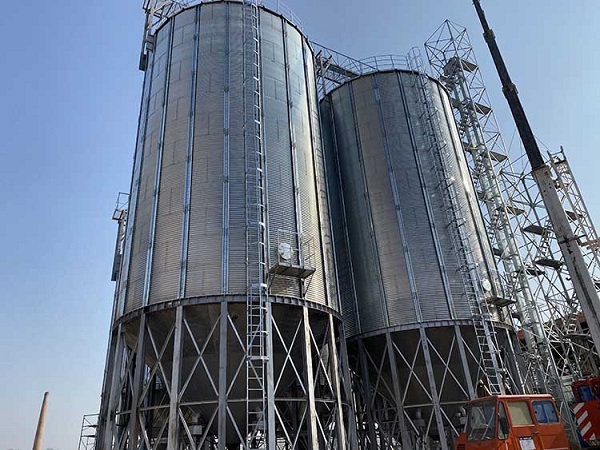
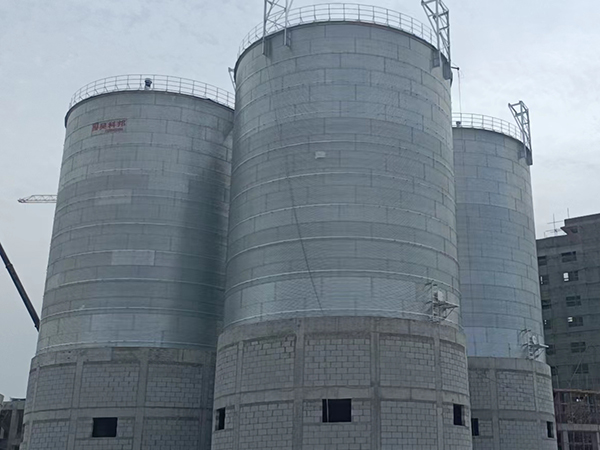
As the East African agricultural sector transitions toward large-scale industrialization, the demand for high-performance storage is no longer just about “buying a tank”—it is about integrated post-harvest engineering. Coban Silo, a leading global grain silo factory, provides Uganda’s millers, farmers, and cooperatives with specialized steel silo systems designed to survive the tropical belt while maximizing grain profitability. All Coban Silo systems comply with ISO 9001:2015 and CE international safety standards.
1. Localized Engineering: Solving the “Tropical Storage” Challenge
Uganda’s equatorial climate, characterized by high humidity (often exceeding 80% during the rainy seasons in the Lake Victoria basin), presents a significant risk of Aflatoxin contamination and spontaneous combustion in stored maize. Our factory addresses this through specific tropicalized engineering:
Galvanization Grade S350GD: We utilize hot-dip galvanized steel with a minimum coating of 275g/㎡ (Z275). This provides a 30-year corrosion barrier against Uganda’s humid environment, far exceeding the standard 180g/㎡ used by low-cost competitors.
The Lipp Advantage: Why 100% Hermetic Sealing Matters In Uganda, even a tiny bolt-hole leak can ruin a fumigation cycle. We use the Lipp double-seam process, where a specialized machine folds the steel edges five times into a permanent spiral lock. This creates a 100% gas-tight structure without a single bolt hole. For exporters, this means you can hit international phytosanitary standards every time, keeping pests out and grain quality in, no matter how long the storage period.
Thermal Insulation Options: For regions like Kasese or Gulu where temperature spikes occur, we provide dual-layered silos with rock wool insulation to maintain a stable internal “cool-grain” environment.
2. Industrial-Grade Automation: The “Smart Silo” Advantage
In 2026, a silo is only as good as its monitoring system. Coban Silo integrates high-tech automation into every Ugandan project:
- Multi-Point Thermometry: Digital temperature cables are suspended every 3 meters, detecting “hot spots” in the grain mass before spoilage occurs.
- PLC Smart Ventilation: No More Guesswork Relying on manual fans in Uganda’s changing weather is risky. Our silos use PLC-driven logic that does the thinking for you. The system monitors the Equilibrium Moisture Content (EMC) of the outside air and only triggers the centrifugal fans when conditions are perfect. This prevents you from accidentally pumping humid air into your dry grain, saving electricity and stopping mold before it starts.
- Remote Oversight: Your Silo in Your Pocket You don’t need to be on-site in Iganga or Gulu to know your grain is safe. Our mobile monitoring app gives project managers in Kampala real-time data on temperature and grain levels. If a “hot spot” is detected, you’ll get an instant alert on your phone, allowing you to take action before a minor heat spike becomes a major financial loss.

3. Commercial Logic: Wholesale Pricing & Strategic Procurement
Procuring a silo is a major capital expenditure (CAPEX). By working directly with our factory, Ugandan clients gain two major strategic advantages:
A. Factory-Direct Wholesale Structure
We offer a tiered pricing model for the Ugandan market. For cooperatives in regions like Iganga and Mbale, we provide “Silo Battery” packages (multiple 500T or 1000T units) which reduce the per-ton storage cost by up to 18% compared to single-unit retail purchases.
B. Logistics & “Last Mile” Expertise
Shipping to landlocked Uganda is complex. Our factory-managed logistics handle:
Ocean Freight: From China to Mombasa Port.
The Northern Corridor: Inland transit via Malaba or Busia borders.
Duty Optimization: We provide all necessary documentation (PVOC, Packing Lists, Certificates of Origin) to ensure smooth clearance through the Uganda Revenue Authority (URA).

4. Full-Lifecycle Engineering Service
| Stage | Process Detail | Why it Matters in Uganda |
| Site Analysis | Geotechnical soil assessment & CAD layout. | Prevents silo tilting in soft soil regions. |
| Custom Mfg | CNC precision cutting of Z275 steel plates. | Ensures 100% structural alignment on-site. |
| Logistics | Sea + Land intermodal transport. | Protects equipment from damage during long transit. |
| Installation | On-site guidance by certified engineers. | Guaranteed structural integrity and safety. |
| Training | Operation & Maintenance (O&M) workshop. | Empowers local staff to manage the automation. |

5. FAQ: Expert Insights for the Ugandan Grain Industry
Q: Why is the spiral (Lipp) silo preferred over bolted silos for Ugandan maize?
A: Maize in Uganda is often harvested with variable moisture levels. The 100% airtight seal of a spiral silo allows for more controlled “sweating” management and more effective pest fumigation than a bolted silo, which has thousands of bolt-hole leak points.
Q: What foundation work is required in Uganda?
A: Depending on the soil bearing capacity (especially in swampy areas near Jinja), we design either a flat-bottom concrete foundation or a conical hopper base. We provide the full civil engineering drawings to your local contractor.
Q: Do you help with UDB (Uganda Development Bank) loan applications?
A: Yes. We provide the comprehensive Proforma Invoices, technical specifications, and ROI projections required by financial institutions for agricultural modernization loans. Our technical dossiers have a 95% acceptance rate for bank-funded agricultural projects.
6. Conclusion: Building Uganda’s Post-Harvest Future
Coban Silo is not just a manufacturer; we are an engineering partner committed to Uganda’s food security. By combining industrial-grade Z275 steel, smart monitoring technology, and factory-direct wholesale pricing, we help you transform your grain harvest into a high-value asset.
Contact our Senior Engineer for a Site Consultation in Uganda. [Get Your 2026 Technical Quote Today]
Lead Engineer at Coban Silo, 15 years experience in Africa’s grain storage