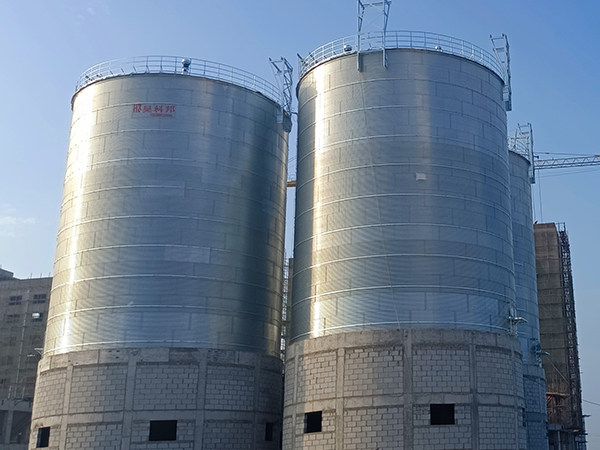
Introduction: Why Dust Control Is Critical in Modern Grain Storage
Grain storage systems are the backbone of feed mills, grain trading hubs, and agricultural supply chains. However, one of the most underestimated risks in grain silos is dust accumulation, which can lead to catastrophic explosions, operational downtime, and severe financial losses.
Fine grain dust particles—generated during handling, conveying, drying, and storage—create an explosive atmosphere when suspended in air under the right conditions. According to industrial safety statistics:
- Over 70% of grain facility explosions are linked to poor dust management
- Dust concentrations as low as 50–100 g/m³ can become explosive
- Ignition sources often include static electricity, overheated bearings, or friction
This article provides a complete, engineering-level guide to silo dust control and explosion prevention, including system design, parameters, operational strategies, equipment selection, and real-world solutions.
1. Understanding Grain Dust: Characteristics and Risks
1.1 What is Grain Dust?
Grain dust is a mixture of:
- Broken grain particles
- Husk fragments
- Mold spores
- Fine organic powder
Particle Size Distribution
| Particle Size (µm) | Description | Explosion Risk |
|---|---|---|
| >500 | Coarse particles | Low |
| 100–500 | Medium dust | Moderate |
| <100 | Fine airborne dust | High |
| <50 | Explosive dust fraction | Very High |
Key Insight: The finer the dust, the higher the explosion potential due to increased surface area.
1.2 The Dust Explosion Pentagon
For an explosion to occur, five elements must be present:
- Fuel (grain dust)
- Oxygen
- Ignition source
- Dispersion (dust cloud)
- Confinement (silo or equipment)
Removing any one of these elements prevents explosions.

2. High-Risk Areas in Grain Silo Systems
Dust is not uniformly distributed. Certain zones are significantly more dangerous:
2.1 Critical Dust Generation Points
| Location | Dust Level | Risk Level |
|---|---|---|
| Bucket elevator head | Very High | Extreme |
| Conveyor transfer points | High | High |
| Silo top inlet | High | High |
| Silo discharge hopper | Medium | Medium |
| Grain dryer exhaust | Very High | Extreme |
2.2 Hidden Danger Zones
- Inside ducts and pipelines
- Under silo floors
- Around bearings and motors
- Dead corners with poor airflow
These areas often accumulate dust layers > 3 mm, which is enough to fuel secondary explosions.
3. Silo Dust Control Systems: Engineering Solutions
3.1 Centralized Dust Collection System
A properly designed central dust collection system is the foundation of safe operation.
Key Components:
- Cyclone separator
- Pulse jet bag filter
- Induced draft fan
- Ducting network
Design Parameters
| Parameter | Recommended Value |
|---|---|
| Air velocity in ducts | 18–22 m/s |
| Filtration efficiency | ≥ 99.5% |
| Dust emission level | < 10 mg/Nm³ |
| Negative pressure | -500 to -1500 Pa |
3.2 Local Dust Extraction (Point Control)
Instead of relying only on centralized systems, install localized extraction points:
- At conveyor transfer points
- At silo inlet
- At bucket elevator heads
Benefits:
- Reduces dust at source
- Lowers system load
- Improves overall efficiency
3.3 Enclosed Conveying Systems
Open conveyors significantly increase dust dispersion.
Recommended Solutions:
- Screw conveyors (sealed)
- Enclosed belt conveyors
- Pneumatic conveying systems
3.4 Silo Ventilation and Pressure Control
Proper ventilation prevents dust accumulation and pressure build-up.
Key Features:
- Roof vents
- Pressure relief valves
- Airflow balancing
4. Explosion Prevention Technologies
4.1 Explosion Venting Systems
Explosion vents release pressure safely.
Design Parameters:
| Parameter | Value Range |
|---|---|
| Opening pressure | 0.1–0.2 bar |
| Vent efficiency | > 90% |
| Response time | < 50 ms |
4.2 Explosion Suppression Systems
Automatically detect and extinguish explosions.
Working Principle:
- Sensors detect pressure rise
- Suppressant is released
- Explosion is stopped within milliseconds
4.3 Spark Detection and Extinguishing
Installed in ducts and conveyors:
- Detects sparks using infrared sensors
- Activates water spray system
4.4 Anti-Static and Grounding Systems
Static electricity is a major ignition source.
Requirements:
- Resistance to ground < 10 ohms
- Use anti-static belts
- Proper grounding of all metal structures
5. Operational Best Practices for Silo Dust Control
5.1 Daily Maintenance Checklist
| Task | Frequency |
|---|---|
| Clean dust accumulation | Daily |
| Inspect filters | Weekly |
| Check grounding system | Monthly |
| Inspect explosion vents | Quarterly |
5.2 Safe Operating Procedures
- Avoid overfilling silos
- Control grain drop height (< 3 m recommended)
- Maintain moisture content (12–14%)
- Prevent grain spoilage
5.3 Housekeeping Standards
According to industrial safety guidelines:
- Dust layer thickness should be < 1 mm
- Immediate cleaning required if visible accumulation

grain silo safety
6. Advanced Technologies in Dust Control
6.1 Smart Monitoring Systems
- Real-time dust concentration sensors
- Temperature monitoring
- IoT-based alerts
6.2 Automation Integration
- Automatic filter cleaning
- Intelligent airflow control
- Remote monitoring dashboards
7. Why Choose COBAN Silo for Dust Control and Safety
When selecting a grain silo supplier, engineering capability and safety design are critical. COBAN silos are specifically designed with integrated dust control and explosion prevention systems.
7.1 Key Advantages of COBAN Silo
1. Integrated Dust Collection Design
- Built-in dust extraction points
- Optimized airflow layout
2. High-Precision Manufacturing
- Smooth inner wall reduces dust adhesion
- Minimizes dead zones
3. Explosion Protection Ready
- Pre-installed explosion vents
- Compatible with suppression systems
4. Advanced Sealing Technology
- Reduces dust leakage
- Improves storage hygiene
7.2 Technical Specifications (Typical COBAN Silo)
| Parameter | Value |
|---|---|
| Capacity range | 100 – 20,000 tons |
| Material | Hot-dip galvanized steel |
| Zinc coating | 275–600 g/m² |
| Wind resistance | ≤ 160 km/h |
| Sealing performance | High airtightness |
7.3 Global Experience
COBAN has successfully delivered projects in:
- Southeast Asia
- Africa
- Latin America
With extensive experience in high-dust environments, COBAN provides customized solutions for:
- Feed mills
- Grain storage terminals
- Processing plants
8. Case Study: 5,000-Ton Grain Silo with Dust Control System
Project Overview
| Item | Details |
|---|---|
| Location | Southeast Asia |
| Capacity | 5,000 tons |
| Application | Feed raw material storage |
| Dust control system | Central + local extraction |
Key Challenges
- High humidity environment
- Fine grain dust generation
- Continuous 24-hour operation
Solutions Implemented
- Installed pulse jet bag filters at key points
- Designed fully enclosed conveying system
- Added explosion vent panels
- Integrated spark detection system
Results
- Dust emission reduced by >95%
- Zero explosion incidents
- Improved operational efficiency by 20%
9. Cost Analysis of Dust Control Systems
Investment Breakdown
| System Component | Cost Ratio (%) |
|---|---|
| Dust collector | 30% |
| Ducting system | 20% |
| Explosion protection | 25% |
| Automation & sensors | 15% |
| Installation | 10% |
ROI Analysis
- Reduced maintenance costs
- Lower insurance premiums
- Increased equipment lifespan
- Improved worker safety
Payback period typically: 1–3 years
10. Common Mistakes in Silo Dust Control
- Ignoring dust at transfer points
- Undersized dust collectors
- Poor duct design
- Lack of maintenance
- No explosion protection system
11. FAQ – Grain Silo Dust Control and Explosion Prevention
Q1: What is the most dangerous dust concentration level?
Dust concentrations between 50–100 g/m³ are highly explosive.
Q2: Can dust explosions happen in small silos?
Yes. Even small silos can explode if conditions are met.
Q3: How often should dust systems be maintained?
- Daily cleaning
- Weekly inspection
- Monthly system checks
Q4: Is explosion venting enough for safety?
No. It should be combined with:
- Dust control
- Spark detection
- Suppression systems
Q5: What industries need silo dust control?
- Feed mills
- Grain storage facilities
- Flour mills
- Biomass plants
Conclusion: Safety Starts with Smart Design
Dust control and explosion prevention are not optional—they are essential investments in modern grain storage systems.
By combining:
- Advanced engineering
- Proper equipment selection
- Strict operational management
You can significantly reduce risks and improve efficiency.
Choosing a reliable supplier like COBAN ensures:
- Proven safety design
- Integrated dust control solutions
- Long-term operational stability
Call to Action
If you are planning a grain storage or feed processing project, investing in a professional silo dust control system is critical.
Contact COBAN today for a customized dust control and explosion prevention solution tailored to your project.