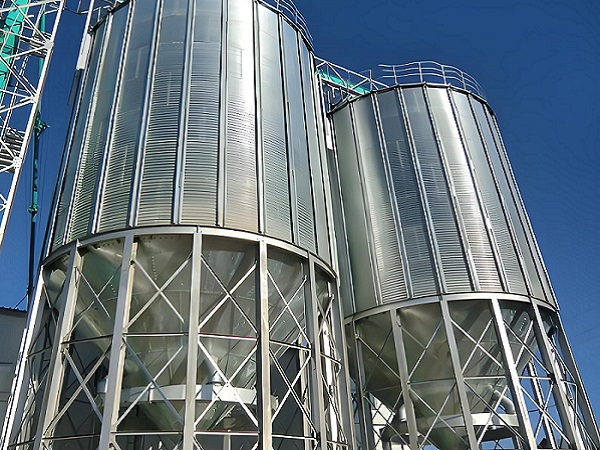
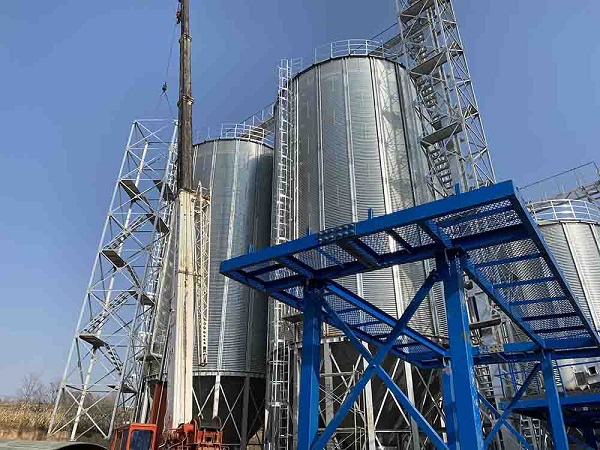
At COBAN, we believe a silo is not a “commodity” or a simple steel tank. It is a high-pressure engineering system. When a quote comes in significantly below market average, the savings aren’t magical—they are extracted from the structural integrity of the building.
This guide exposes the five hidden areas where “budget” suppliers cut corners and how those decisions affect your long-term ROI.

The Bolt & Sealing System: The “Zipper” Failure Risk
Most buyers focus on the steel plates, but the bolts are the only things holding those plates together under thousands of tons of lateral pressure.
The Budget Shortcut: Use of Grade 4.8 or 6.8 carbon steel bolts with simple zinc plating.
The COBAN Standard: We utilize Grade 8.8 High-Strength Bolts treated with Dacromet coating.
The Engineering Reality: Under the “hoop tension” of a full load, low-grade bolts can undergo creep—a slow stretching that eventually leads to a “zipper failure,” where the vertical seam rips open instantly. Furthermore, Dacromet coating offers 1,200+ hours of salt-spray resistance, whereas cheap zinc plating begins to white-rust within 12 months, compromising the seal and allowing moisture to rot your grain.
Pro Tip: Check your quote for the bolt grade. If it just says “galvanized bolts” without a numeric grade (8.8 or 10.9), it is almost certainly a low-cost, high-risk component.

Galvanization Mass: 275 g/m² is Not a “One-Size-Fits-All”
Steel is a living material that fights oxidation from day one. The thickness of the zinc layer determines when that fight is lost.
The Budget Shortcut: Quoting a standard 275 g/m² regardless of the site location.
The COBAN Standard: We match galvanization to the micro-climate. For inland, dry regions, Z275 is sufficient. However, for coastal or high-humidity tropical zones (e.g., SE Asia, parts of Africa), we mandate Z450 (450 g/m²).
The ROI Calculation: A Z275 silo in a humid environment will show red rust in 3–5 years. A Z450 silo will remain pristine for 20+ years. The cost difference is roughly 5–8%, but the lifespan is 400% longer.
Structural Stiffeners: The “Skeleton” vs. The “Skin”
Stiffeners carry the vertical load of the grain and the weight of the roof. They prevent the silo from “accidioning” or buckling.
The Budget Shortcut: Reducing the number of stiffeners or using thin-walled, cold-formed C-channels with minimal thickness. Some suppliers even “skip” stiffeners on the top rings to save weight.
The COBAN Standard: External, high-profile stiffeners with a thickness calculated against Seismic Zone requirements and Wind Loads (up to 180km/h).
The Hidden Danger: If a silo is under-stiffened, it may look fine while full. The disaster happens during unloading. If grain sticks to one side (asymmetric flow), the resulting vacuum pressure can cause an under-engineered silo to buckle inward like a crushed soda can. Explore our range of seismically reinforced grain storage silos designed for extreme weather conditions.

The “Truth Table”: A Technical Deep-Dive
| Feature | Premium Engineering (COBAN) | Budget Supplier “Red Flags” | Operational Impact |
|---|---|---|---|
| Bolt Grade | Grade 8.8 High-Strength | Grade 4.8 or 6.8 Grade | Structural “Zipper” failure risk |
| Coating | Z350 – Z450 Galvanized | Z180 – Z275 | Rust appears within 3-5 years |
| Hopper Angle | 45° to 60° (Crop Specific) | Standard 45° for everything | Grain “bridging” and mold growth |
| Steel Source | Certified S350GD | Unknown/Recycled Grade | Brittle walls under cold/pressure |
| Engineering | Site-specific Calculations | “Generic” standard design | Collapse during storms/earthquakes |
5. Aeration & Temperature: Your Insurance Against Spoilage
A silo is a “safe” for your money. If the grain spoils, the safe is useless.
The Budget Shortcut: Using low-pressure centrifugal fans that cannot “push” air through the center of a dense grain pile.
The COBAN Standard: High-pressure axial or centrifugal systems paired with Multi-point Digital Thermometry.
The Reality: If your temperature cables are spaced too far apart (to save cost), a “hot spot” can develop in the grain core undetected. By the time you smell the spoilage at the top, you have already lost $30,000+ in grain value. Proper monitoring is an investment that pays for itself in a single season.
Case Study: When a $20,000 “Discount” Backfires
A commercial miller in East Africa recently learned why the lowest bid isn’t always the best deal. In 2024, he walked away from our $130,000 proposal to sign a $110,000 contract with a budget supplier. The competitor had promised “the same specs,” but they secretly shaved costs by using undersized stiffeners and low-grade Z275 steel.
The nightmare began during the first monsoon. The Z275 bolts—already showing signs of rust—failed to maintain a tight seal. Rainwater began seeping into the grain mass through the vertical seams. To make matters worse, the undersized aeration fans weren’t powerful enough to push air through the damp core. Within weeks, the grain began to ferment and “cake” into a solid, sticky block.
The breaking point: When the mill tried to unload the silo, the caked grain stuck to one side, creating massive asymmetric pressure. Without enough external stiffeners to brace the structure, the silo wall buckled inward with a deafening metallic pop.
The owner saved $20,000 on the purchase but ended up flushing $45,000 worth of ruined grain down the drain. Add to that $22,000 for emergency structural reinforcement and two months of dead production time, and his “cheap” silo became the most expensive investment of his life.
📊 Planning Your 2026 Budget?
Avoid the “low-bid” trap by knowing the industry benchmarks. Before you sign any contract, consult our comprehensive pricing analysis:
👉 How Much Does it Cost to Build a Grain Storage Silo? (2026 Investment Guide)
FAQ: Industry Insights for Professional Buyers
Stop Guessing. Let Our Engineers Audit Your Quote.
Are you holding a quote that seems too good to be true? Don’t risk your facility on a “low-bid” gamble.
Send us your current technical proposal (redact the competitor’s name if you wish).
We will analyze the steel thickness, bolt grades, and load calculations to pinpoint hidden risks.
100% Confidential • Professional Engineering Analysis • Response within 24 Hours