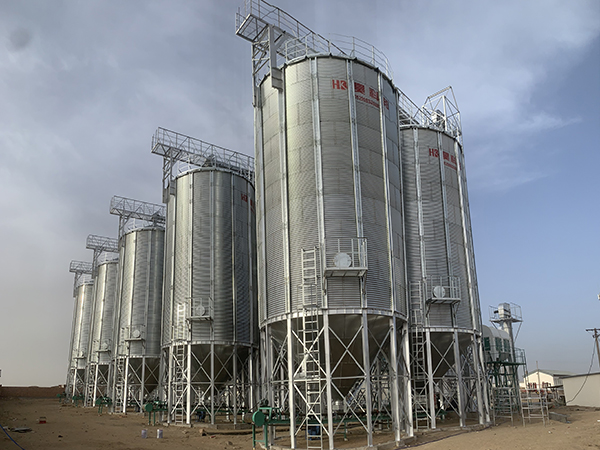
Modern grain storage is no longer just about building a steel silo. A complete grain storage project depends heavily on two core systems: the grain conveyor system and the grain handling system. These systems determine how efficiently grain moves, how safely it is stored, and how much product loss a facility experiences over time.
For grain processing plants, feed mills, rice mills, flour factories, seed plants, and commercial storage terminals, choosing the right conveying and handling solution directly affects:
- Grain quality
- Drying efficiency
- Labor costs
- Energy consumption
- Operational safety
- Long-term maintenance expenses
As a professional grain storage equipment manufacturer, COBAN provides integrated grain silo solutions that combine storage, conveying, cleaning, drying, and intelligent control systems into one efficient operating platform.
What Is a Grain Silo Conveyor System?
A grain silo conveyor system is responsible for transporting grain between different sections of a storage or processing facility. It moves materials from receiving pits to cleaning systems, dryers, silos, packaging stations, or truck loading points.
Without a reliable conveying system, even a high-quality grain silo cannot operate efficiently.
Main Functions of a Grain Conveyor System
- Receiving grain from trucks
- Elevating grain vertically
- Transporting grain horizontally
- Distributing grain into multiple silos
- Loading and unloading grain quickly
- Reducing manual handling
- Preventing grain damage and loss
Modern conveyor systems are designed for continuous operation and high-capacity grain movement while minimizing energy consumption and grain breakage.
What Is a Grain Handling System?
The grain handling system is the complete operational process used to manage grain flow inside a facility.
It includes:
- Grain intake
- Cleaning
- Conveying
- Drying
- Storage
- Aeration
- Monitoring
- Discharge
- Packaging or shipping
In simple terms:
- The conveyor system moves the grain
- The handling system manages the entire grain operation
A professional grain handling system ensures stable product quality, improves storage safety, and increases operational efficiency.
Why Conveyor and Handling Systems Are So Important
1. Improve Grain Storage Efficiency
Large grain facilities handle thousands of tons of corn, wheat, rice, soybean, or feed materials every day.
Efficient conveyor systems help operators:
- Reduce waiting time
- Increase loading speed
- Improve operational flow
- Handle seasonal harvest peaks
Poor conveying efficiency can create bottlenecks that slow down the entire production line.
2. Reduce Grain Damage and Loss
Improper grain handling often causes:
- Kernel breakage
- Dust generation
- Grain cracking
- Moisture imbalance
- Mold growth
A professionally designed system reduces drop impact and ensures smoother grain movement.
This is especially important for:
- Rice
- Seeds
- Corn
- Soybeans
- Fragile food materials
3. Maintain Grain Quality
Grain quality directly affects market value.
Efficient handling systems help maintain:
- Moisture consistency
- Cleanliness
- Temperature stability
- Ventilation quality
Integrated aeration and monitoring systems prevent spoilage during long-term storage.
4. Lower Labor Costs
Automatic conveying and handling systems reduce manual labor requirements significantly.
Benefits include:
- Fewer operators needed
- Reduced operational errors
- Lower labor costs
- Safer working environments
Modern facilities increasingly use PLC automatic control systems for centralized management.
5. Improve Facility Safety
Dust accumulation and equipment overload are major risks in grain facilities.
A properly engineered system helps reduce:
- Dust explosion risks
- Equipment overheating
- Conveyor blockages
- Structural stress
- Unsafe manual operations
Safety-focused design is critical for long-term stable operation.

Main Equipment Used in Grain Conveyor Systems
Different conveying equipment is selected based on grain type, capacity, plant layout, and transportation distance.
Bucket Elevators
Bucket elevators are used for vertical grain transportation.
Advantages
- High lifting capacity
- Small footprint
- Stable operation
- Suitable for tall silo projects
Common Applications
- Grain receiving stations
- Grain dryers
- Storage silos
- Feed mills
Common Problems
| Problem | Cause | Solution |
|---|---|---|
| Belt slipping | Incorrect tension | Adjust belt tension |
| Bucket damage | Overloading | Control feeding volume |
| Grain leakage | Worn seals | Replace sealing parts |
| Elevator blockage | Wet grain | Install cleaning systems |
Belt Conveyors
Belt conveyors transport grain horizontally over long distances.
Advantages
- Low grain damage
- Energy efficient
- Large conveying capacity
- Stable continuous operation
Common Problems
| Problem | Cause | Solution |
|---|---|---|
| Belt deviation | Misalignment | Adjust rollers |
| Belt wear | Poor maintenance | Regular inspection |
| Dust generation | Open structure | Install dust covers |
| Motor overload | Excessive feeding | Optimize grain flow |
Screw Conveyors
Screw conveyors are widely used for short-distance grain transportation.
Advantages
- Compact structure
- Flexible installation
- Good sealing performance
Common Problems
| Problem | Cause | Solution |
|---|---|---|
| Shaft wear | Continuous friction | Use wear-resistant materials |
| Material blockage | High moisture grain | Improve cleaning |
| Excessive noise | Bearing issues | Replace bearings |
Chain Conveyors
Chain conveyors are commonly used in large-capacity grain terminals.
Advantages
- High durability
- Heavy-duty performance
- Long-distance conveying capability
Common Problems
| Problem | Cause | Solution |
|---|---|---|
| Chain wear | Poor lubrication | Regular lubrication |
| Excessive vibration | Improper installation | Realign equipment |
| Low efficiency | Chain loosening | Adjust chain tension |
Main Equipment Used in Grain Handling Systems
Grain Cleaners
Grain cleaners remove:
- Dust
- Stones
- Straw
- Metal impurities
- Damaged kernels
Why It Matters
Cleaner grain improves:
- Storage safety
- Dryer efficiency
- Final product quality
Grain Dryers
Dryers reduce grain moisture to safe storage levels.
Common dryer types include:
- Batch grain dryers
- Continuous flow dryers
- Mobile grain dryers
- Rotary drum dryers
Proper drying prevents:
- Mold
- Fermentation
- Insect infestation
Aeration Systems
Aeration systems regulate airflow and temperature inside silos.
Functions
- Prevent hot spots
- Reduce condensation
- Maintain grain freshness
- Extend storage life
Temperature Monitoring Systems
Modern silos use intelligent sensors to monitor grain temperature in real time.
Benefits
- Early warning detection
- Reduced spoilage risk
- Better inventory management
PLC Automation Control Systems
Automation systems centralize equipment management.
Operators can control:
- Conveyors
- Elevators
- Dryers
- Fans
- Sensors
from one intelligent control panel.
Most Common Grain Handling Problems and Solutions
Grain Blockage
Causes
- High moisture grain
- Poor flow design
- Uneven feeding
Solutions
- Install flow control systems
- Use cleaning equipment
- Optimize hopper angles
Excessive Dust
Causes
- High-speed grain impact
- Open transfer points
- Poor ventilation
Solutions
- Install dust collection systems
- Use enclosed conveyors
- Reduce drop height
Dust control is essential for environmental compliance and worker safety.
Grain Spoilage During Storage
Causes
- High moisture
- Poor ventilation
- Temperature imbalance
Solutions
- Proper drying before storage
- Install aeration fans
- Use temperature monitoring systems
High Energy Consumption
Causes
- Inefficient motors
- Poor system layout
- Equipment overload
Solutions
- Use energy-saving motors
- Optimize conveyor routes
- Apply automatic control systems
How COBAN Provides Better Grain Conveyor and Handling Solutions
As an experienced grain storage system manufacturer in China, COBAN focuses on delivering complete, reliable, and customized grain engineering solutions.
COBAN’s Core Advantages
1. Complete Turnkey Grain Storage Solutions
COBAN provides integrated systems including:
- Grain silos
- Conveyors
- Bucket elevators
- Grain dryers
- Cleaning systems
- Steel structures
- PLC control systems
Customers receive one complete solution instead of purchasing equipment from multiple suppliers.
2. Customized Engineering Design
Different grains require different handling methods.
COBAN customizes solutions based on:
- Grain type
- Capacity requirements
- Climate conditions
- Plant layout
- Budget
- Automation level
This helps customers maximize operational efficiency.
3. Advanced Manufacturing Technology
COBAN uses:
- High-precision steel processing
- Advanced welding technology
- Galvanized corrosion-resistant materials
- Durable industrial components
This ensures long service life and stable performance.
4. Intelligent Automation Systems
Modern grain facilities increasingly require smart management systems.
COBAN provides:
- PLC intelligent control
- Real-time monitoring
- Automatic alarm systems
- Remote operation support
- Data integration
These technologies improve efficiency while reducing labor dependency.
5. Energy-Efficient System Design
COBAN focuses on lowering customer operating costs through:
- Optimized conveyor layouts
- Energy-saving motors
- Efficient airflow systems
- Intelligent automation logic
Lower energy consumption means better long-term profitability.
6. Strong International Project Experience
COBAN has experience serving customers in:
- Southeast Asia
- Africa
- South America
- Middle East
- Central Asia
Our engineering team understands different environmental and operational requirements worldwide.
What Makes COBAN Different From Other Suppliers?
Many suppliers only sell individual equipment.
COBAN focuses on the complete operational efficiency of the entire grain facility.
Customers benefit from:
| COBAN Advantage | Customer Benefit |
|---|---|
| Integrated system design | Better operational coordination |
| Customized engineering | Higher efficiency |
| Strong technical support | Faster problem solving |
| Durable equipment | Lower maintenance costs |
| Intelligent automation | Reduced labor dependence |
| Global project experience | More reliable solutions |
Future Trends in Grain Conveyor and Handling Systems
The grain industry is rapidly evolving toward:
- Intelligent automation
- Energy-saving technology
- Remote monitoring
- AI-assisted operation
- Smart storage management
- Low-damage conveying systems
Modern grain facilities are becoming more efficient, safer, and more data-driven.
Companies investing in advanced handling systems today will gain long-term competitive advantages in grain storage and processing operations.
Conclusion
The grain conveyor system and grain handling system are the operational backbone of every modern grain storage facility.
Efficient systems help businesses:
- Reduce grain loss
- Improve storage safety
- Increase automation
- Lower labor costs
- Maintain grain quality
- Improve profitability
Choosing the right equipment supplier is equally important.
With strong engineering capability, advanced manufacturing technology, intelligent automation systems, and extensive international project experience, COBAN provides customers with reliable and efficient grain storage solutions designed for long-term success.
For modern grain storage projects, investing in a professional conveyor and handling system is not just an equipment decision — it is a strategic investment in operational efficiency and future business growth.