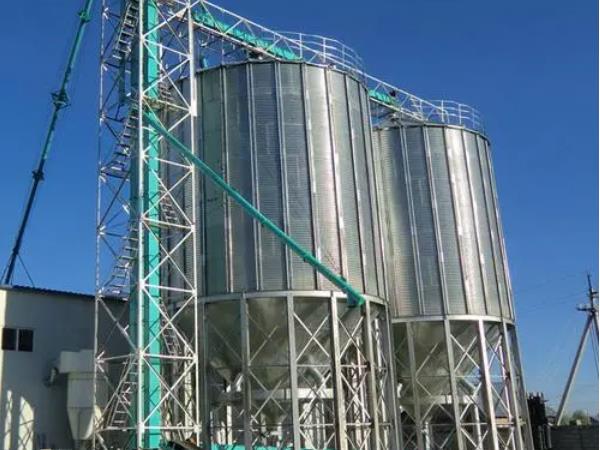
If you’re stuck choosing between a Bin and a Silo, don’t just look at the price tag. You’re choosing how much labor you’re willing to do and how much risk you can stomach. I’ve seen guys sink six figures into a setup that didn’t fit their harvest speed—it’s a nightmare you don’t want.
Let’s cut the corporate talk. We’re looking at the raw trade-offs:
Can you afford the extra labor to sweep out a flat bin?
Is your grain going to rot because you couldn’t seal the hatch for fumigation?
Are you paying for “automation” you don’t actually need?
Choosing the right structure is about more than just volume—it’s about engineering your storage for long-term ROI. If you’re ready to dig into the technical design, material specs, and capacity calculations for 2026, click here to read our complete Engineering & Selection Guide for Grain Silos.

The Reality of Grain Storage
Most guys focus on two things: capacity and the price tag. But you’re playing a long game here. If you ignore how long you’re holding the grain, how fast you need to load it, or how you’re going to stop the bugs, you’re just buying a box, not a storage system.
Whether you are looking for a grain storage setup for family farms or a high-capacity commercial solution, grain bins and silos cater to very different operational needs.
Grain Bins: The All-Rounder
Grain bins are just big, low-profile steel tubs. You see them on every farm because they aren’t a headache. Since they aren’t some giant tower, you can whip your trucks and loaders around them all day without worrying about tight turns or overhead clearance.
Why guys build them
Easy to get around: They sit low to the ground, so you can move trucks and tractors nearby without needing a huge site plan.
Faster harvest: You dump the load and get back to the field. No waiting on a slow elevator.
Versatility: Need to separate crops? Toss in a partition. Need a dry shed for the tractor in winter? Park it inside. They actually earn their keep year-round.

Grain Silos: The “Vault” for Control
Think of a Silo as a high-tech vault. You don’t buy a Silo for “flexibility”—you buy it for total control.
Where the Silo earns its keep
It’s an airtight fortress: If you’ve got a bug issue, you can seal it and fumigate properly. In a flat-bottom bin, you’re just wasting chemicals.
Go vertical: Stacking thousands of tons on a small footprint.
Push-button farming: Most modern units are rigged with sensors. You’re at the kitchen table checking the grain temp on your phone while the system moves the product for you.

Grain Bin vs Grain Silo – Quick Comparison
Still not sure where you land? Here’s a quick breakdown of how they compare in the real world:
| Decision Factor | Grain Bin (Flat-Bottom) | Grain Silo (Hopper-Bottom) |
|---|---|---|
| Structure | Low & wide | Tall & cylindrical |
| Automation | Low–medium | Medium–high |
| Land Requirement | Larger footprint | Smaller footprint |
| Pest Control | Limited fumigation | Airtight, effective fumigation |
| Ideal Use | Family farms, seasonal turnover | Large commercial storage, centralized logistics |
The real cost of the build
In markets like Australia:
Small steel silos can cost over $300 per ton, depending on equipment.
Large farm Grain Bins can cost around $200–210 per ton, thanks to scale advantages.
Other factors affecting total investment include foundation work, automation, labor, transportation, and installation. Look at lifecycle costs, not just construction costs.
Pest Control and Grain Quality
Silos: Airtight design allows effective fumigation, ideal for long-term storage.
Bins: Larger internal space and lower sealing make full fumigation harder, so they are better for short-term storage and fast turnover.

When to Choose a Grain Bin
Choose a Bin if your priorities are:
Multi-purpose flexibility
Lower investment per ton
Fast loading and unloading during harvest
Ample space for machinery
Bins work well for family farms, cooperatives, and seasonal grain operations.
When to Choose a Grain Silo
Choose a Silo if you need:
Storage longer than six months
Airtight storage and strong pest control
Limited land area
Highly automated operations
Silos are best for large commercial storage and centralized logistics.
Many farms use both: Bins for temporary harvest storage, Silos for long-term preservation.
What to look for in the steel
Modern Grain Bins and Silos use high-strength galvanized steel to withstand harsh conditions.
Silos: Focus on corrosion resistance, structural strength, and bottom cone design.
Bins: Focus on roof span, wall strength, and floor durability, as heavy machinery frequently operates inside.
FAQ: The Real Talk for Grain Storage
Honest advice on optimizing your farm’s storage strategy.
Designing Your Grain Storage System
Choosing between a Bin and a Silo isn’t a science project. It comes down to your throughput, your crops, and your time.
Send over your annual tonnage and crop types. We’ll sketch out a layout that makes sense—no fluff, just a look at what saves you time and keeps your grain in peak shape without breaking the bank.
 Text Requirements on WhatsApp
 Request Custom Layout
Professional Grain Engineering by Kebang