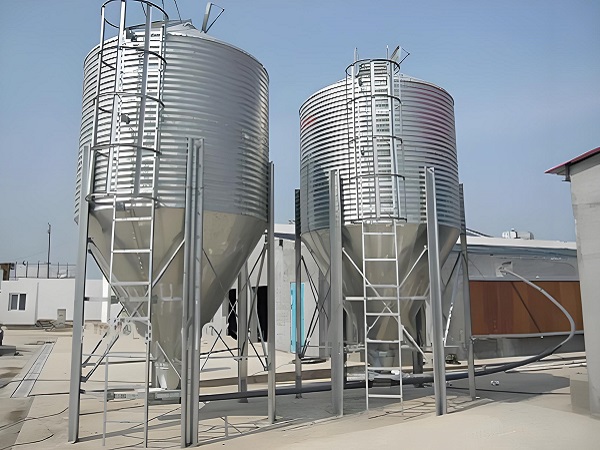
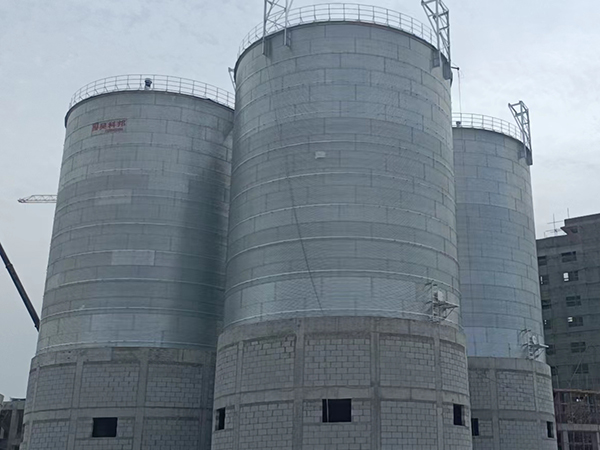
Comprehensive Analysis of the Whole Process of Feed Silo Production
Careful Material Selection Lays a Solid Foundation
Material selection is the key first step in the production of feed silo. Because the silos needs to carry feed and work in a specific environment, it is necessary to choose suitable steel. First of all, it is necessary to fully consider various loads that the silos will bear, such as the weight of the feed itself and the pressure generated by the accumulation, as well as the environmental requirements, such as whether it is in a humid environment with corrosive substances.
Usually, Q235 and Q345 steel plates are more commonly used. If the silo is in a special harsh environment, such as a high humidity and chemical corrosion risk place, then stainless steel or high-strength steel is more suitable, these materials can better resist the damage of external factors to the silo.

Scientific Design, Plan Overall Layout
After the material selection is completed, it enters the rigorous design stage. At this stage, multiple factors need to be considered comprehensively. The storage capacity of the silo is an important basis for design, which directly relates to the size and shape of the silo.
The location of the feed inlet and outlet must be carefully planned to ensure that the feed can enter and leave the silos efficiently and match the subsequent conveying process. In addition, supporting conveying equipment is also an indispensable part of the design.
For example, the width and transmission speed of the conveyor belt should be coordinated with the silo. Designers need to develop a detailed design plan and provide accurate drawings, which also need to go through strict review and repeated modification to ensure the rationality and feasibility of the design.
Fine Production Ensures Quality and Precision
The production link is the most complicated part of the whole process of feed silo production. Skilled and experienced workers are required to operate it. According to the requirements of the design drawings, steel plate cutting must be carried out first. The cutting size must be accurate, as this directly affects the subsequent assembly of parts.
Then it is the bending operation of the steel plate, which must ensure that the bending angle and arc meet the design standards. Welding work is even more important, and the quality of welding directly relates to the stability of the structure of the silo.
It must be operated by skilled welders according to strict welding process. Finally, shot blasting cleaning is also required. This process helps to remove impurities on the surface of steel plates and improve the surface quality of the silo. In the whole production process, every step must be strictly controlled. This strict control is necessary to ensure that the precision and quality meet the high standards.

Precise Installation Ensures Stable Operation
The installation of feed silo requires extremely high precision. Accurate installation position and stable support structure are required during installation. After determining the position of each component according to the drawing, further steps are required. Detailed adjustment and correction work must also be carried out.
At the same time, in the installation process, it is necessary to pay special attention to the connection with supporting equipment, such as conveying equipment, ventilation equipment, etc., as well as the connection of corresponding pipelines. The sealing and firmness of these connections are very critical. Any problem in any link may affect the overall operation effect of the silo.
Strict Acceptance Ensures Performance Standards
When all production and installation work is completed, it is necessary to carry out comprehensive acceptance and testing work. The focus is on checking whether the structure of the silos is reasonable and whether the installation is stable. The former is related to whether the silos can bear the expected load, and the latter is the basis for the safe operation of the silos. Additionally, it is important to check whether the sealing is good, as good sealing can prevent feed from getting damp, deteriorating, and causing dust leakage, and whether the running state of the silos is normal, including whether the feeding is smooth. The quality and performance of the feed silos can only be ensured through strict acceptance. And this strict acceptance must include thorough testing.
We describe the whole process of feed silo production in detail, covering material selection, design, production, installation, and final acceptance. Through this detailed description, readers can gain a more comprehensive understanding of the key processes and key points involved.