
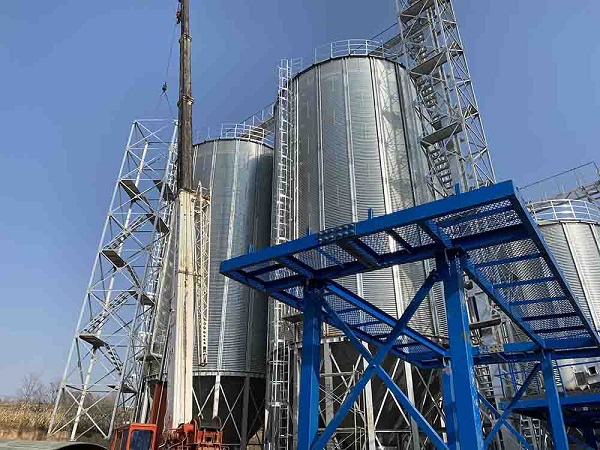
Why choose a 1,000-ton grain silo?
A 1,000-ton grain silo is suitable for medium-sized farms, large processing plants or regional storage centers, and has the following advantages:
Moderate capacity
It can meet the needs of batch storage without too long a construction period or too high an investment threshold.
Easy to manage
With automatic ventilation and temperature measurement systems, it can effectively reduce the risk of grain deterioration.
Adapt to the climate
Compared with traditional warehouses, steel structure silos are more adaptable to hot and humid climates.
In Uganda, the cost of building such a grain silo is not only “materials + construction”, but also includes transportation, tariffs, installation services, post-maintenance and other links.
Grain silo construction cost composition
Constructing a 1,000-ton grain silo usually includes the following main cost components:
| Cost Category | Description | Estimated Cost (USD) |
|---|---|---|
| Silo Equipment | Galvanized steel plates, silo body, structural components | $25,000 – $35,000 |
| Ventilation & Control Systems | Fans, ducts, sensors, control boxes | $5,000 – $8,000 |
| Civil Work | Concrete foundation, drainage, site prep | $6,000 – $10,000 |
| Installation & Commissioning | Labor, hoisting, testing | $4,000 – $6,000 |
| Shipping & Customs | International transport (e.g., from China) and clearance | $3,000 – $7,000 |
Total estimated cost:$43,000 – $66,000 USD
(approximately 1.6 million to 2.4 million Ugandan shillings)
It should be noted that if you choose to manufacture silo components locally or use second-hand equipment, the cost can be further reduced, but durability and sealing need to be strictly controlled.
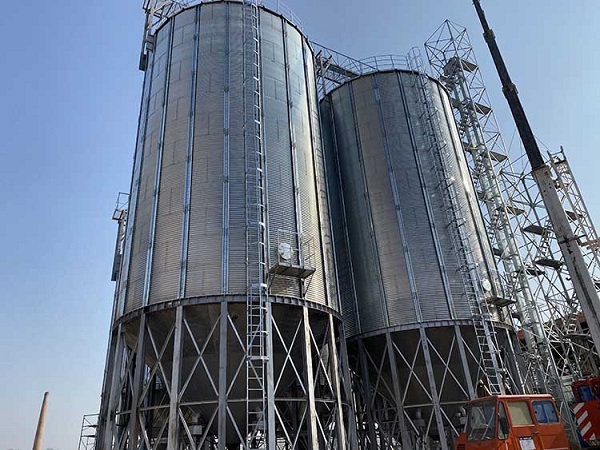
Made in China is still the mainstream choice
Most of the grain silos currently used in Uganda are mainly from Chinese manufacturers. There are three reasons:
Good cost control
Chinese silos are relatively cheap at the same quality.
Full range of specifications
All types from 100 tons to 5,000 tons can be customized.
Complete supporting facilities
From the silo body to ventilation, dust removal, lifting, and temperature measurement systems, one-stop procurement is available.
Most users contact manufacturers through B2B platforms such as Alibaba and Made-in-China to place orders, and there are also many Sino-Ukrainian joint ventures responsible for local installation and after-sales service.
Localized construction and service support
In Uganda, although the main equipment of grain silos is mostly imported, civil construction, foundation pre-embedded, power access and other links usually need to rely on local teams to complete. It is recommended that the purchaser give priority to an integrated service provider that provides installation, training and after-sales maintenance, so that it can respond quickly and reduce the risk of loss when the system fails.
Construction period and precautions
The construction period of a 1,000-ton grain silo is generally about 45 to 60 days. The main factors affecting the progress include:
Foundation construction progress
Equipment transportation and customs clearance time
Installation team technical level
Rainy season construction risk control
Before construction, the geological conditions of the site should be carefully investigated to ensure that the drainage system is unobstructed and to avoid foundation settlement caused by water accumulation during the rainy season. In addition, it is recommended to reserve an expansion interface to allow the addition of other capacity silos or supporting equipment in the future.
Investment return period and economic benefit analysis
Assuming that the current grain price in Uganda is US$280 per ton of corn, a 1,000-ton grain silo can hold grain worth about US$280,000. If calculated based on two batches of grain storage per year, the annual value of grain circulation exceeds US$500,000.
Taking the average annual grain loss reduction of 5% as an example, it is conservatively estimated that the economic loss can be reduced by about US$25,000 per year. If we consider the benefits of reduced labor input, improved grain output efficiency, and faster logistics turnover, most projects investing in grain silos can achieve cost recovery within 2 to 3 years and have high economic feasibility.
Conclusion: Rational choice, reasonable configuration
As Uganda’s grain output continues to increase, traditional grain storage methods can no longer meet the current storage and circulation needs, and the construction of modern grain storage facilities has become an industry consensus. Among the many grain storage solutions, 1,000-ton grain silos have become the preferred solution for local medium-sized grain processing companies and farmers due to their moderate construction costs, stable performance and good scalability.
In the actual construction process, owners can choose to import a complete set of equipment according to their own situation, or adopt a combination of “foreign main equipment + local construction” to reduce transportation and labor costs. At the same time, the project budget, available site and operation and maintenance capabilities should be combined to scientifically configure various system components to ensure the long-term and efficient operation of the grain silo and maximize the return on investment.


