This article will systematically introduce the definition, construction process and main technical characteristics of grain steel silo, and provide professional reference for agricultural enterprises, grain storage units and related engineering contractors.
What is a grain steel silo?
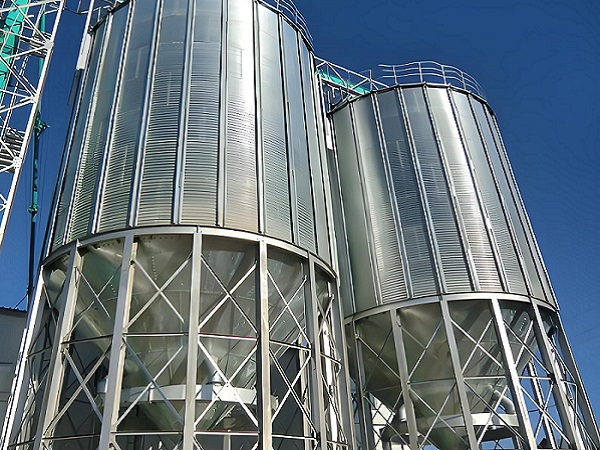
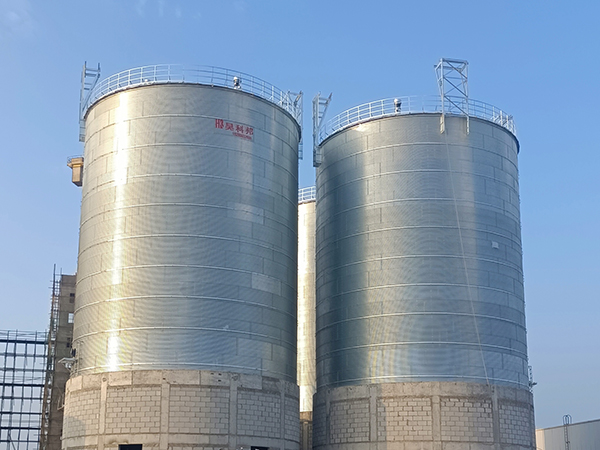
Grain steel silos are large cylindrical grain storage facilities assembled by bolts or welding with galvanized steel plates as the main building materials. Its main function is to store grain crops such as corn, wheat, soybeans, and rice safely and efficiently. It is suitable for grain storage enterprises, agricultural planting bases, and port grain distribution areas.
Compared with traditional storage methods, grain steel silos have stronger sealing and pressure resistance, can significantly reduce the risk of grain loss, and support intelligent management methods such as automated ventilation, temperature control, and measurement. It is an important manifestation of the development of modern grain storage towards intensive and intelligent development.

Grain steel silo construction process
The construction process of grain steel silo has a high degree of standardization, mainly including the following key steps:
Foundation construction
The construction of steel silo starts with foundation treatment and foundation pouring. The construction unit needs to design the corresponding circular or integral reinforced concrete foundation according to the silo capacity and geological conditions. The foundation needs to have good bearing capacity and flatness to ensure the stability of the silo installation in the later stage.
Prefabrication and transportation of silo plates
The corrugated plate of the grain steel silo adopts hot-dip galvanizing anti-corrosion technology, and punching, profiling and other processing procedures are completed in the factory prefabrication stage. Before construction, the steel plate is numbered according to the diameter and height parameters of the silo to achieve fast and accurate assembly on site, effectively improving construction efficiency.
Assemble the silo with the help of a silo lift
At the construction site, a hydraulic silo lift is used for bottom-up assembly. The construction personnel first install the first circle of silo plates on the ground, and then slowly lift the entire structure through the silo lifting equipment, install the steel plates upward circle by circle and tighten the bolts in sequence. This method reduces the risk of high-altitude operations and improves construction safety.
Roof structure installation
After the main body of the silo is assembled, the construction team needs to install the roof structure on the top, which usually includes components such as the center top cover, ventilation hood, ladder, safety fence, etc. The roof structure is generally a conical or umbrella-shaped steel structure, which has rain and wind protection performance, and a ventilation duct interface is reserved.
Auxiliary system integration
The grain steel silo also needs to install a number of auxiliary systems, such as silo conveying equipment, discharging device, temperature and humidity monitoring system, ventilation system, material level meter, etc. The integration and debugging of these systems determine the storage efficiency and automation management level.
Anti-corrosion and sealing treatment
In order to extend the service life of the grain steel silo, the bolt connection parts, welds, etc. need to be sealed with a coating after the construction is completed. At the same time, according to the environmental conditions of the project, the inner wall anti-corrosion coating or anti-condensation material can also be used to enhance the protection performance.

Main features of grain steel silo
Lightweight structure and short construction period
Grain steel silos have significant lightweight advantages over concrete silos, and their standardized module components support rapid assembly operations. The construction period of conventional silos can be controlled within 15-30 working days, which can effectively meet the storage expansion needs during the peak season of grain procurement and greatly improve the project delivery time.
High storage safety
Grain steel silos adopt a fully sealed structure design to effectively block the invasion of external moisture and pests, greatly reducing the probability of mildew in stored grain. Its cylindrical silo body is evenly distributed through hoop stress, showing excellent wind pressure resistance and seismic resistance, especially suitable for harsh climate areas such as windy and seismic areas.
Support intelligent management
The current mainstream grain steel silos integrate temperature and humidity sensors, intelligent ventilation and automatic feeding and discharging systems, support remote monitoring and parameter self-adjustment, significantly optimize grain storage efficiency, and reduce the need for manual operation.
Small footprint and strong expandability
Grain steel silos adopt a three-dimensional grain storage structure, which saves 40%-60% of land compared with flat warehouses under the same capacity conditions. It is especially suitable for ports, suburbs of cities and other areas with limited land resources. Its modular design supports height adjustment and multi-warehouse parallel connection, providing flexible expansion space for subsequent capacity expansion.
Long service life and low maintenance cost
Grain steel silos treated with hot-dip galvanizing or coating have excellent anti-corrosion performance and can be used stably for more than 20 years under normal maintenance conditions. Compared with traditional brick-concrete silos, its maintenance cost is lower and the economic benefits during its life cycle are more significant.
Conclusion
In summary, as an important infrastructure of the modern grain storage and transportation system, grain steel silos not only have the advantages of high standardization and modularization in construction technology, but also have outstanding performance in terms of performance, intelligence level and economic benefits. With the continuous advancement of agricultural modernization, grain steel silos will play a more critical role in grain circulation, agricultural product processing and national food security strategy.