
Analysis of silo cost scale differences
As an important facility for storing bulk materials, the cost of silo is significantly affected by scale. There are large differences in the construction costs of silos of different volumes and types, which mainly come from material consumption, construction technology, and supporting equipment. The following will analyze the relationship between silo cost and scale from a professional perspective.
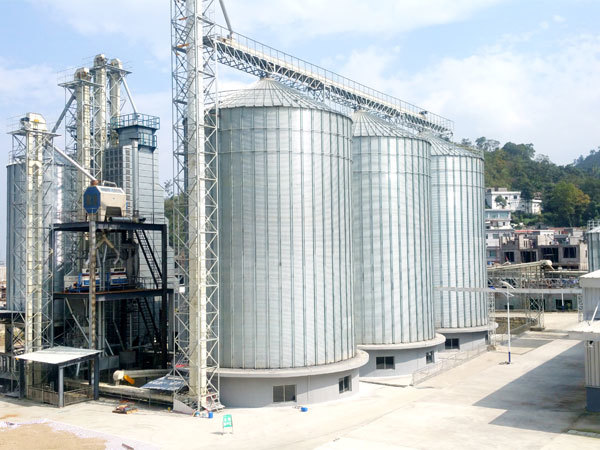
Basic relationship between silo scale and cost
In the field of silo engineering, the relationship between cost and capacity presents a typical nonlinear characteristic. Specifically:
The unit storage cost of small silos (<500 tons) is relatively high, mainly because the fixed costs such as foundation engineering and steel structure installation account for a high proportion of the total investment, which is difficult to dilute through scale effects.
The economic efficiency of medium-sized silos (500-5000 tons) has been significantly improved, and the unit cost has shown a downward trend. In this range, the proportion of fixed costs has gradually decreased, the equipment utilization rate has increased, and the scale effect has begun to be fully reflected.
Although the absolute investment amount of large silos (>5000 tons) is large, the unit storage cost can be further optimized due to the significant increase in storage capacity. This cost advantage mainly comes from: improved equipment configuration efficiency, reduced basic cost per unit area, and the intensive effect of operation and maintenance costs.
It should be noted that in actual projects, the impact of variables such as geological conditions, construction standards, and material prices on the cost must be comprehensively considered.
Key factors affecting the cost
Structural type
The cost of steel plate silos, concrete silos, and brick-concrete silos is significantly different. Steel plate silos are fast to construct but have high material costs, while concrete silos have large initial investments but low maintenance costs.
Height-to-diameter ratio
Silos with a large height-to-diameter ratio require a more robust structural design, which will increase the material consumption and construction difficulty, thereby increasing the cost.
Foundation treatment
Large silos require higher foundation bearing capacity, and the cost of foundation treatment may account for 15-25% of the total cost.
Supporting equipment
The specifications and quantity of supporting facilities such as feeding and discharging systems, dust removal devices, and temperature measurement systems will increase with the expansion of scale, but the unit cost may decrease.

Specific cost difference example
Take a grain storage project as an example:
The cost of a 1,000-ton steel silos is about 800,000-1.2 million yuan
The cost of a 5,000-ton steel silos is about 3-4 million yuan
The cost of a 10,000-ton steel silos is about 5-6 million yuan
It can be seen that the capacity increases by 10 times, and the total cost only increases by about 5-6 times, and the unit storage cost is significantly reduced.
Economic critical points of special scale
There are several key economic scale points in silo design:
Transportation restriction point: When the silos diameter exceeds a certain size (usually 12-15 meters), the steel plate needs special processing and transportation, and the cost increases sharply.
Construction technology turning point: Silos with a height of more than 30 meters require more professional construction equipment and processes.
Cluster effect point: A cluster of multiple small and medium-sized silos may be more economical than a single super-large silo.
Conclusion and suggestions
Silo construction costs do vary significantly with scale, but this difference is nonlinear. When planning a project, storage needs, site conditions, frequency of use and budget constraints should be considered comprehensively to select the optimal scale plan. Generally speaking, large silos have more cost advantages for long-term and stable storage of bulk materials; while for frequent turnover or multi-variety storage needs, a combination of small and medium-sized silos may be more suitable. Professional cost evaluation should be comprehensively analyzed in combination with specific material characteristics, geographical conditions and operational requirements.


