
However, building a silo in Thailand that is safe, reliable, and has long-term economic benefits is not a simple civil engineering project. Instead, various conditions need to be assessed one by one from early planning. From site selection, climate environment, to structural plan, grain storage technology, to construction process and post-management, every link will directly affect the service life and operating cost of the silo.

Site Selection Strategy: Terrain, transportation and power supply are fundamental conditions
When building steel silo in Thailand, site selection is usually the first hurdle that affects the subsequent return on investment.
Topography and soil quality
In some areas of Thailand, the foundation is relatively soft, especially in the low-lying areas along the Chao Phraya River. Before building a silo here, a geological survey should be conducted first. Deep foundations or reinforced foundations should be selected to prevent uneven ground settlement from causing the silo to tilt or structural damage. Since soil stabilization can add complexity to the project, understanding the timeline is crucial for seasonal planning. You can refer to our guide on the construction cycle of a 200-ton grain steel silo in Thailand to see how foundation work fits into the overall schedule.
Transportation convenience
Grain storage needs to be closely linked with the transportation system. Locations close to national highways, ports or processing plants have more advantages. They can not only reduce logistics costs but also improve the efficiency of grain turnover.
Stable power supply and drainage system
The rainy season is distinct in Thailand. Poor drainage can lead to water accumulation on the ground and corrosion of equipment. Therefore, well-developed drainage channels and a stable power supply are of vital importance to ventilation systems, detection instruments and automated equipment.
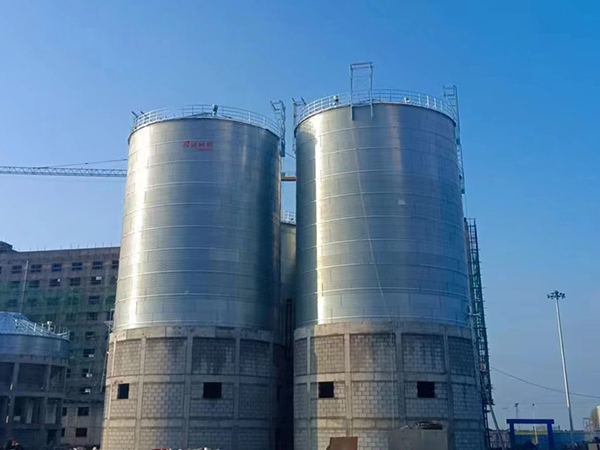
Climatic factors: The high-temperature and high-humidity environment determines the technical requirements of the storage system
Thailand has a typical tropical monsoon climate. High temperature and high humidity are the two major issues that require vigilance during grain storage.
Moisture-proof and sealing performance
In high-humidity environments, grains are prone to absorbing water and getting moldy. Therefore, the outer panels of silos need to have excellent corrosion resistance and sealing properties to prevent rainwater and moisture from entering. Aluminized zinc steel plates are usually the preferred material for building warehouses in local areas due to their more durable anti-corrosion performance. Choosing a material that can withstand 25+ years of tropical humidity is what separates a professional asset from a cheap mistake. As specialized grain storage silo manufacturers, we prioritize S350GD steel with Z350-Z450 coatings to ensure zero-rust performance in Southeast Asian climates.
Temperature control and ventilation system
High-temperature environments can enhance the respiration of grains, easily causing the temperature inside the warehouse to rise. Therefore, steel silos in the Thai region generally adopt intelligent ventilation systems to maintain air exchange and stabilize grain temperature. If the stored grains are prone to pests such as corn and soybeans, mechanical ventilation or cooling devices should also be equipped to enhance temperature and pest control.
Insect and rodent prevention design
In high-temperature environments, pests reproduce rapidly. Insect-proof nets, rodent-proof boards and sealing modules must be installed at the bottom of the silo, the feeding port and the discharging port. Periodic fumigation should also be arranged during operation.
Structural Design: Wind resistance and corrosion resistance are the two key points
As Thailand is prone to tropical storms in specific seasons, the structural design of steel silos must meet higher safety standards.
Wind resistance grade design
The silo body, roof and ladder platform must be structurally calculated based on the local maximum wind speed, and measures such as densifying columns and reinforcing ring beams should be adopted to ensure overall stability. For larger installations where structural stability is even more critical, engineering must be precisely calculated. For deeper insights into high-capacity engineering, see our investment and technical guide for 1,000-ton hopper bottom silos.
Roof bearing capacity
Due to the frequent heavy rainfall during the rainy season in Thailand, the design of the warehouse roof needs to have sufficient drainage slope and structural strength to prevent rainwater from accumulating on the roof and thus causing local collapse.
Long-term corrosion-resistant materials
High-humidity air and salt spray can accelerate the corrosion of steel. Therefore, when constructing silos, alloy coated plates, hot-dip galvanized bolts and corrosion-resistant sealants should be selected to ensure long-term use and reduce maintenance costs.
Grain Storage Process Configuration: Automation and safety are standard features of modern silo
An efficient grain steel silo is not merely a storage container, but a complete system integrating loading, inspection, ventilation and management.
Design of the feeding and discharging system
Thailand has a concentrated peak in grain production. The feeding and discharging system must be highly efficient to prevent excessive accumulation of grain in exposed environments. Belt conveyors, bucket elevators and pneumatic conveying systems are common configurations.
Intelligent monitoring system
Modern silos are usually equipped with temperature probes, humidity probes and gas concentration detectors, which can monitor the changes in grain conditions in real time. When the internal temperature abnormally rises, the system can promptly activate ventilation to prevent condensation, pest infestation or overheating accidents.
Safety and fire protection measures
Grain dust poses an explosion risk, so silo should be equipped with dust removal equipment, pressure relief valves and anti-static components. At the same time, all operating platforms and stairs should be equipped with anti-slip pedals and safety guardrails.
Construction and Acceptance Standards: Compliance and a professional team are both indispensable
In order to ensure project quality and later operational safety, the construction process must comply with international industry standards (such as ISO, EN, etc.) and be executed by an experienced team.
Precise installation quality
The splicing of steel plates, the verticality of vertical plates, and the pre-tightening force of bolts all directly affect the service life of silos. Once installed improperly, it will lead to water leakage, deformation and even structural hazards.
Full-process quality inspection
From the foundation to the completion, each stage needs to be inspected, including weld inspection, coating thickness detection, air leakage test, etc., to ensure that the silo meets the requirements for safe grain storage.
Compliance documents and usage training
After completion, structural drawings, inspection reports and user manuals should be provided, and the operators should be trained to ensure the correct operation of the equipment.
Operation and Maintenance: The Key Guarantee for Long-term Benefits
A high-quality grain steel silo cannot fully realize its true value if it lacks systematic management.
Daily inspection
This includes checking the temperature changes, the operating status of the ventilation system, the sealing performance, and the rust condition outside the warehouse.
Regular fumigation and cleaning
Under the climatic conditions in Thailand, it is recommended to conduct fumigation at least once a year to control the risk of pests. The clearance of the granary should be carried out during the period when the grain is empty, and a comprehensive inspection of the bottom discharge equipment should be conducted.
Equipment maintenance and upgrade
Ventilators, sensors and conveying equipment all need regular maintenance. If necessary, the intelligent system can be upgraded to enhance the degree of automation and operational efficiency.
Beyond engineering, the final feasibility depends on the total landed cost. To help you map out your budget, including shipping to major Thai ports like Laem Chabang, please read our analysis on purchasing costs and freight to Thailand.
Conclusion
Building a high-quality grain steel silo in Thailand is by no means merely about setting up a steel structure storage space. Climate environment, structural process, equipment configuration, safety standards and operation and maintenance all directly affect the lifespan of silos and the economic benefits of enterprises. Only by conducting comprehensive planning before construction and choosing a professional team to implement the project can the silo be ensured to operate stably for a long time in a high-temperature and high-humidity environment, reduce losses and increase the value of grain. For enterprises that hope to enhance their food supply chain capabilities in Thailand, a well-designed and well-managed steel silo is an important cornerstone for moving towards a modern agricultural system.
Comprehensive Project Reference:
Understanding these factors is the first step toward a successful investment. For a real-world application of these standards—including detailed budgeting and ROI for the most popular capacity in the region—please refer to our
2026 500-ton metal silo price and construction guide for Thailand
It provides a practical breakdown of how site selection, Z450 anti-corrosion, and automation influence the total turnkey cost.


