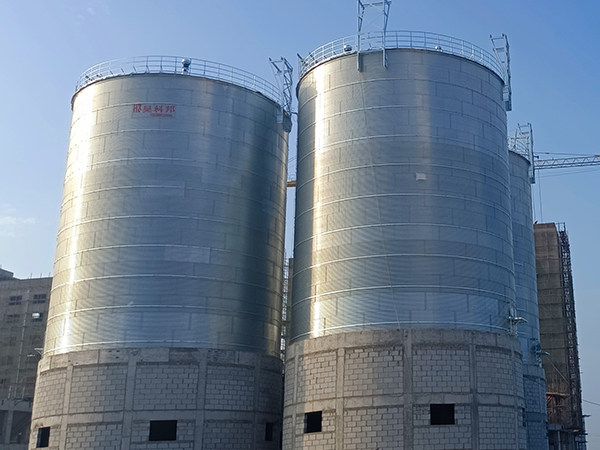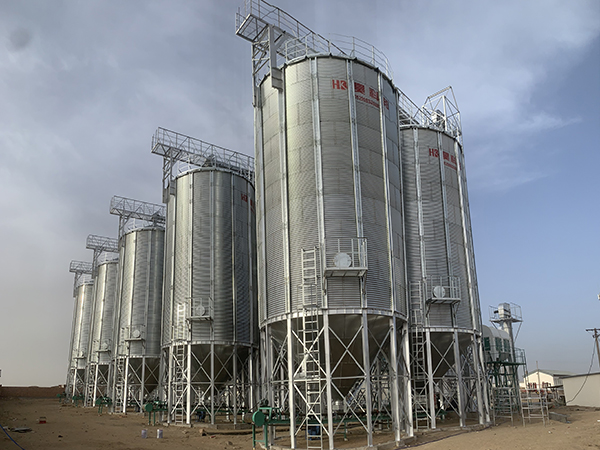
Ready for harvest: This row of bolted steel silos offers 40% faster setup than concrete alternatives, allowing this facility to hit the market season on time.
At a Glance: Steel vs. Concrete Comparison
| Storage Factor | Modern Steel Silo (COBAN) | Traditional Concrete Silo |
|---|---|---|
| Ready to Use | 2–8 weeks (Fast ROI) | 6 months to a year |
| Budget (Upfront) | 30-40% lower cost | High (Major labor/material) |
| Groundwork | Light foundation | Deep, reinforced foundation |
| Expansion | Add more bins anytime | Fixed structure; no moving |
| Smart Tech | Easy to plug in sensors | Hard to install once built |
“Before comparing materials, it’s essential to understand how these systems function. If you are new to industrial storage, check out our Engineering Guide: What is a Silo? for a full breakdown of silo types and volume calculations.”
Rapid ROI: Short Construction Period
In the grain trade, every week of delay costs you money. Steel silos are basically high-quality ‘Lego’ sets—pre-made in the shop and bolted together on your site. While a concrete crew is still waiting for the walls to cure or messing with complex frames for six months, you could already be filling a steel silo. It’s the difference between missing the harvest season and being ready to buy grain in just a few weeks.

Like high-quality ‘Lego’ for industry: These pre-fabricated steel plates are bolted together on-site, cutting construction time by months compared to pouring concrete.
Lower Total Investment (CAPEX)
Steel silos give you a much better ROI, mostly because you aren’t burying money in the ground. Because steel is so much lighter than concrete, you don’t need a massive, deep-sea foundation to hold it up. That alone can shave 30% to 50% off your civil engineering bill. You’re getting the same storage capacity without paying for thousands of tons of extra concrete just to support the weight of the structure itself.
Superior Grain Safety & Smart Technology
The real problem with concrete is that it breathes—and not in a good way. It’s porous, so over time you’re almost guaranteed to deal with hairline cracks. That’s an open door for damp air and bugs, and honestly, once pests get into those thick walls, you’ll spend a fortune trying to get them out. With steel, you get a solid, non-porous barrier right from the start. It’s a lot simpler to bolt on sensors or fans whenever you need them, and when it’s time to fumigate, you can actually get the thing sealed tight. You aren’t just holding grain; you’re keeping it from rotting, and steel just makes that job a whole lot easier.
Flexibility and Scalability
Your business today might not be the same as your business in five years.
It grows with your business One of the biggest mistakes we see is people overbuilding. With concrete, you’re stuck with whatever size you build on day one. But with steel, you don’t have to guess how big you’ll be in ten years. You can start with what you need now and just bolt on more bins as your tonnage grows.
Moving the whole setup It might sound hard to believe, but you can actually move these things. Since they’re bolted together, you can disassemble the silo and set it back up on a different site if your logistics change or you lose a lease. If you build a concrete silo in the wrong spot, it’s there forever—basically a giant, expensive monument.
Durability in Harsh Environments
There’s a common myth that steel doesn’t last, but it all comes down to the galvanization. When you’re using heavy-duty coatings like 275g/㎡ or 450g/㎡, you’re looking at a 30-year lifespan, easy. These bins just sit there and take whatever the weather throws at them—searing sun, heavy rain, you name it. Unlike concrete, which you have to baby and constantly check for structural cracks, steel is pretty much ‘set it and forget it.’ Aside from checking the seals and vents once in a while, you don’t have to worry about it. It’s built to be a workhorse, not a maintenance project.
Conclusion: Which is Right for You?
Look, if you’re building a massive government reserve meant to sit there for half a century, concrete still has its place. But for everyone else—commercial traders, flour mills, or feed plants—steel is usually the smarter move. It’s about being practical: you get your facility running faster, you keep more cash in your pocket, and you can actually use modern tech to keep your grain safe. In a business where margins are tight, the flexibility of steel just makes more sense.
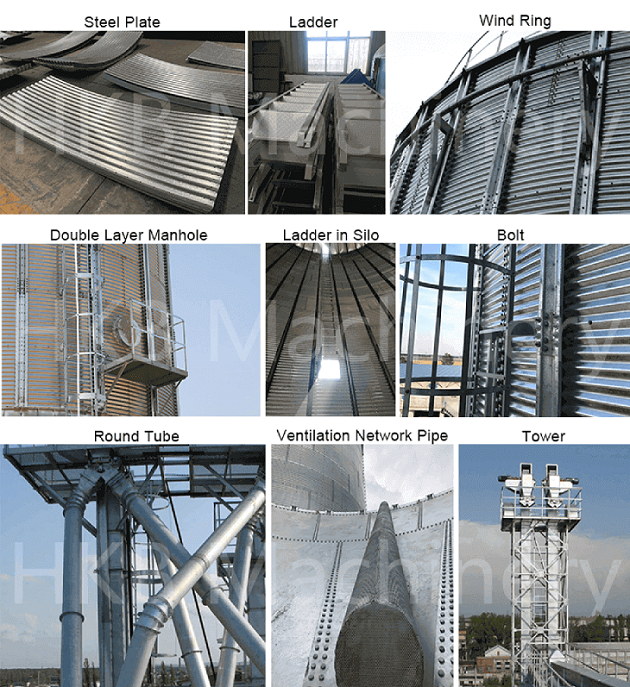
More than just a bin: Our engineering team designs the internal aeration flow and external stiffeners based on your specific grain type and local climate to prevent spoilage.
Frequently Asked Questions (FAQ)
Everything you need to know about long-term steel silo performance.
Global Project Showcases
Proven engineering excellence from Zambia to Dubai.
🇿🇲
Case 1: Zambia – Fast ROI for Local Buyers
“In Zambia, a local grain buyer needed storage that didn’t cost a fortune. We installed four 100-ton steel silos that hit the sweet spot. Unlike massive concrete builds that tie up capital for years, these bins were affordable and went up quickly. It’s the perfect example of professional storage without the ‘permanent’ price tag.”
🇮🇩
Case 2: Indonesia – Humidity Control & Automation
“In Indonesia’s humidity, we linked two 1,000-ton silos directly to a 15-ton grain dryer. Integrating this level of automation with concrete would have been a technical nightmare. With steel, we bolted everything into one seamless system, keeping grain dry from the moment it leaves the truck.”
🇦🇪
Case 3: Dubai – Defying the Desert Heat
“You might think steel would bake in the desert, but this Dubai project proves otherwise. Using high-grade galvanization, we protected the grain from extreme UV that often causes concrete to crack. This setup shows that even in the toughest conditions, steel is more reliable and easier to maintain.”