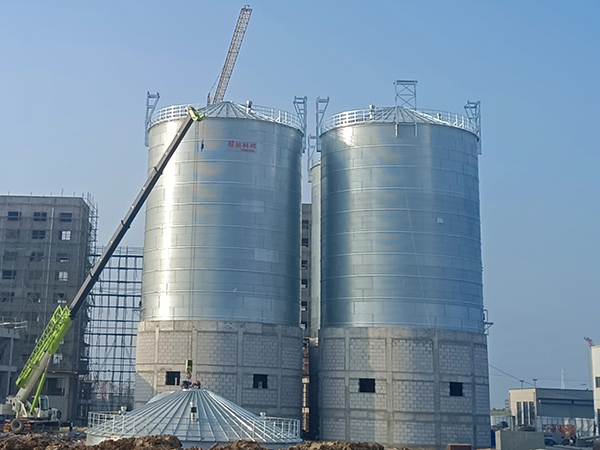
Core advantages of silo
Maximized space efficiency
The vertical design reduces the floor area by 40%-60% (taking a 100,000-ton corn silo as an example, it saves about 3,000 square meters of land compared to a flat warehouse), which is particularly suitable for areas with tight land resources.
Strong material protection
The fully enclosed structure can effectively block rainwater and pests (the damage prevention rate is increased to 99.5%), and the mildew rate can be controlled below 0.3% with the temperature and humidity control system (such as intelligent ventilation technology).
Convenient mechanized operation
The gravity flow unloading system reduces energy consumption by 30%, and realizes the automation of in and out of the warehouse with equipment such as bucket elevators, and the daily processing capacity can reach 2-3 times that of traditional warehouses.
Outstanding long-term economic benefits
Although the construction cost is high (concrete silo is about 1,200 yuan/ton capacity), the maintenance cost within a 20-year cycle is 55%-70% lower than that of a closed warehouse.

Limitations of silo
High initial investment threshold
The cost of a steel structure silo is about 800-1,500 yuan per ton, and it needs to be equipped with dust removal, temperature measurement and other systems. Small and medium-sized enterprises may face financial pressure.
Limited material adaptability
High-moisture materials (such as rice with a moisture content of >18%) are prone to compaction. Meanwhile, sticky materials (such as wet clay) may cause wall hanging, so additional vibration arch breaking devices need to be installed.
Structural risks exist
Seismic design needs to be added in earthquake zones, which increases costs by 15%-20%. Meanwhile, dust explosion risks require explosion-proof levels to meet ATEX standards.
Lack of flexibility
Single warehouses are usually dedicated to specific materials. Changing to other categories requires thorough cleaning and disinfection, and the conversion cost is high.

Technical improvement direction
New composite warehouse walls (such as fiberglass lining) can alleviate corrosion problems. Meanwhile, IoT sensor networks can achieve real-time inventory monitoring, and modular design improves expansion flexibility. The current mainstream solution recommends the use of a composite model of “steel-concrete hybrid structure + intelligent management system”.