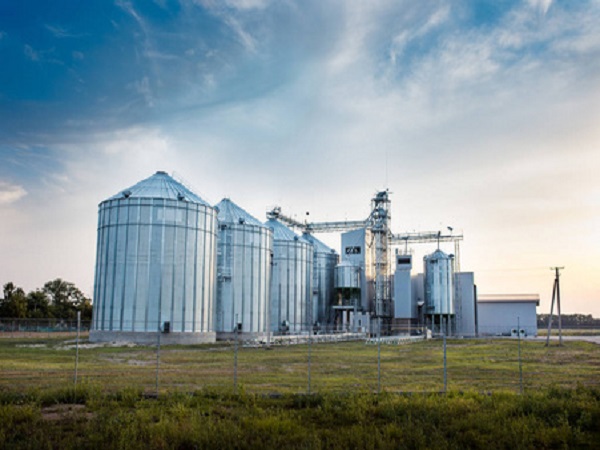
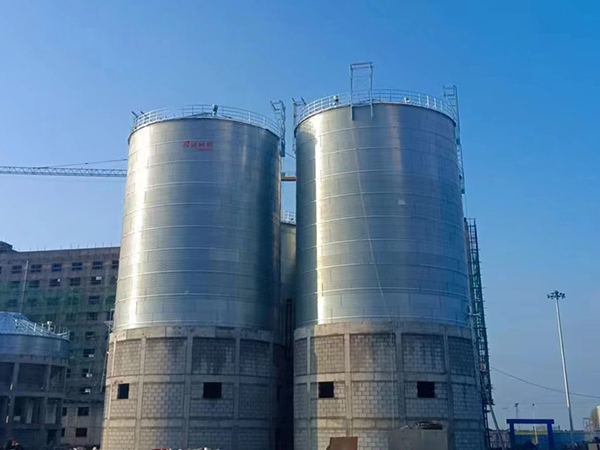
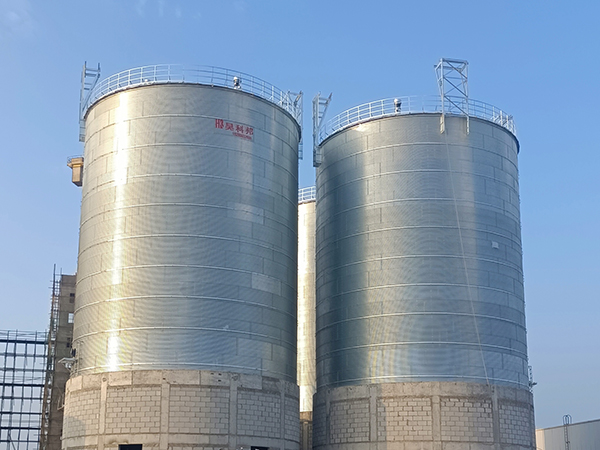
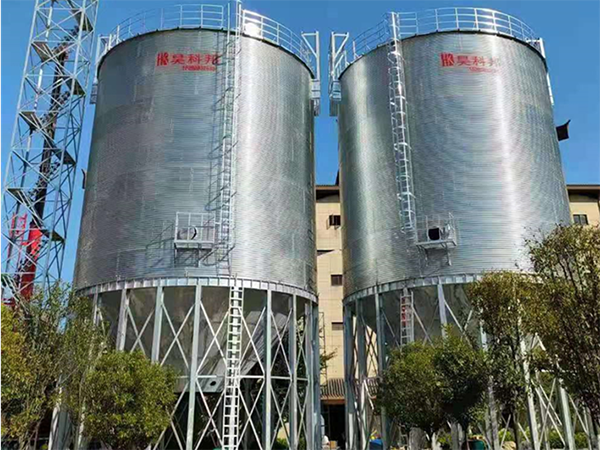
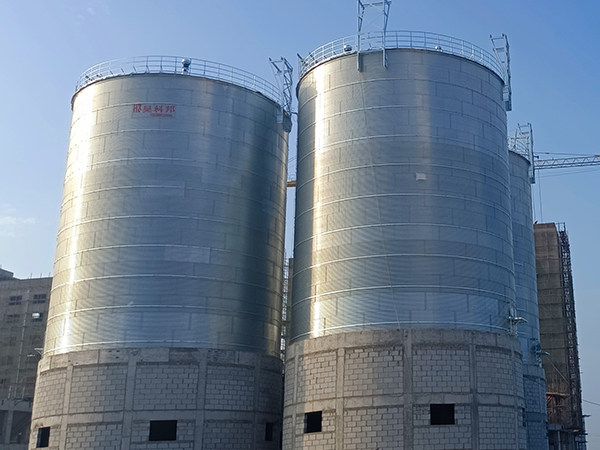
Choosing between a 500 ton grain silo and a 1000 ton grain silo is not simply a question of choosing the larger storage capacity.
The right grain silo depends on how much grain you harvest or purchase at one time, how long you plan to store it, how frequently the silo is emptied, and whether you expect your business to expand.
For a farm, grain trader, feed mill or grain storage project, choosing the wrong silo capacity can create unnecessary investment or insufficient storage space.
This guide compares 500 ton and 1000 ton grain silos from a practical engineering perspective.
500 Ton vs 1000 Ton Grain Silo: Quick Comparison
| Factor | 500 Ton Grain Silo | 1000 Ton Grain Silo |
|---|---|---|
| Nominal capacity | 500 tons | 1000 tons |
| Suitable operation | Small to medium scale | Medium to large scale |
| Typical use | Farm, small grain depot, collection point | Commercial storage, feed mill, grain trader |
| Initial investment | Lower | Higher |
| Space requirement | Lower | Higher |
| Grain turnover | Faster for smaller operations | Better for larger grain volumes |
| Expansion | Easy to add another silo | Suitable as a larger storage unit |
| Best for | 300–500 ton storage demand | 700–1000+ ton storage demand |
Important: Silo capacity should not be selected only according to the average annual grain output. The more important figure is the maximum quantity that needs to be stored at the same time.

What Does a 500 Ton Grain Silo Actually Mean?
A 500 ton grain silo is designed to hold approximately 500 metric tons of grain under the specified grain bulk density and filling conditions.
It is commonly considered for:
- Small and medium-sized farms
- Grain collection centers
- Maize storage
- Wheat storage
- Rice and paddy storage
- Grain trading businesses
- Small feed mills
- Agricultural cooperatives
For example, if a farm harvests 350–450 tons of maize during a harvest season and normally sells part of the crop shortly after harvest, a 500 ton grain silo may provide sufficient working capacity.
But there is an important point:
500 tons of storage capacity does not necessarily mean you should fill the silo to exactly 500 tons every time.
Actual usable capacity depends on grain density, moisture, grain variety, operating conditions and the silo’s design.
When Should You Choose a 500 Ton Grain Silo?
A 500 ton silo is usually more practical when your peak storage requirement is below about 500 tons.
Consider a 500 ton silo if:
1. Your harvest volume is relatively small
If you normally need to store 300–450 tons of grain at the same time, investing in a 1000 ton silo may leave a large amount of unused capacity.
2. You sell grain regularly
If grain is continuously loaded, dried, stored and sold, you may not need a very large storage buffer.
3. You are starting a grain storage business
For a startup project, a 500 ton silo can reduce the initial investment while leaving the possibility of adding another silo later.
4. Land area is limited
A smaller silo requires less space for the silo body and associated conveying equipment.
5. Your grain throughput is limited
If your dryer, cleaner or receiving system processes only a few tons per hour, installing a much larger silo may not improve the overall efficiency of the project.
When Does a 1000 Ton Grain Silo Make More Sense?
A 1000 ton grain silo becomes more attractive when your business regularly needs to store a large quantity of grain simultaneously.
It is commonly suitable for:
- Commercial grain storage facilities
- Large farms
- Grain traders
- Feed mills
- Rice mills
- Maize collection centers
- Agricultural cooperatives
- Regional grain storage projects
For example, if you normally receive 700–900 tons of maize during harvest and need to hold most of it before selling, a 500 ton silo would force you to move grain elsewhere.
In this situation, a 1000 ton grain storage silo provides a much more practical buffer.
500 Ton vs 1000 Ton: The Real Question Is Peak Storage Demand
This is one of the most important points when selecting grain silo capacity.
Do not calculate the silo only from annual production.
Instead, calculate:
Peak storage requirement = Grain entering storage − Grain sold/processed during the same period
For example:
Example A — 500 Ton Silo
A farmer produces:
- Annual maize production: 1,500 tons
- Harvested in three periods
- Maximum grain held at one time: 420 tons
- Grain sold continuously after drying
A 500 ton grain silo can be reasonable.
Example B — 1000 Ton Silo
A grain trader purchases:
- 2,500 tons during the main harvest
- 800–900 tons may arrive within a short period
- Grain is sold gradually over several months
A 500 ton silo is too small for the peak requirement.
A 1000 ton silo, or multiple silos with a combined capacity of around 1000 tons or more, would be more practical.
Should You Buy One 1000 Ton Silo or Two 500 Ton Silos?
This is another question customers often overlook.
Two 500 ton silos do not provide exactly the same operating flexibility as one 1000 ton silo.
Two smaller silos can offer several advantages:
- Store different grain varieties separately
- Separate different moisture levels
- Easier inventory management
- One silo can be emptied while the other remains in operation
- Better flexibility for future expansion
- Easier segregation of different customers’ grain
For example, a grain trader may use:
Silo 1 → Maize from Customer A
Silo 2 → Maize from Customer B
This can be more useful than putting 1000 tons into a single silo.
However, two silos normally require additional equipment, foundations, conveying connections and installation work.
Therefore, the choice should be based on the operating process, not just the total tonnage.
What About Grain Silo Height and Diameter?
Capacity is not determined by tonnage alone.
The final grain silo dimensions depend on:
- Grain bulk density
- Silo diameter
- Silo wall height
- Roof design
- Storage capacity
- Structural loading
- Wind and seismic conditions
- Local installation requirements
Different grains have different bulk densities.
For this reason, a 500 ton maize silo and a 500 ton wheat silo may not have exactly the same engineering configuration.
This is why silo manufacturers should calculate the actual dimensions based on the material rather than simply using a fixed size for every application.

1000 Ton Grain Storage Silo
500 Ton vs 1000 Ton Grain Silo: Which One Costs More?
Obviously, a 1000 ton grain silo generally requires a higher initial investment.
But the comparison should not be:
500 ton = cheap
1000 ton = expensive
The more useful comparison is cost per ton of storage.
A larger silo can sometimes provide a lower cost per ton because some structural and auxiliary costs do not increase proportionally with capacity.
However, the total project cost also includes:
- Silo body
- Foundation
- Aeration system
- Temperature monitoring
- Grain conveying equipment
- Bucket elevator
- Cleaning equipment
- Electrical system
- Installation
- Control system
Therefore, the cheapest silo is not always the lowest-cost storage solution.
Don’t Forget Grain Dryer Capacity
Your silo capacity should also match your grain drying capacity.
For example:
500 ton silo + 10 TPH dryer
may be a reasonable configuration for one project.
But if you install:
1000 ton silo + very small dryer
the silo may remain partially empty because grain cannot be dried and transferred into storage quickly enough.
For many projects, the better approach is to design the system as a complete flow:
Receiving → Cleaning → Drying → Conveying → Silo Storage → Discharge
The silo should match the capacity of the whole grain handling system.
How Many 500 Ton Silos Do You Need?
A simple calculation can give you a starting point:
Required silo capacity = Peak grain inventory × safety margin
For example:
If your maximum inventory is approximately 420 tons, a 500 ton silo may be sufficient.
If your maximum inventory reaches 750 tons, you could consider:
- 1 × 1000 ton silo, or
- 2 × 500 ton silos
If your maximum inventory reaches 1,400 tons, you could consider:
- 2 × 1000 ton silos
- 3 × 500 ton silos
- Or another combination based on grain segregation requirements
The final configuration should also consider future expansion.
500 Ton or 1000 Ton: A Practical Decision Rule
Use this simple rule when making an initial decision:
Choose a 500 Ton Grain Silo if:
- Your peak storage requirement is around 300–500 tons
- You have a smaller farm or grain collection business
- Your grain turnover is relatively fast
- Initial investment is an important consideration
- You have limited land
- You plan to expand by adding another silo later
Choose a 1000 Ton Grain Silo if:
- You regularly store 700–1,000 tons at one time
- You operate a commercial grain storage business
- You buy grain during harvest and sell it later
- Your feed mill or processing plant has higher grain consumption
- You want more storage capacity for seasonal price fluctuations
- Your receiving and drying system can support the larger volume
What Should You Tell a Grain Silo Manufacturer?
Before requesting a quotation for a 500 ton grain silo or 1000 ton grain silo, prepare these figures:
- Grain type — maize, wheat, rice, soybean, sorghum, etc.
- Maximum quantity stored at one time
- Annual grain throughput
- Harvest quantity per season
- Initial grain moisture
- Target storage moisture
- How long the grain will be stored
- Required loading capacity
- Required discharge capacity
- Whether you need future expansion
These details are much more useful than simply saying:
“I need a 500 ton silo.”
An experienced engineer can then determine whether 500 tons, 1000 tons, or several smaller silos are the better solution.
Final Recommendation
If your actual maximum storage requirement is below 500 tons, a 500 ton grain silo is generally the more economical starting point.
If your peak inventory is 700–1,000 tons, a 1000 ton grain silo is usually more practical.
If you need to store different grains, moisture levels or customer batches separately, two 500 ton silos may be better than one 1000 ton silo, even though their total capacity is the same.
From an engineering perspective, I would not select the silo based on annual production alone. Start with peak inventory, then check grain turnover, dryer capacity, conveying capacity and future expansion.
That approach gives you a grain storage system that is sized for the actual operation, rather than simply buying a larger silo because it appears safer.