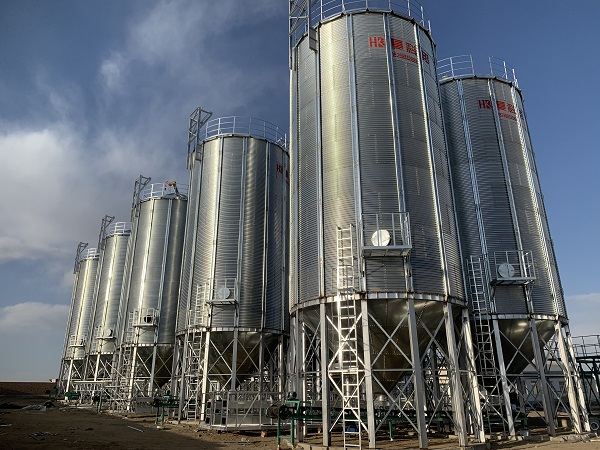
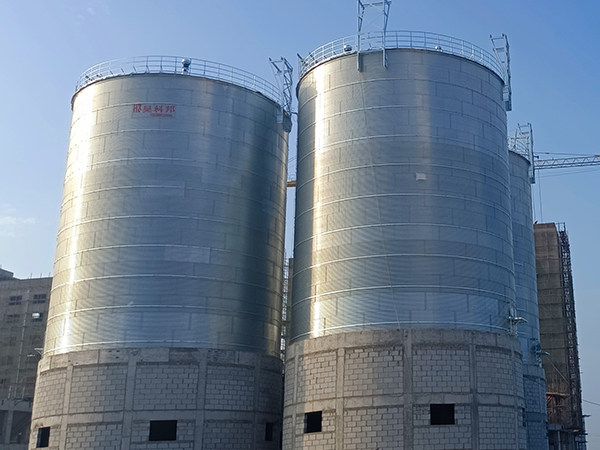
If not cleaned up in time, these residues will not only breed pests and contaminate newly stored grains, but may even cause dust explosions or structural instability. Today, based on my practical experience in the industry, I will delve into the cleaning logic of grain silo, the causes of wall sticking, and efficient maintenance plans.

Why does “wall sticking” occur in grain silo?
Many customers ask when consulting: “Why does my grain still have severe wall sticking when the moisture content is controlled within the standard?” ” In fact, the phenomenon of wall hanging is the result of the interweaving of multiple physical and chemical factors.
The “respiration” of moisture and temperature difference
Even dry grains will “breathe” in silos due to the temperature difference between day and night. Moisture evaporates and condenses back and forth between the silo walls and the gaps between the grains. Especially in humid seasons or areas with large temperature differences between day and night, a thin water film is prone to form on the inner side of the silo walls. This layer of water film acts like glue, allowing grain dust to adhere quickly.
The oil and sugar content of the grain itself
Crops such as corn and soybeans contain a certain amount of oil. Under long-term storage and compression, local pressure can cause a small amount of oil to seep out. Combined with the environmental humidity, a hard and even carbonized wall coating will eventually form on the warehouse wall.
“Natural Dead Corners” of silo Structure
Flat-bottomed silos or poorly designed conical silos often have uneven flow rates when discharging materials. The roughness of the surface of the silo wall or the protrusion of the weld seam is a high-incidence area for material deposition.
Core Process of silo Cleaning: From inspection to deep cleaning
Cleaning silos is by no means simply sweeping around with a broom; rather, it is a premeditated and step-by-step project.
The first step: Thorough pre-check and empty position assessment
Before the formal cleaning, it is necessary to ensure that the silo is as empty as possible. We usually check the distribution of residues through observation holes or infrared thermal imaging. If obvious hardening and lumps are found, heavy-duty cleaning tools need to be prepared in advance. At this point, it is necessary to simultaneously inspect whether the external structure of the silo and the ventilation ducts are blocked or damaged.
Step 2: Initial cleaning and dust control
To prevent secondary pollution and explosion risks caused by dust flying during the cleaning process, the first step is to use high-energy vacuum equipment or large brooms to remove loose residues on the surface. This step can clear the way for the subsequent “tough battle”.
Step 3: Remove the adherents on the wall specifically
This is the part that tests professionalism the most. Depending on the hardness of the hanging objects, we will adopt different strategies:
Mechanical scraping: Physical peeling is carried out using a long-rod scraper or pneumatic tools.
High-pressure air impact: For relatively loose adhesions, compressed air flow is used to shake them off.
Local vibration: Install temporary vibrators on the outer wall to assist in the detachment of the internal hanging wall.
High-pressure water gun (use with caution) : It should only be used when the water is completely emptied and conditions for rapid drying are met.
Step 4: Detailed cleaning and disinfection
Don’t overlook the ventilation openings, sensor probes and conveyor inlet. These corners are the favorite breeding grounds for insect eggs and mold. After cleaning, it is recommended to carry out necessary disinfection and sterilization treatment to ensure that the environment is in a “zero-pollution” state when new grains are stored in the warehouse.

Third, safety is the lifeline of the cleaning work
In the silo maintenance industry, safety standards come first. Since silos are typical “Confined Spaces”, improper operation is highly likely to cause accidents.
Gas detection is a prerequisite: Before entering, a multi-gas detector must be used to measure the oxygen content, carbon dioxide and possible residual phosphine.
Forced ventilation: During the cleaning process, the mechanical ventilation system must be kept on throughout to ensure air circulation.
Personnel supervision system: Internal operators must fasten safety ropes, and there must be a dedicated person outside for visual or intercom communication supervision.
No open flames: Grain dust is highly flammable and explosive. All electric tools entering the warehouse must have an explosion-proof grade.
Preventive Maintenance: How to Reduce Cleaning Frequency?
Smart business operators know that the best clean-up plan is to “minimize the frequency of clean-up as much as possible”.
Optimize the warehousing process
Ensure that the impurity content of the grain entering the warehouse is reduced to the minimum. The more impurities there are, the greater the frictional resistance of the grain during the flow process will be, and the higher the possibility of sticking to the wall will be.
Improve the performance of the warehouse wall
In some frequently used grain silo, we would recommend that customers use inner lining materials with high smoothness (such as high-molecular polyethylene lining plates) or specific food-grade anti-corrosion coatings. This can physically reduce the coefficient of friction, making the material “unable to hang even if it wants to”.
Establish a regular inspection system
Don’t wait until the discharge port is clogged to think of cleaning it. We suggest conducting a micro-inspection based on the usage frequency (such as every three months or every six months). Early detection of thin wall sticking often only requires simple vibration or small-scale cleaning to solve the problem, and the cost is much lower than that of hard scraping after large-scale caking.
Trade-off between Cost and Long-Term Value
Many enterprises will postpone the clean-up due to labor costs or time costs. However, based on our experience, the direct economic loss caused by a single grain spoilage or equipment damage due to wall sticking is often five to ten times the cost of professional cleaning.
Regular maintenance is not only about protecting facilities but also safeguarding assets. A clean, dry and well-ventilated silo environment is the fundamental guarantee for upgrading the grade of grain and selling it at a higher premium.
Conclusion
The cleaning and maintenance of grain silo is a discipline that balances physics, biology and safety management. As practitioners, we are not only “sweeping the floor”, but also extending the lifespan of facilities and safeguarding food security through scientific methods.
If you encounter serious wall sticking problems during the operation of your silo or are looking for maintenance solutions for specific materials, please feel free to communicate with us at any time.