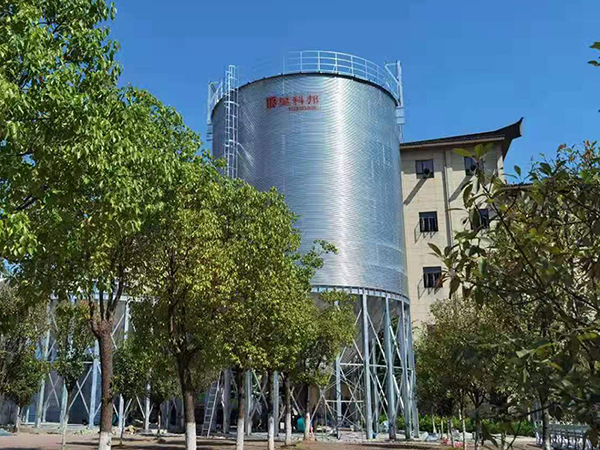
3000 Ton Paddy Steel Silo
COBAN grain silos are designed to ensure safe storage, stable ventilation, and long-term grain preservation under different climate conditions. Each silo system can be customized based on capacity, grain type, and project requirements for optimal storage performance and reliability.

3000 Ton Paddy Steel Silo
Capacity:3,000 Tons
Material:Paddy, Rice & Bulk Grains
Construction:Galvanized Corrugated Steel
Configuration:1×3000T, 2×1500T, 3×1000T or Customized
- Customized Capacity Design
- High Strength Galvanized Steel
- ISO Certified Manufacturing
- Global Installation Support
Applications
Corn Storage
Wheat Storage
Rice Storage
Soybean Storage
Feed Storage
Commercial Grain Storage
Product Details & Technical Information
A 3000 Ton Paddy Steel Silo is a large-capacity galvanized steel grain storage system designed for the safe and efficient storage of paddy after harvesting, drying and cleaning. It is widely used in rice mills, commercial grain warehouses, agricultural enterprises, grain trading companies, large farms and integrated rice processing plants.
Unlike temporary storage or traditional flat warehouses, a properly designed 3000 ton paddy storage silo combines the silo structure with aeration, temperature monitoring, grain conveying, cleaning and discharge equipment to create a controlled storage environment.
For a 3,000-ton paddy storage project, the key engineering question is not simply how to build a silo with 3,000 tons of capacity. The system should also match the paddy moisture content, bulk density, storage duration, receiving capacity, unloading capacity, local climate, available land and future expansion requirements.
3000 Ton Paddy Steel Silo at a Glance
| Item | Reference Specification |
|---|---|
| Product | 3000 Ton Paddy Steel Silo |
| Storage Capacity | 3,000 metric tons |
| Main Material | Paddy / Rough Rice |
| Silo Material | Galvanized Corrugated Steel |
| Silo Type | Flat Bottom / Hopper Bottom |
| Standard Galvanization | 275 g/m² |
| Optional Galvanization | 450 g/m² / 600 g/m² |
| Storage Management | Aeration + Temperature Monitoring |
| Grain Handling | Bucket Elevator + Belt / Chain Conveyor |
| Grain Discharge | Gravity Discharge + Screw Conveyor / Sweep Auger |
| Typical Configuration | 1 × 3,000 t / 2 × 1,500 t / 3 × 1,000 t |
| Optional Equipment | Cleaner, Dryer, Dust Collector, Fumigation System |
| Application | Rice Mills, Grain Warehouses, Farms, Grain Trading & Processing Plants |
Important: The final silo diameter, wall height, steel thickness, stiffener configuration, roof structure and concrete foundation should be engineered according to the actual paddy characteristics and local conditions, including bulk density, wind load, seismic requirements, snow load and soil bearing capacity.
What Is a 3000 Ton Paddy Steel Silo?
A 3000 Ton Paddy Steel Silo is a vertical steel storage structure designed to hold approximately 3,000 metric tons of bulk paddy under controlled storage conditions.
Here, paddy refers to harvested rice grain that still has its husk. This distinction is important because paddy has different handling, aeration and storage characteristics from brown rice or milled white rice.
A typical paddy storage process is:
Harvesting → Cleaning → Drying → Cooling → Paddy Storage → Rice Milling
The silo is therefore normally located between the grain drying/conditioning section and the rice milling section, although the exact layout depends on the customer’s process.
For a commercial rice mill, the silo becomes the buffer between seasonal paddy procurement and continuous rice processing.
Basic Structure of a 3000 Ton Paddy Steel Silo
A complete paddy steel silo consists of several structural and functional components working together as one storage system.
The main components include:
- Silo cylinder
- Reinforcing stiffeners
- Roof structure
- Foundation and support structure
- Inlet and outlet system
- Aeration system
- Temperature monitoring system
- Access ladder and platforms
- Grain conveying equipment
- Safety and dust-control equipment
Silo Cylinder
The main body of the silo is manufactured from galvanized corrugated steel plates. A 275 g/m² galvanized coating can be used as the standard configuration, while 450 g/m² and 600 g/m² options are available for projects requiring additional corrosion protection.
The corrugated wall provides structural strength while keeping the silo relatively lightweight. The smooth internal surface also helps paddy flow during loading and unloading.
For a 3,000-ton silo, wall thickness is not necessarily identical from top to bottom. Different wall sections can be engineered according to the grain pressure and structural loads at different heights.
Reinforcing Stiffeners
Large-capacity steel silos require reinforcing ribs or stiffeners to maintain structural stability.
The reinforcing ribs can be installed externally or internally depending on the engineering design. Their function is to strengthen the silo wall against:
- Vertical grain loads
- Horizontal grain pressure
- Wind loads
- Seismic loads
- Other site-specific structural loads
The stiffener base can also receive protective coating to improve long-term corrosion resistance.
For projects located in areas with strong winds or hurricanes, the silo reinforcement design becomes particularly important.
High-Strength Bolts and Sealing
The silo wall panels are connected using high-strength bolts and appropriate sealing gaskets.
The connection system needs to provide both:
- Structural strength
- Protection against moisture penetration
Properly sealed connections help reduce the possibility of rainwater entering the silo and help maintain a controlled storage environment.
Roof System
The silo roof is a structural component rather than simply a weather cover.
The roof structure uses interconnected radial ribs and reinforced panels to provide the required structural strength. Overlapping roof panels help improve weather resistance.
Depending on the project design, the roof can accommodate:
- Inspection openings
- Access platforms
- Ventilation outlets
- Temperature monitoring cables
- Roof vents
- Safety equipment
For regions with high rainfall, strong winds or heavy snow, roof design should be adapted to local environmental loads.
Wide-Flange H-Beam Support Structure
For hopper-bottom configurations, a heavy-duty steel support structure transfers the concentrated grain load from the hopper and silo body to the concrete foundation.
Wide-flange H-shaped steel beams provide the required structural strength and stability while accounting for local wind and seismic conditions.
The final support structure must be designed according to the actual silo capacity, hopper geometry and foundation conditions.
Paddy Inlet and Discharge System
Paddy can be loaded into the silo through a bucket elevator, belt conveyor, chain conveyor or other suitable grain handling equipment.
A rotary distributor can then distribute the paddy evenly into the selected silo.
For unloading, the system can use:
- Gravity discharge
- Hopper outlet
- Screw conveyor
- Chain conveyor
- Sweep auger
The discharge configuration depends largely on whether the silo is flat-bottom or hopper-bottom.

How Many Silos Are Needed for 3,000 Tons of Paddy?
A 3,000-ton storage requirement does not necessarily mean using one 3,000-ton silo.
In practical grain storage projects, dividing the total capacity into several silos can provide better inventory control and operating flexibility.
| Configuration | Total Capacity | Main Advantage | Suitable For |
|---|---|---|---|
| 1 × 3,000 t | 3,000 t | Simple layout and fewer structures | Single paddy batch |
| 2 × 1,500 t | 3,000 t | Good balance of capacity and flexibility | Medium rice mills |
| 3 × 1,000 t | 3,000 t | Better batch separation | Commercial storage |
| 4 × 750 t | 3,000 t | High operational flexibility | Multiple varieties / frequent turnover |
Why 3 × 1,000 Tons Is Often a Practical Configuration
For many commercial paddy storage projects, 3 × 1,000 Ton Paddy Steel Silos provide a good balance between investment, flexibility and inventory management.
For example:
Silo 1 → Newly received paddy
Silo 2 → Dried and conditioned paddy
Silo 3 → Paddy ready for rice milling
Multiple silos can also be used to separate:
- Different paddy varieties
- Different moisture levels
- Different harvest batches
- Different suppliers
- Different quality grades
This can be more practical than putting all 3,000 tons into one storage chamber.
However, one 3,000-ton silo may still be appropriate when the customer handles a single material and wants a simpler storage layout.
3000 Ton Paddy Storage System Layout
A complete system should be designed around the grain flow rather than the silo alone.
A typical process is:
Truck Receiving
↓
Intake Hopper
↓
Pre-Cleaning
↓
Drying / Cooling
↓
↓
Rotary Distributor
↓
3000 Ton Paddy Steel Silos
↓
Aeration + Temperature Monitoring
↓
Discharge Conveying
↓
Rice Milling / Truck Loading
A complete project may include:
- Truck receiving pit
- Intake hopper
- Pre-cleaner
- Bucket elevator
- Belt conveyor
- Chain / scraper conveyor
- Rotary distributor
- Paddy silos
- Aeration fans
- Aeration ducts
- Temperature monitoring system
- Grain level sensors
- Dust collectors
- Screw conveyors
- Sweep auger
- Control cabinet
- Electrical system
The actual equipment selection depends on the required tons-per-hour receiving and unloading capacity.
Equipment Needed for a 3000 Ton Paddy Silo
The silo is only the storage section of the system. A complete 3000 ton paddy storage system normally requires several supporting machines.
| Equipment | Function | Importance |
|---|---|---|
| Intake Hopper | Receives harvested paddy | Essential |
| Paddy Cleaner | Removes impurities | Essential |
| Bucket Elevator | Vertical conveying | Essential |
| Belt / Chain Conveyor | Horizontal conveying | Essential |
| Rotary Distributor | Distributes paddy | Recommended |
| Aeration Fan | Controls grain temperature | Essential |
| Aeration Duct | Delivers airflow through grain | Essential |
| Temperature Monitoring | Detects temperature changes | Essential |
| Level Sensor | Monitors filling level | Recommended |
| Sweep Auger | Removes residual paddy | Flat-bottom silo |
| Screw Conveyor | Transfers discharged grain | Recommended |
| Dust Collector | Controls airborne grain dust | Recommended |
| Fumigation System | Pest control | Optional |
| Grain Dryer | Reduces moisture before storage | Required when paddy is too wet |
Does Paddy Need to Be Dried Before Storage?
Yes, when the incoming paddy moisture is too high for safe storage.
A steel silo is not a substitute for grain drying. Storing excessively wet paddy can increase the risk of heating, mold growth, deterioration and quality loss.
For a rice mill receiving freshly harvested paddy, a typical process is:
Harvested Paddy → Cleaning → Drying → Cooling → Silo Storage
The dryer capacity should not be selected simply because the silo capacity is 3,000 tons.
Instead, it should be calculated according to:
- Daily paddy intake
- Harvest season duration
- Initial moisture content
- Target moisture reduction
- Required drying time
- Number of drying cycles
- Expected peak receiving volume
This is why the grain dryer and 3000-ton paddy silo should be engineered as one system when the project receives wet paddy directly from farms.
Aeration System for 3000 Ton Paddy Storage
Aeration is one of the key systems for maintaining paddy quality during storage.
The basic objective is to move suitable air through the stored grain mass to help control grain temperature and reduce the risk of localized heating and condensation.
A typical system consists of:
- Aeration fans
- Air ducts
- Perforated floor or ventilation channels
- Air outlets
- Control system
For hot and humid climates, the aeration design becomes particularly important.
The fan capacity should not be selected only according to the silo tonnage. Local temperature, humidity, paddy moisture, storage duration and silo geometry should all be considered.
Paddy Temperature Monitoring System
A 3,000-ton paddy silo should ideally be equipped with a continuous grain temperature monitoring system.
The system can include:
- Temperature sensors
- Sensor cables
- Junction boxes
- Controllers
- Monitoring software
- Alarm functions
The purpose is to identify abnormal temperature changes before they develop into larger grain quality problems.
For multiple silos, each silo can be monitored independently, allowing operators to identify which batch requires attention.
How to Store Paddy Safely in a 3000 Ton Steel Silo
The basic storage principle is:
Correct Moisture + Clean Paddy + Controlled Temperature + Aeration + Continuous Monitoring
Before Loading
Check:
- Paddy moisture
- Paddy temperature
- Foreign material content
- Silo cleanliness
- Roof and wall sealing
- Aeration system
- Temperature sensors
The silo should be clean and dry before receiving a new batch.
During Storage
Operators should:
- Monitor grain temperature
- Check for abnormal temperature increases
- Run aeration when conditions are suitable
- Monitor condensation
- Inspect the silo roof and exterior
- Maintain pest-control procedures
- Keep monitoring equipment operational
Before Unloading
The downstream conveying equipment should be ready before opening the silo discharge.
For flat-bottom silos, a sweep auger can help remove remaining paddy after the main discharge.
When changing between different varieties or batches, the silo and conveying system should also be properly cleaned to minimize cross-contamination.
Flat Bottom vs Hopper Bottom for a 3000 Ton Paddy Silo
Both configurations can be used for large-capacity paddy storage, but they serve different operating requirements.
| Feature | Flat-Bottom Silo | Hopper-Bottom Silo |
|---|---|---|
| Structural Design | Simpler | More complex |
| Foundation | Generally simpler | Requires support structure |
| Discharge | Mechanical assistance required | More gravity-assisted |
| Residual Grain | Relatively higher | Relatively lower |
| Cleaning | Sweep auger normally required | Easier |
| Investment | Generally more economical | Generally higher |
| Best Application | Long-term bulk storage | Frequent unloading |
Which Type Is Better?
If the main purpose is long-term paddy storage, a flat-bottom silo is often an economical choice.
If the customer frequently changes batches and needs faster unloading with less residual grain, a hopper-bottom configuration may be more suitable.
The correct choice should be based on the operating process, not capacity alone.
3000 Ton Paddy Steel Silo for Rice Mills
Rice mills are one of the most common applications for large paddy storage silos.
A typical rice mill storage process is:
Farmer / Truck Receiving
→ Pre-Cleaning
→ Drying
→ Cooling
→ Paddy Storage
→ Paddy Cleaning
→ Rice Milling
→ Rice Grading
→ Rice Packaging
The silo acts as an important buffer between seasonal paddy procurement and continuous rice milling.
With several silos, a rice mill can manage different batches separately instead of mixing all incoming paddy together.
3000 Ton Paddy Silo for Commercial Grain Storage
For grain traders and commercial grain warehouses, flexibility is often more important than simply achieving maximum capacity in one silo.
A configuration such as:
3 × 1,000 Ton Paddy Steel Silos
allows operators to maintain separate inventories.
For example:
- Silo 1: Grade A paddy
- Silo 2: Grade B paddy
- Silo 3: New harvest paddy
The actual allocation can be changed according to purchasing and processing requirements.
3000 Ton Paddy Storage for Large Farms
Large farms may use a 3,000-ton paddy storage system to reduce dependence on temporary storage after harvest.
The main priorities are usually:
- Reliable storage
- Simple operation
- Low manual labor
- Proper moisture management
- Reasonable investment
- Easy grain loading and unloading
For a farm with strong seasonal production, the dryer and silo should be sized according to peak harvest conditions rather than average annual production.
3000 Ton Paddy Silo for Ports and Grain Terminals
Port and grain terminal applications require much higher grain handling rates than many farm or rice mill projects.
In these cases, silo capacity is only one part of the engineering calculation.
The following equipment may need to be sized for high throughput:
- Truck receiving system
- Intake pit
- Bucket elevators
- Belt conveyors
- Chain conveyors
- Rotary distributors
- Dust collectors
- Ship loading / unloading equipment
For example, a 3,000-ton silo can store the required quantity, but if the receiving system is undersized, the silo will still become a bottleneck during peak harvest or truck arrival periods.
Why Use a Steel Silo for Paddy Storage?
Better Storage Environment
A properly designed steel silo provides a controlled storage environment and works together with aeration and monitoring systems to help maintain stable grain conditions.
Reduced Storage Losses
Controlling moisture, temperature, insects and condensation helps reduce the risk of grain deterioration during storage.
Higher Land Utilization
Vertical storage makes better use of available land than low-density temporary storage methods.
Easier Automated Handling
Steel silos can be integrated with elevators, conveyors, cleaning machines, dryers and automated monitoring systems.
Suitable for Large-Capacity Storage
A modular steel silo system can be configured from several smaller silos to a large commercial storage facility.
Better Inventory Management
Multiple silos make it easier to separate different paddy varieties, grades, suppliers and harvest batches.
Why Choose Galvanized Steel for a Paddy Silo?
Galvanized steel provides a practical combination of structural strength, corrosion resistance, service life and construction efficiency.
COBAN silo systems can use:
- 275 g/m² galvanized coating as the standard configuration
- 450 g/m² galvanized coating for higher corrosion protection requirements
- 600 g/m² galvanized coating for demanding environmental conditions
For projects in tropical, humid or coastal environments, corrosion protection should be considered during the initial design.
The correct galvanization level should be selected according to local environmental conditions and project requirements.

What Determines the Cost of a 3000 Ton Paddy Steel Silo?
The price of a 3,000-ton paddy silo cannot be determined by storage capacity alone.
Major cost factors include:
| Cost Factor | Influence on Project |
|---|---|
| Number of Silos | More silos require more structures and connections |
| Silo Diameter | Affects steel consumption and foundation |
| Wall Thickness | Depends on structural loads |
| Galvanization | Higher coating levels increase corrosion protection |
| Bottom Type | Hopper-bottom systems require additional support |
| Aeration | Depends on silo size and climate |
| Temperature Monitoring | Depends on monitoring requirements |
| Conveying Capacity | Higher tph requires larger equipment |
| Grain Cleaning | Depends on required cleaning performance |
| Grain Dryer | Required when incoming paddy is too wet |
| Dust Collection | Depends on grain handling points |
| Foundation | Depends heavily on soil conditions |
| Installation | Depends on project location and site conditions |
Therefore, a reliable quotation should be based on the complete project configuration, not simply “3,000 tons”.
Engineering Information Required Before Ordering
Before manufacturing a 3000 Ton Paddy Steel Silo, the following information should ideally be confirmed:
| Project Information | Why It Matters |
|---|---|
| Paddy Type | Determines material characteristics |
| Initial Moisture | Determines drying requirements |
| Bulk Density | Affects storage volume and structural load |
| Storage Duration | Influences aeration and monitoring |
| Local Temperature | Affects aeration design |
| Humidity / Rainfall | Influences corrosion and condensation control |
| Wind Speed | Determines structural design |
| Seismic Conditions | Determines reinforcement requirements |
| Snow Load | Influences roof design |
| Soil Bearing Capacity | Determines foundation design |
| Receiving Capacity | Determines intake and conveyor capacity |
| Unloading Capacity | Determines discharge system |
| Available Land | Determines silo arrangement |
| Future Expansion | Influences overall site layout |
These details allow the silo and supporting equipment to be engineered around the customer’s actual operating conditions.
3000 Ton Paddy Steel Silo Project Solution
For a complete project, we recommend designing the material flow first and the silo second.
Step 1 — Confirm the Paddy
Determine:
- Paddy variety
- Bulk density
- Initial moisture
- Expected storage duration
- Required storage condition
Step 2 — Confirm the Capacity
The total requirement is:
3,000 tons
Then determine whether this should be:
1 × 3,000 tons
or
2 × 1,500 tons
or
3 × 1,000 tons
Step 3 — Confirm Receiving Capacity
For example:
Truck → Intake Hopper → Cleaner → Bucket Elevator → Distributor → Silo
The conveying capacity should be based on the customer’s actual receiving volume.
Step 4 — Confirm Drying Requirements
If the incoming paddy is wet:
Paddy → Cleaner → Dryer → Cooler → Silo
If the paddy already meets the required storage moisture condition, a dryer may not be necessary.
Step 5 — Design Storage Management
Add:
- Aeration
- Temperature monitoring
- Level sensors
- Pest control
- Dust collection
Step 6 — Design Discharge
For example:
Silo → Screw Conveyor → Bucket Elevator → Rice Mill
or:
Silo → Discharge Conveyor → Truck Loading
This creates a complete paddy storage and handling system rather than an isolated steel silo.
One 3000-Ton Silo or Three 1000-Ton Silos?
There is no universal answer.
Choose 1 × 3,000 Tons when:
- One paddy type is mainly stored
- Batch separation is not important
- The customer wants a simpler layout
- Available land is suitable
- The storage operation is relatively straightforward
Choose 3 × 1,000 Tons when:
- Different paddy varieties need to be separated
- Moisture levels vary between batches
- The customer purchases from multiple suppliers
- Frequent batch turnover is expected
- Inventory flexibility is important
- Future expansion is being considered
From an operational perspective, 3 × 1,000 tons is often a very practical configuration for commercial paddy storage, but the final choice should be based on the customer’s actual process.
3000 Ton Paddy Steel Silo Installation
A complete installation normally includes:
- Foundation preparation
- Silo bottom installation
- Wall sheet assembly
- Stiffener installation
- Roof assembly
- Ladder and platform installation
- Aeration system installation
- Temperature monitoring installation
- Bucket elevator installation
- Conveyor installation
- Electrical and control system installation
- Commissioning
- Empty-running test
- Grain-loading test
The concrete foundation is especially important because it transfers the silo load to the ground.
Final foundation dimensions and reinforcement should be determined from the actual structural loads and local geological conditions.
Turnkey 3000 Ton Paddy Storage Solution
For customers who need more than a storage tank, COBAN can integrate the silo with the required grain handling and conditioning equipment.
A typical complete solution can be arranged as:
Paddy Receiving
↓
Pre-Cleaning
↓
Drying / Cooling
↓
Bucket Elevator
↓
Rotary Distribution
↓
3 × 1,000 Ton Paddy Steel Silos
↓
Aeration + Temperature Monitoring
↓
Discharge Conveying
↓
Rice Milling / Truck Loading
The benefit of designing the system as a complete project is that the storage capacity, drying capacity, conveying capacity and processing capacity can be matched from the beginning.
This avoids a common problem in grain projects: having enough silo capacity but insufficient conveying or drying capacity.
3000 Ton Paddy Steel Silo FAQs
How much paddy can a 3000 ton silo store?
A 3000 Ton Paddy Steel Silo is designed for approximately 3,000 metric tons of paddy, subject to the actual bulk density, filling level and final engineering design.
Is paddy the same as rice?
Not exactly. Paddy is harvested rice grain with the husk still attached. Brown rice and white rice are produced after further milling processes. For a paddy storage silo, paddy should therefore be treated as the primary stored material.
Can a 3000 ton steel silo store paddy directly after harvest?
Freshly harvested paddy may contain excessive moisture and should normally be cleaned and dried to a suitable storage condition before long-term silo storage.
How many silos are best for 3000 tons?
Common configurations include 1 × 3,000 tons, 2 × 1,500 tons and 3 × 1,000 tons. For commercial paddy storage, 3 × 1,000 tons often provides better batch separation and operating flexibility.
What equipment is needed for a 3000 ton paddy silo?
A complete system may include an intake hopper, cleaner, bucket elevator, conveyors, rotary distributor, aeration fans, temperature monitoring system, dust collector, level sensors and discharge equipment.
Does a 3000 ton paddy silo need aeration?
For long-term paddy storage, an appropriate aeration system is strongly recommended. The actual design depends on the paddy moisture, storage duration, local climate and silo configuration.
Is a flat-bottom or hopper-bottom silo better?
A flat-bottom silo is generally economical for long-term bulk storage. A hopper-bottom silo can be advantageous when frequent unloading, faster discharge and lower residual grain are important.
Can the paddy silo be expanded in the future?
Yes. Future expansion should be considered during the initial site layout and conveying-system design. This makes it easier to add additional silos later without rebuilding the entire grain handling system.
How long can paddy be stored in a steel silo?
There is no single fixed storage period. Storage life depends on moisture, temperature, grain cleanliness, aeration, pest management and monitoring. Good storage management is more important than silo capacity alone.
Get a 3000 Ton Paddy Steel Silo Designed for Your Project
A 3,000-ton paddy storage system should be designed according to the customer’s actual grain flow, storage conditions and operating process, rather than simply selecting a standard silo.
For an engineering proposal, the following information is especially useful:
- Storage material: Paddy
- Required capacity: 3,000 tons
- Preferred configuration: 1 × 3,000 t / 2 × 1,500 t / 3 × 1,000 t
- Initial moisture: ___ %
- Required receiving capacity: ___ tons/hour
- Required unloading capacity: ___ tons/hour
- Project country: ___
- Available installation area: ___
- Need grain dryer: Yes / No
- Need complete grain handling system: Yes / No
- Future expansion: Yes / No
With these details, the silo configuration, diameter, structural design, aeration system, temperature monitoring, conveying equipment, dryer capacity and overall 3,000-ton paddy storage layout can be designed around the actual project requirements.
Request A Quote
Tell us your capacity, grain type, and project location. We will design a turnkey solution for you.